Teufelsberg
Berlin’s Devil’s Mountain, a hill built from wartime rubble and crowned by an abandoned Cold War listening station, now one of the largest open-air street art galleries in Europe.
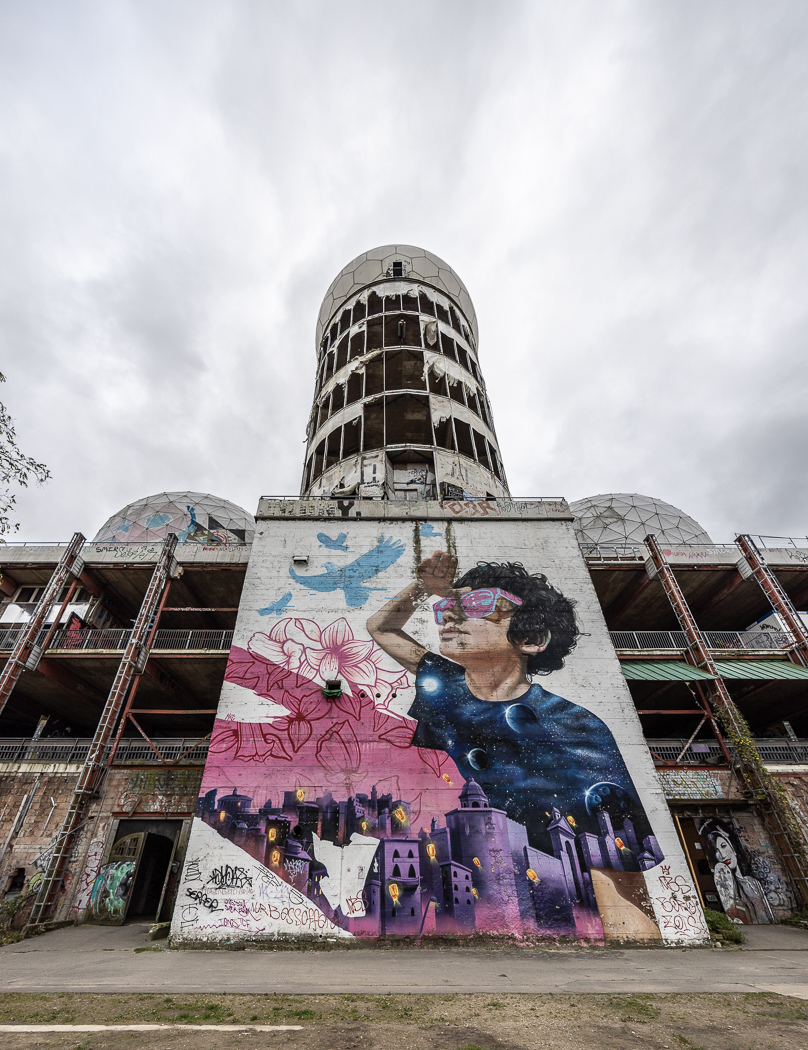
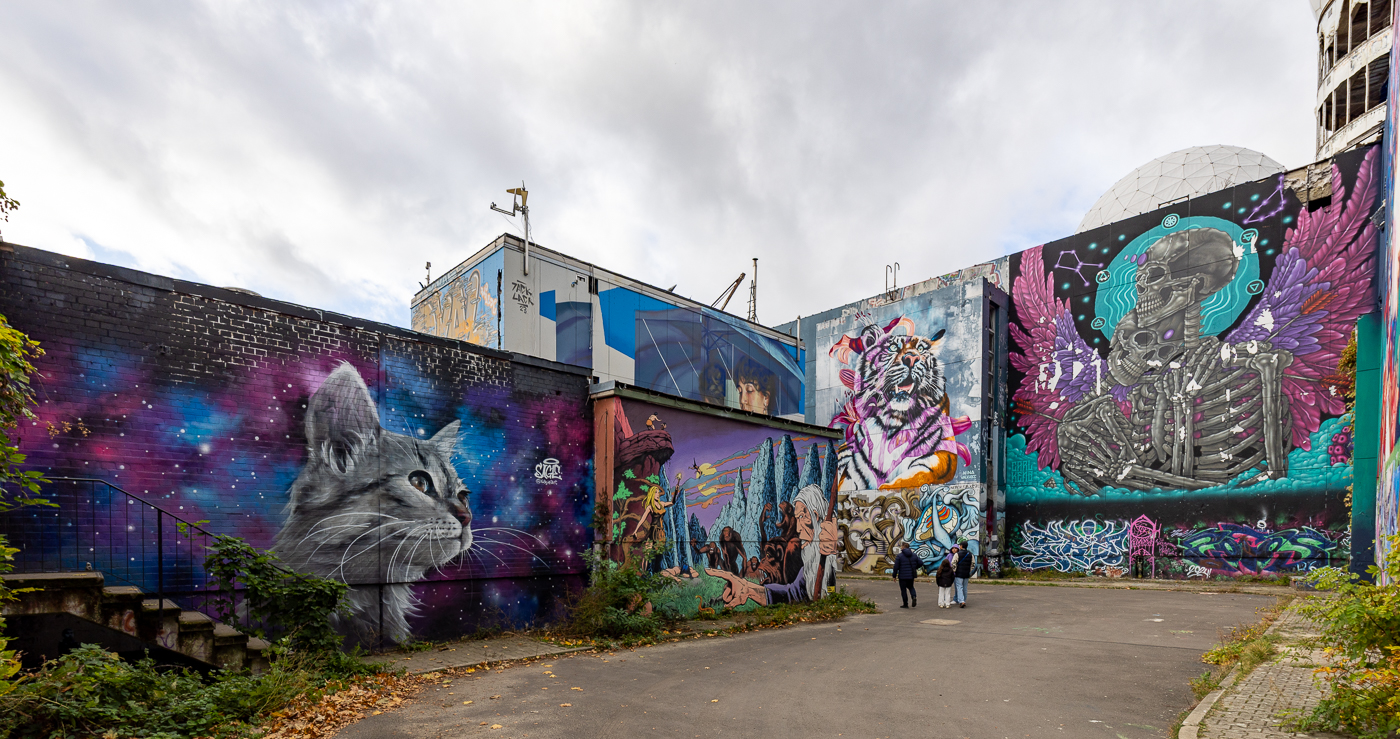
Teufelsberg, the Devil’s Mountain, rises out of the Grunewald forest in the west of Berlin. It is not a natural hill. Underneath it lie the ruins of a wartime city, and on top sit the white domes of a Cold War listening station. Today the station’s walls are covered with what may be one of the largest street art galleries in Europe. These photos are from a visit in October 2024.
A mountain of rubble
By 1945 bombing and street fighting had left much of Berlin in ruins. In the west of the city the clearance was concentrated on one site in the Grunewald, and from 1950 until the early 1970s an endless line of lorries tipped rubble there. The result was a hill of around 120 metres, made from the remains of thousands of homes, shops and factories. It took its name from the Teufelssee, a small lake at its foot.
Below the rubble is another layer of history. In 1937 work began here on a military technical college, part of the Nazi plans to rebuild Berlin as “Germania”. It was never finished, and after the war the shell proved so solid that burying it was easier than blowing it up.
Listening to the East
Being one of the highest points in West Berlin made the hill valuable during the Cold War. From the late 1950s the American and British armies used it as a listening post, and over the years it grew into “Field Station Berlin”, a large signals intelligence station run with the US National Security Agency. Inside the radomes, antennas listened in on radio traffic from East Germany and across the Warsaw Pact.
The station closed after German reunification. When the Allied forces withdrew in the early 1990s, they took their equipment and left the buildings empty.
Dreams that came to nothing
Investors bought the site in the late 1990s and drew up plans for a hotel, flats and a spy museum. None of them happened, and the land was later reclassified as forest. Film director David Lynch also wanted to buy it for a meditation centre, but that plan failed too. In the meantime the station was stripped by scrap thieves and vandals, and wind and weather tore the fabric covers off the domes.
Teufelsberg today
People have been climbing in to explore and paint for years. Since the 2010s the site has been run as an official destination: you pay an entrance fee, guided tours tell the station’s history, and artists are invited to paint its walls. The station is now a listed monument, but the buildings are still decaying. Many floors are bare concrete with no windows, the radomes are open to the wind, and the views stretch across the Grunewald to the city skyline.
The graffiti
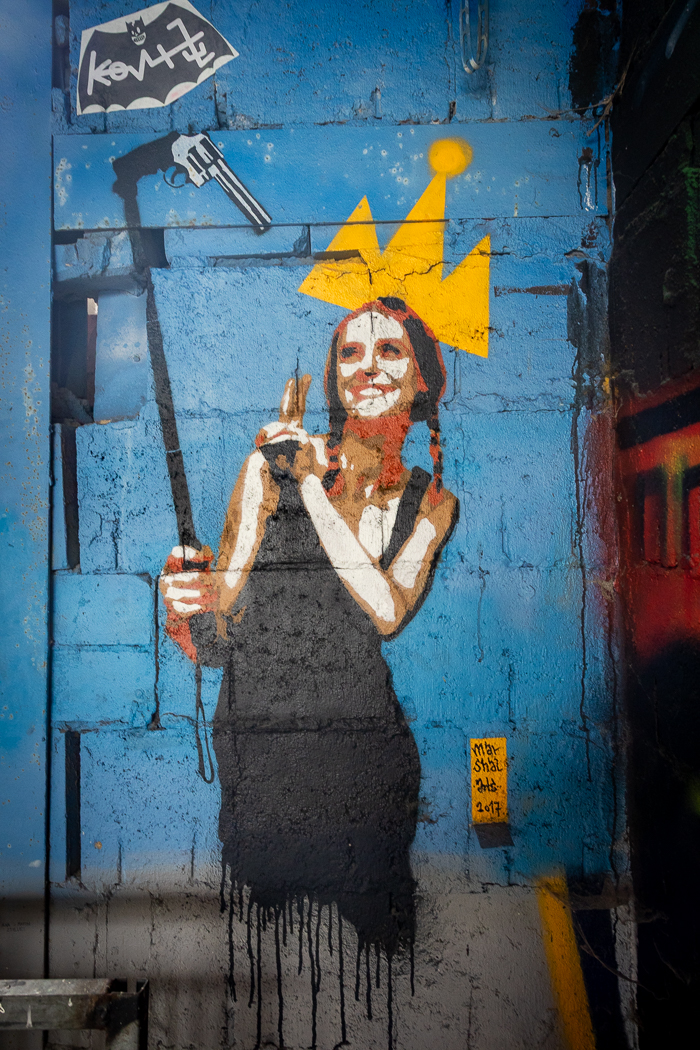
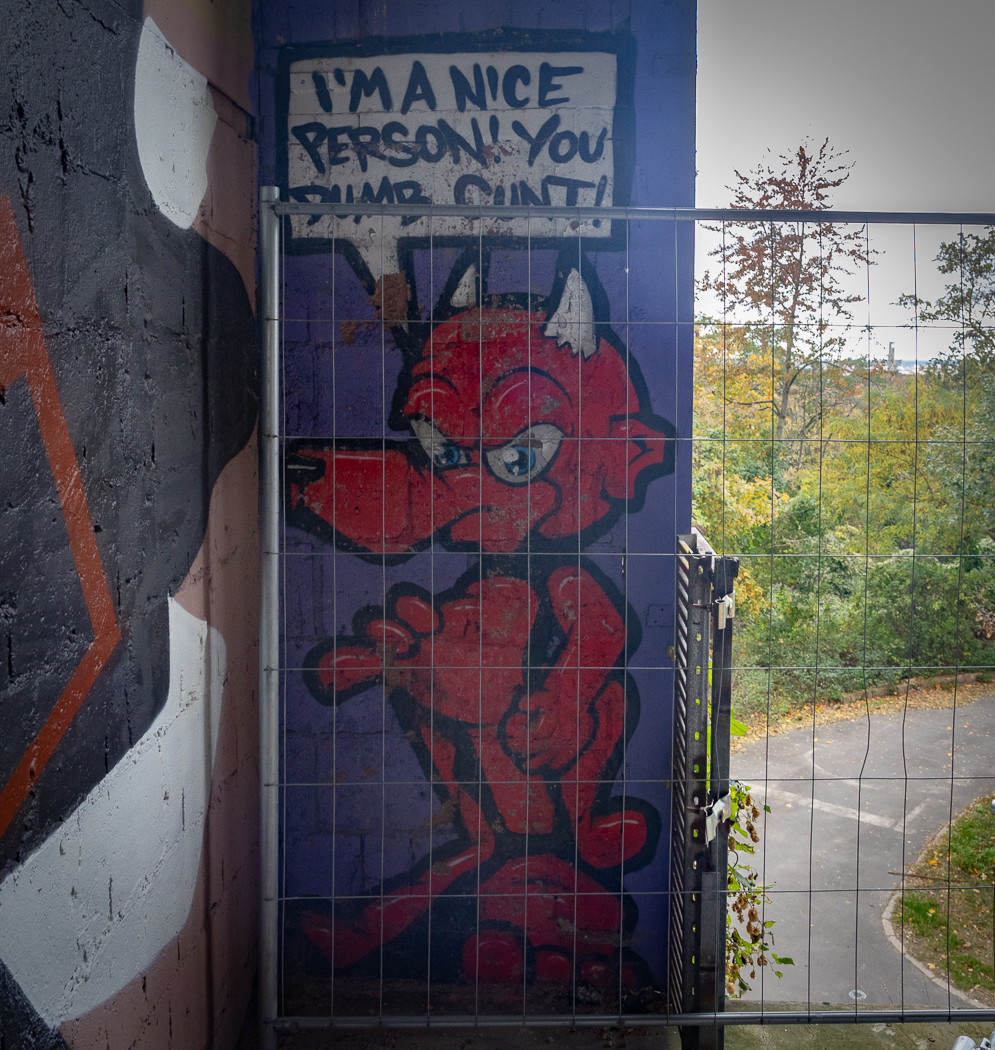
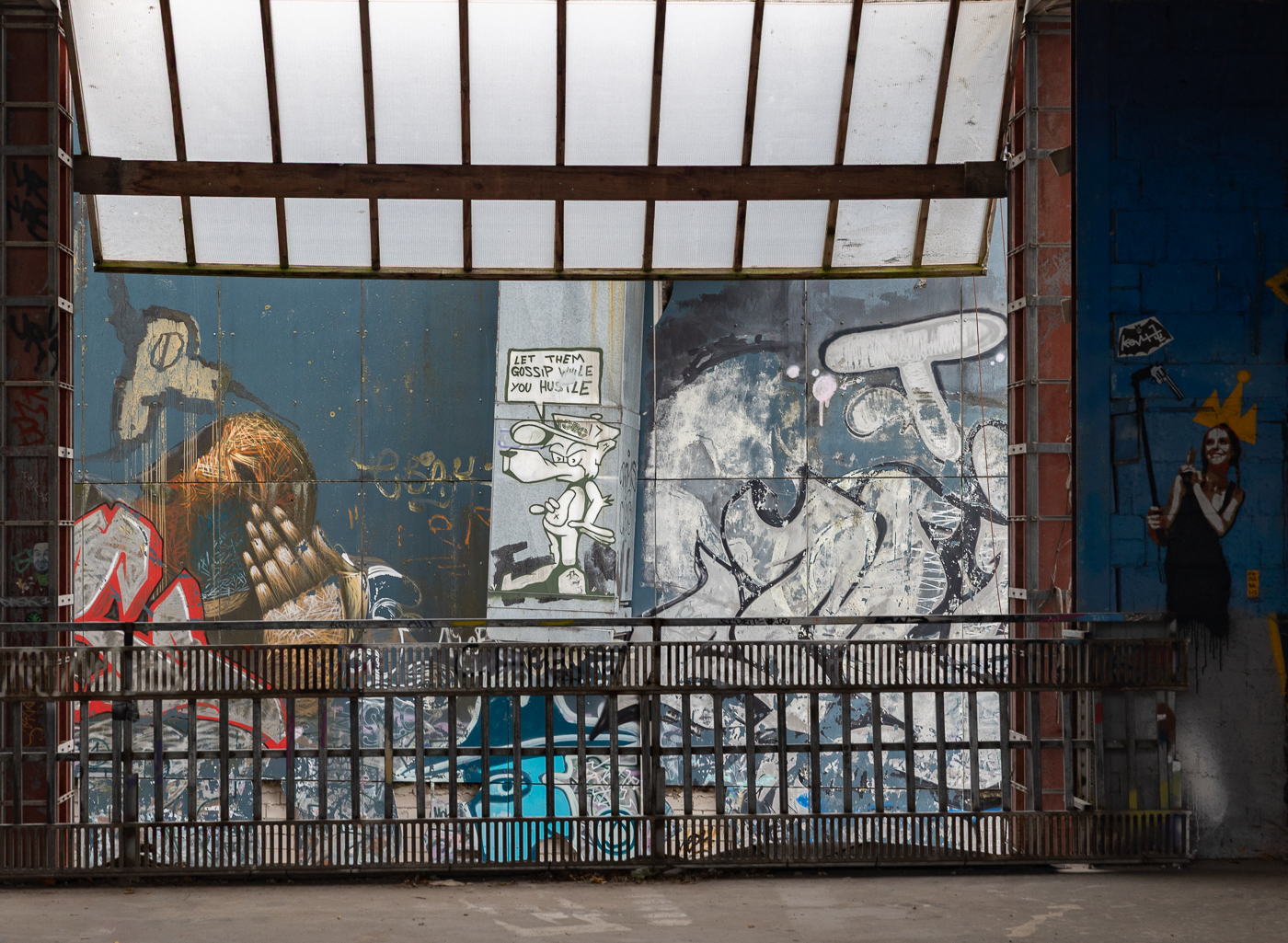
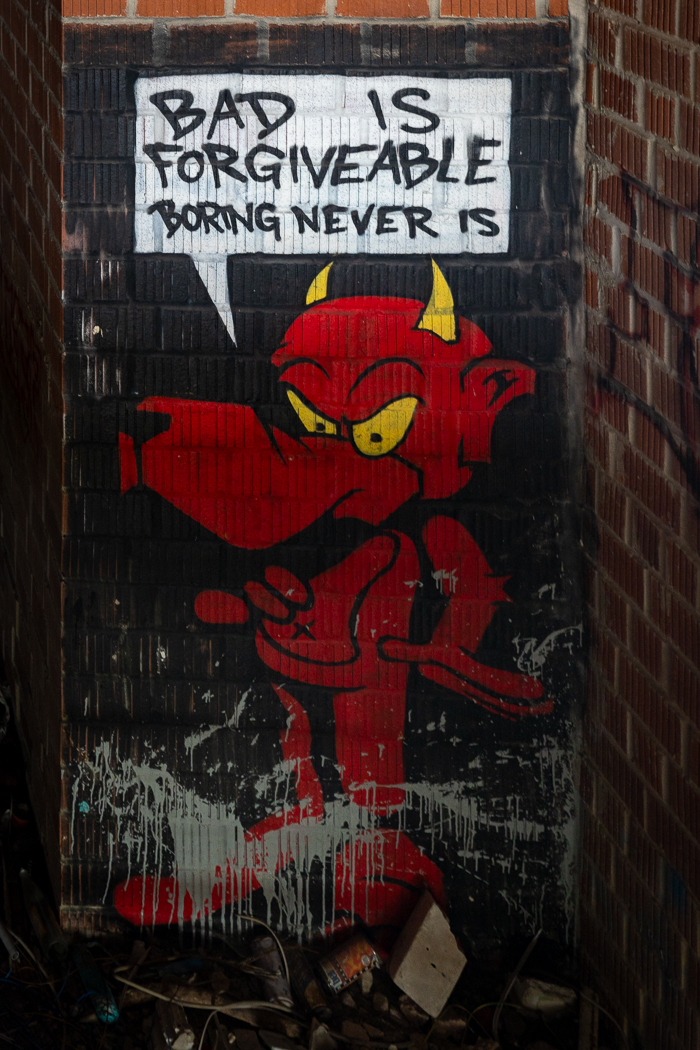
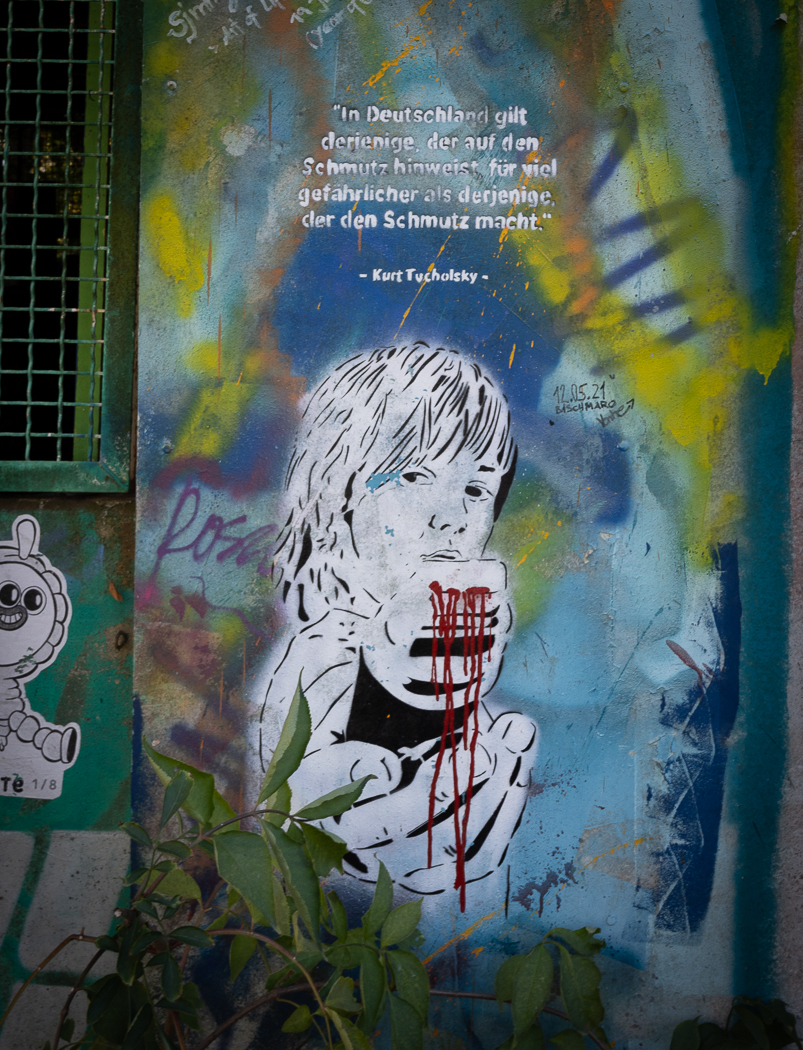
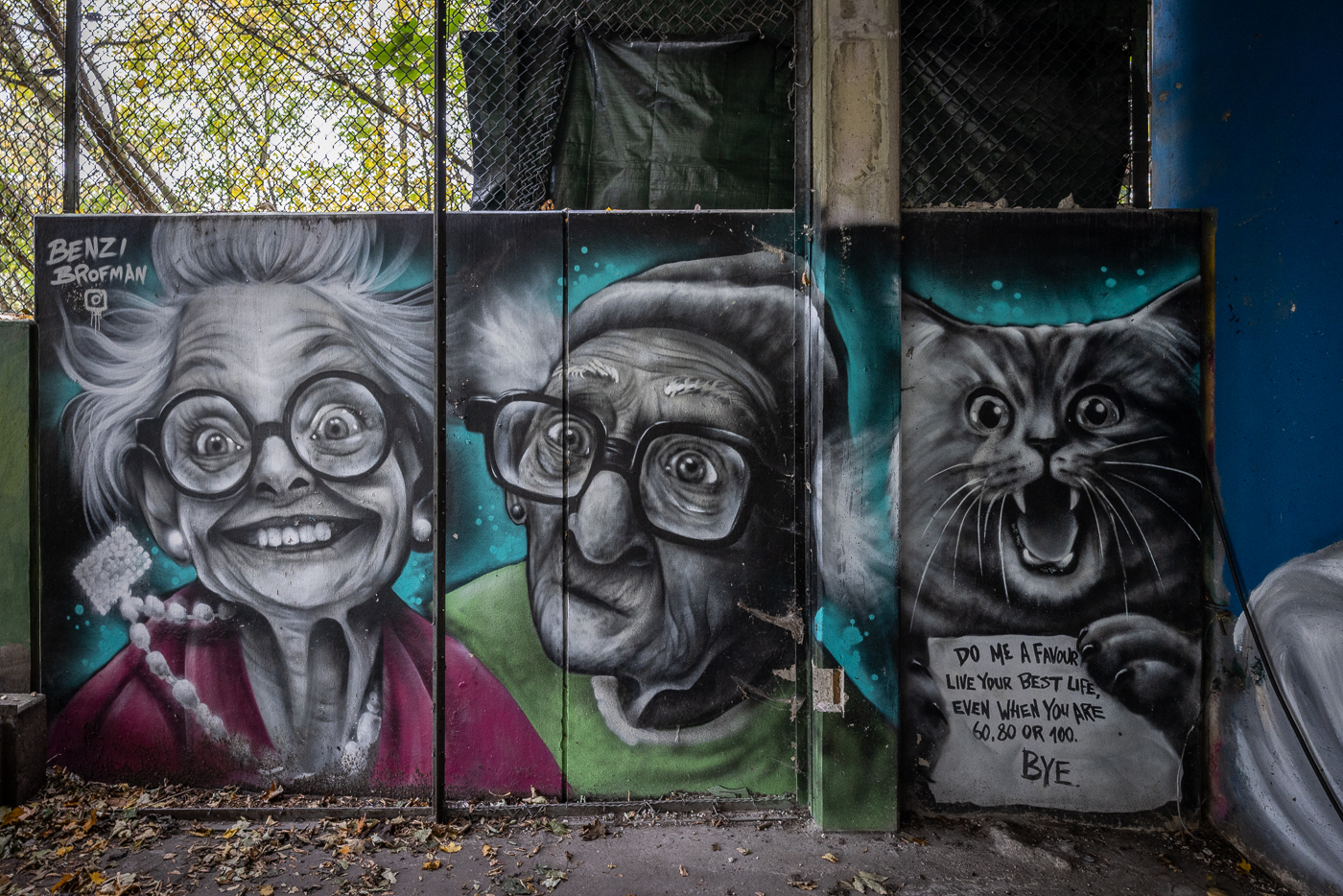
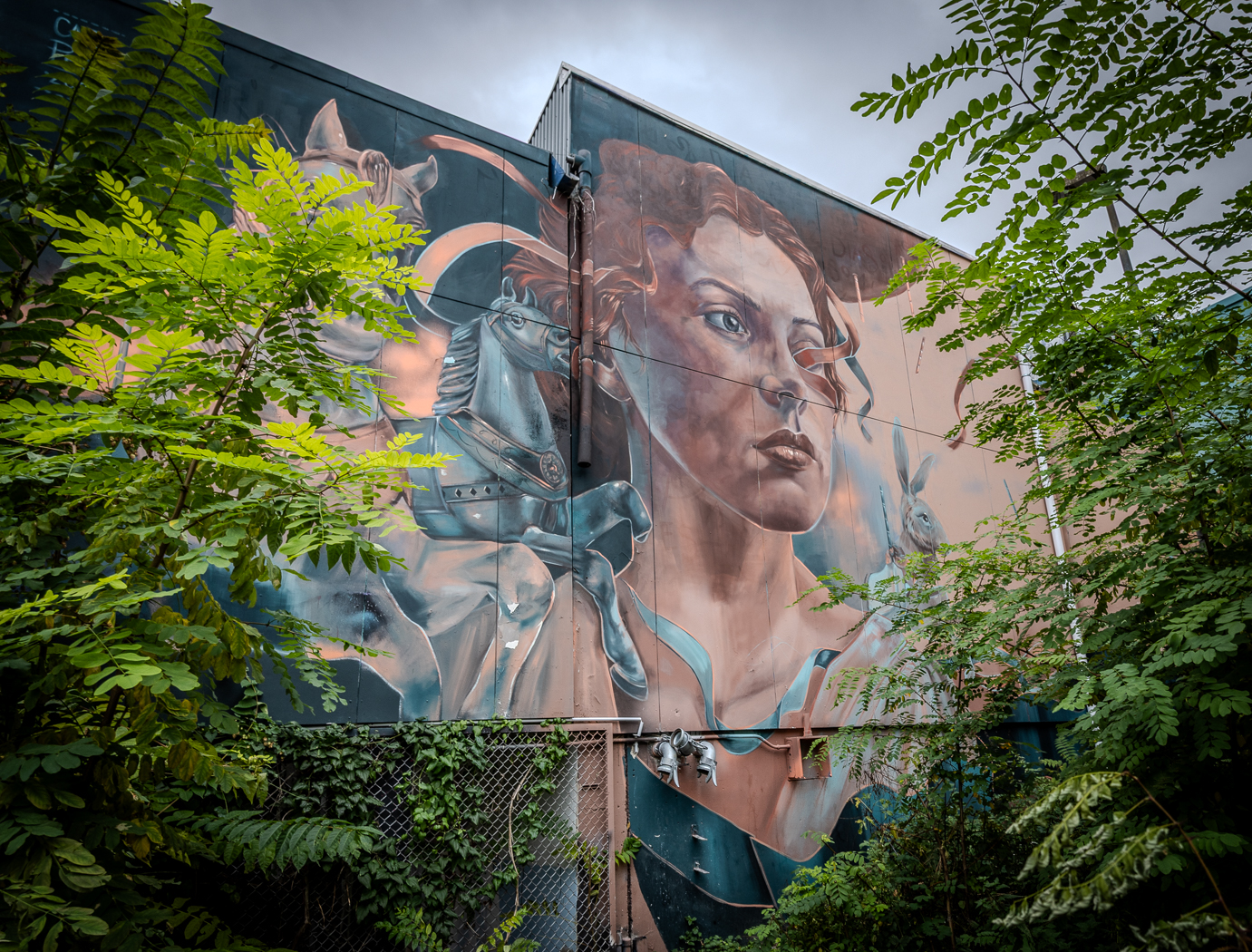
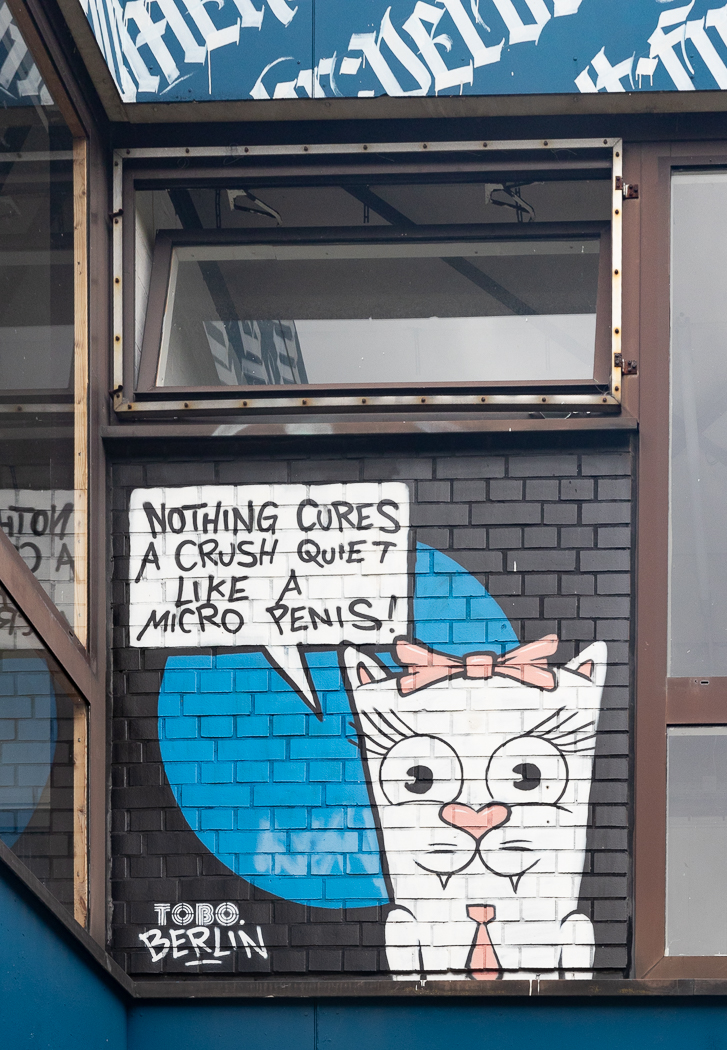
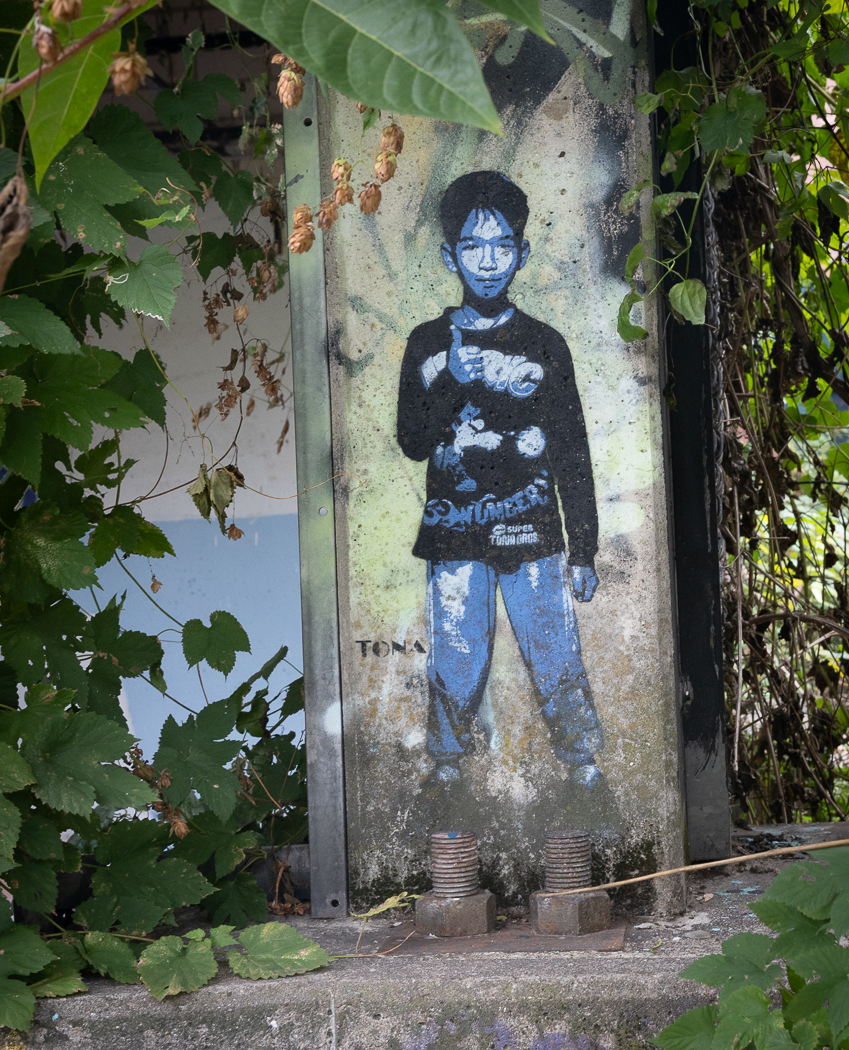
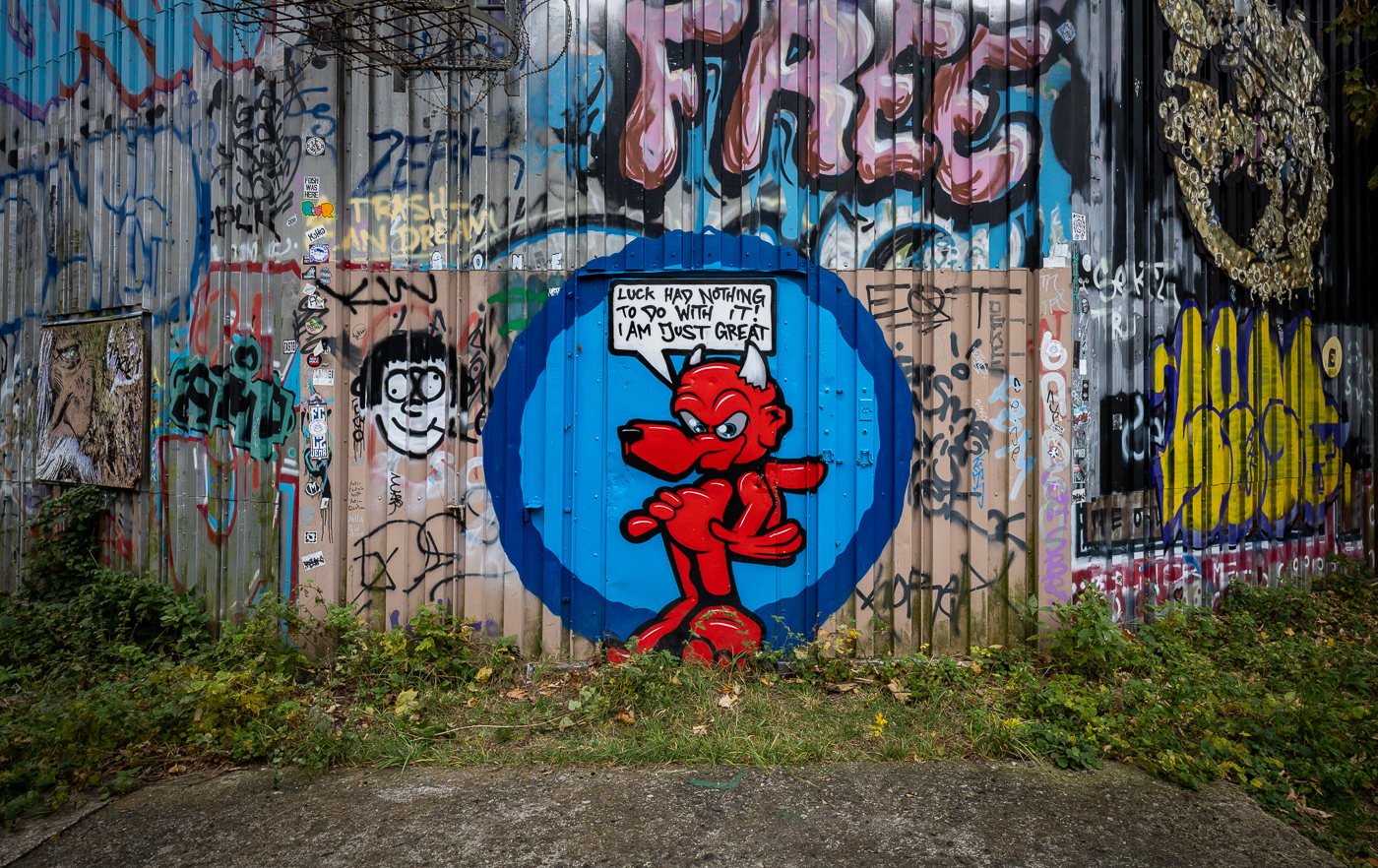
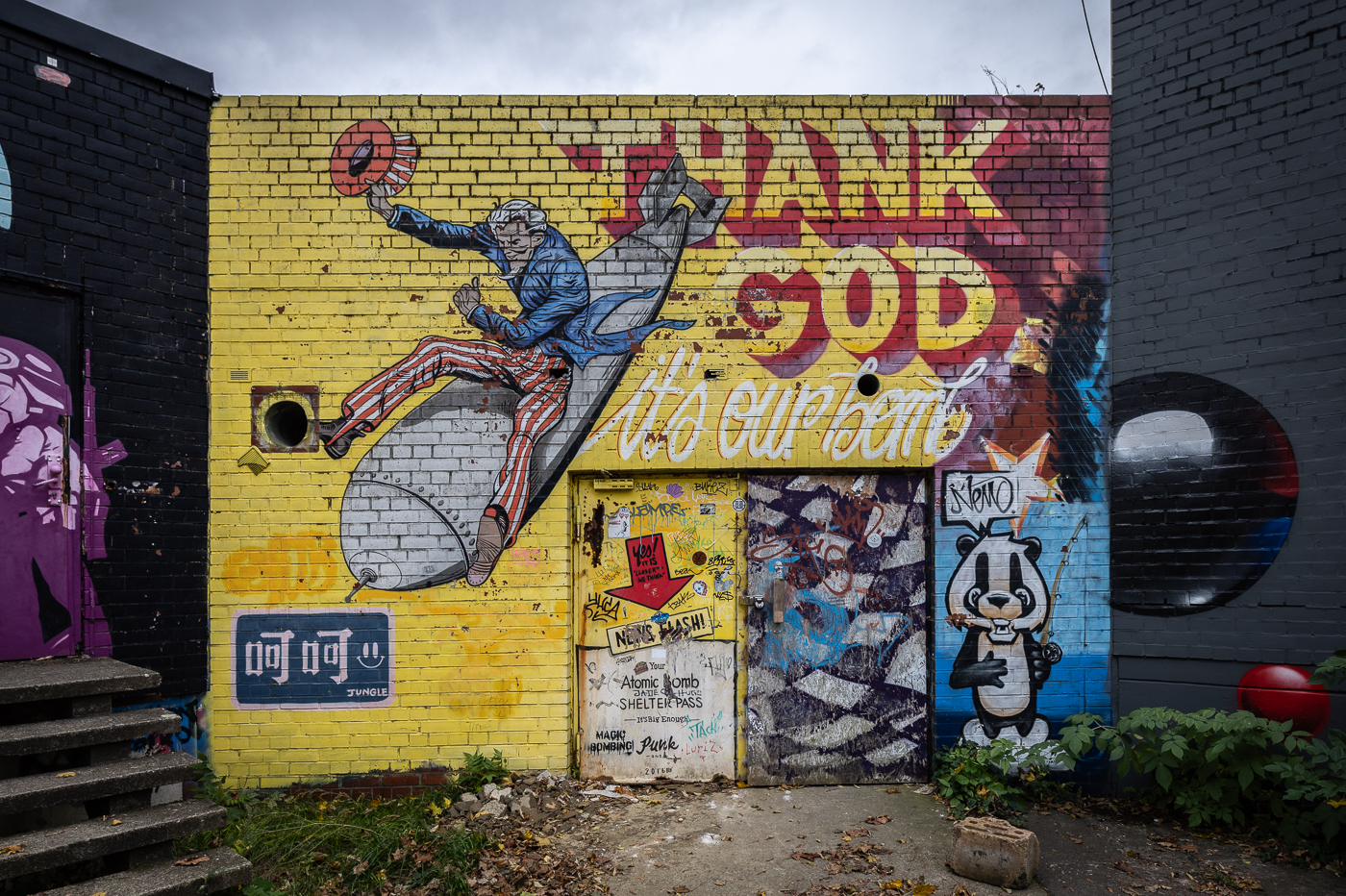
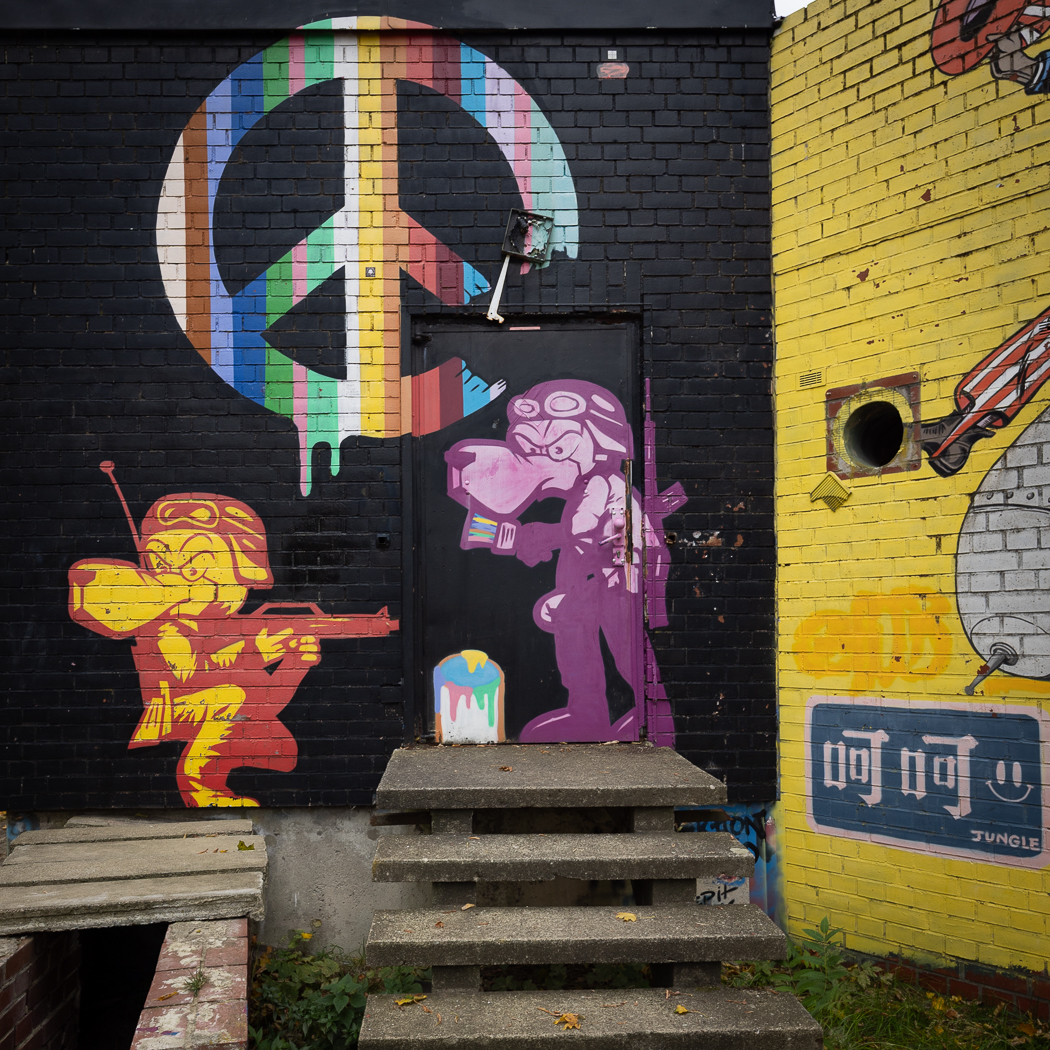
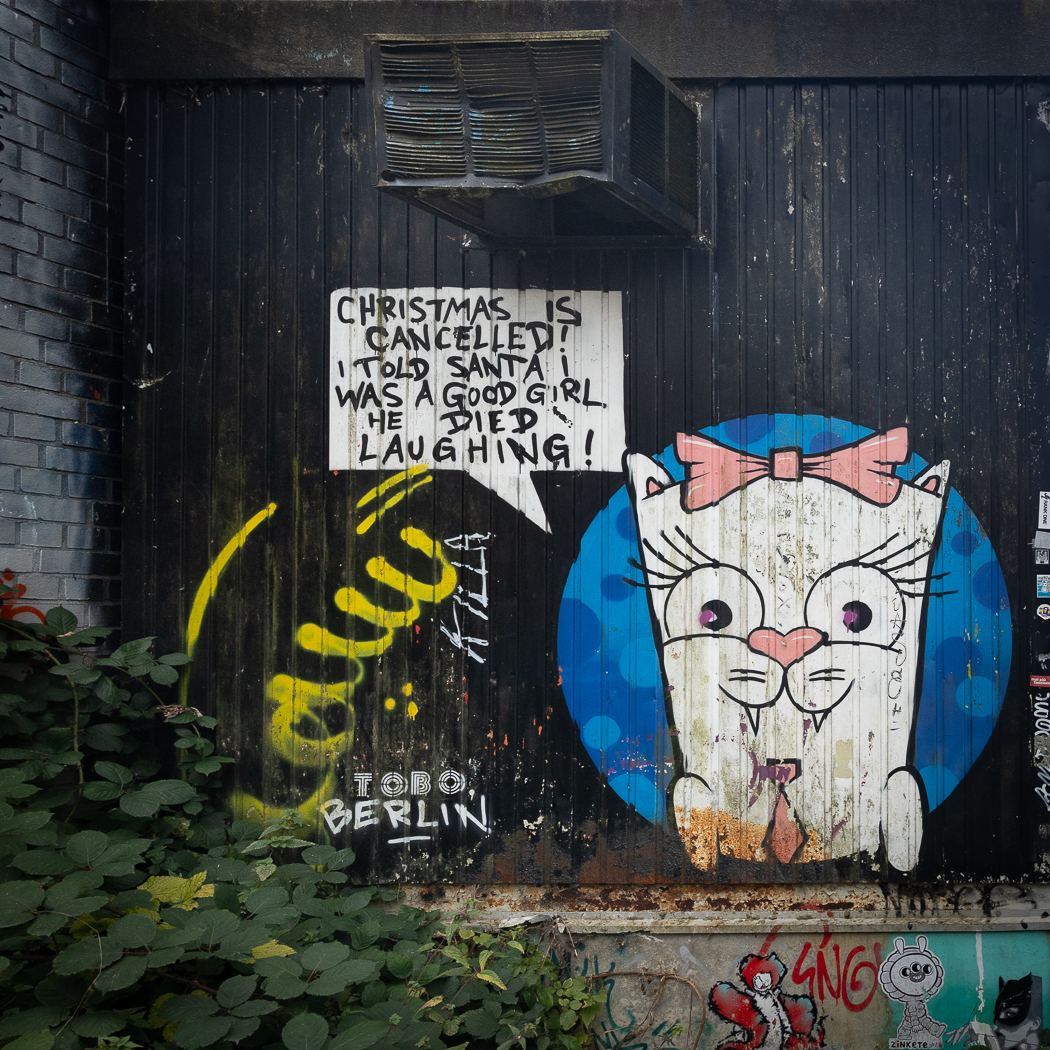
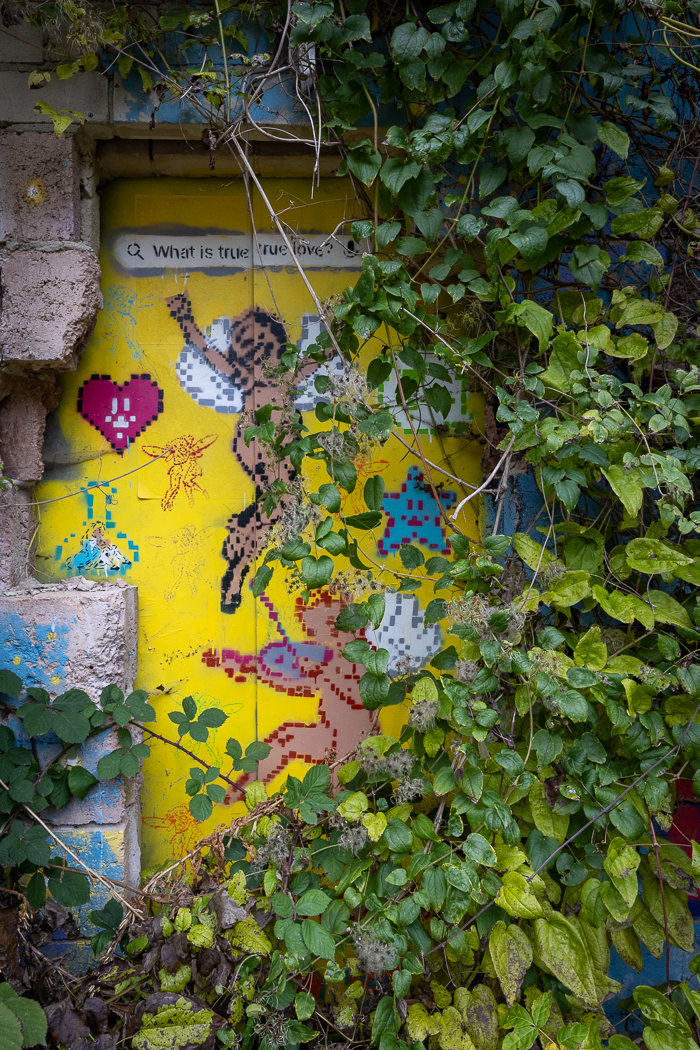
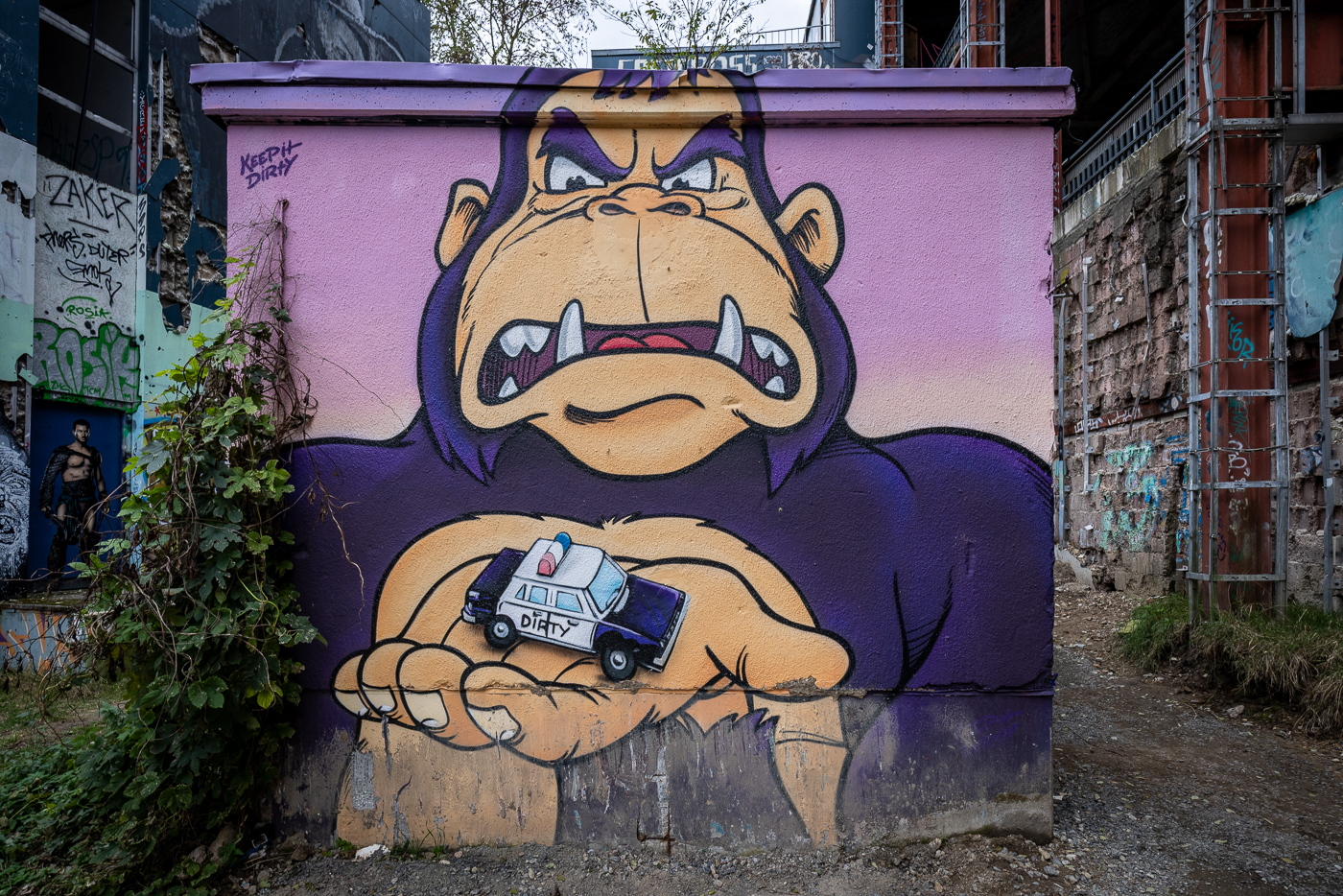
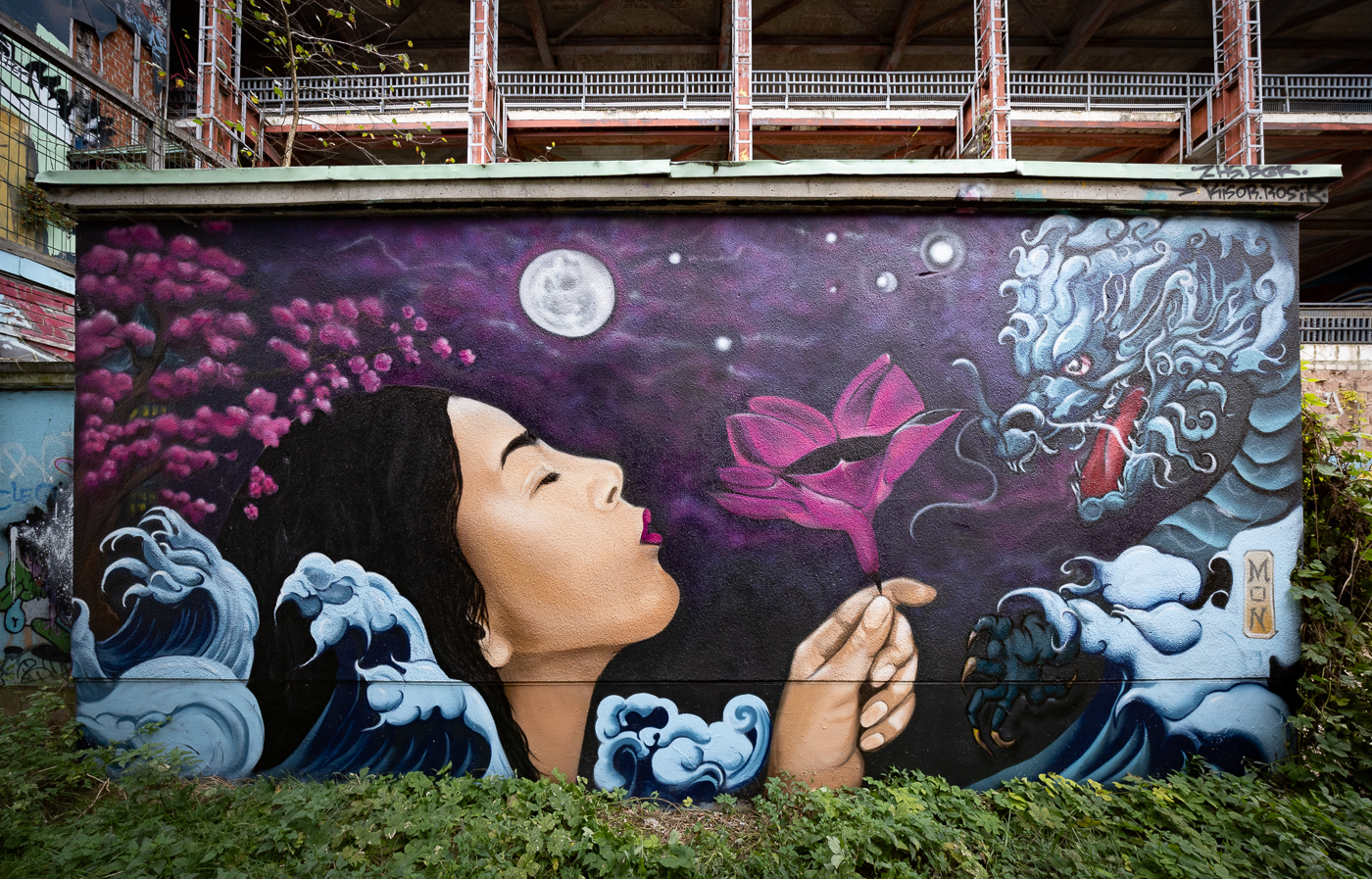
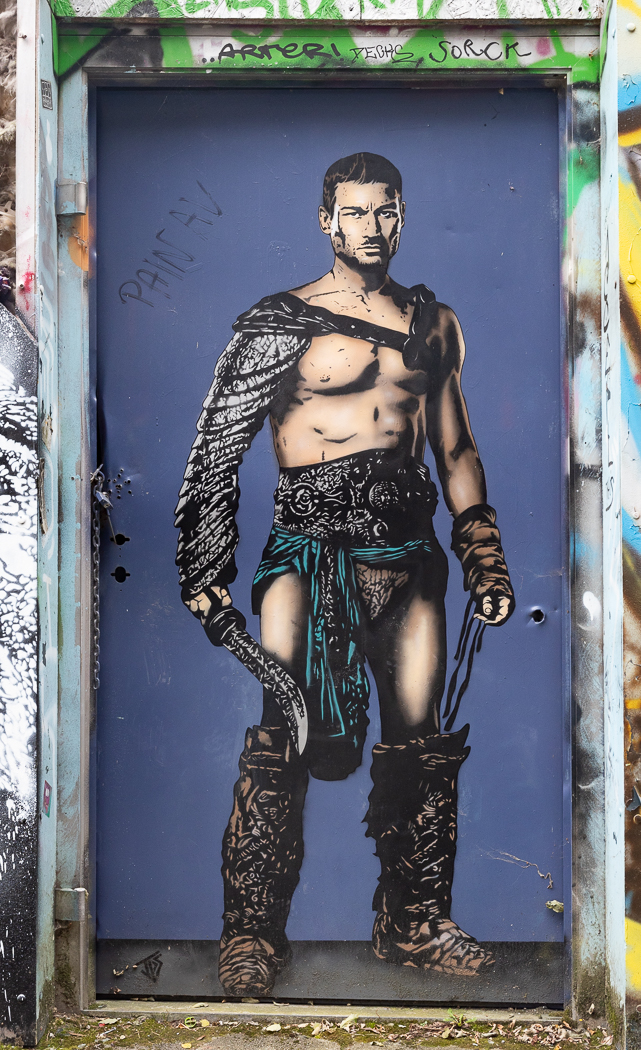
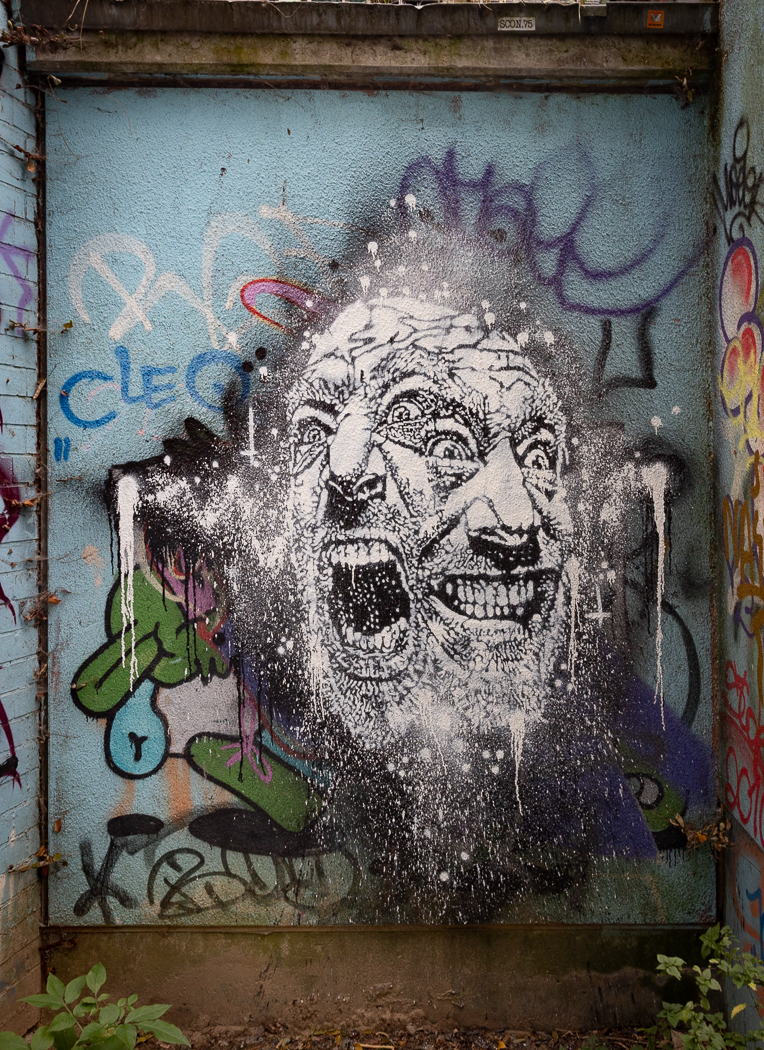
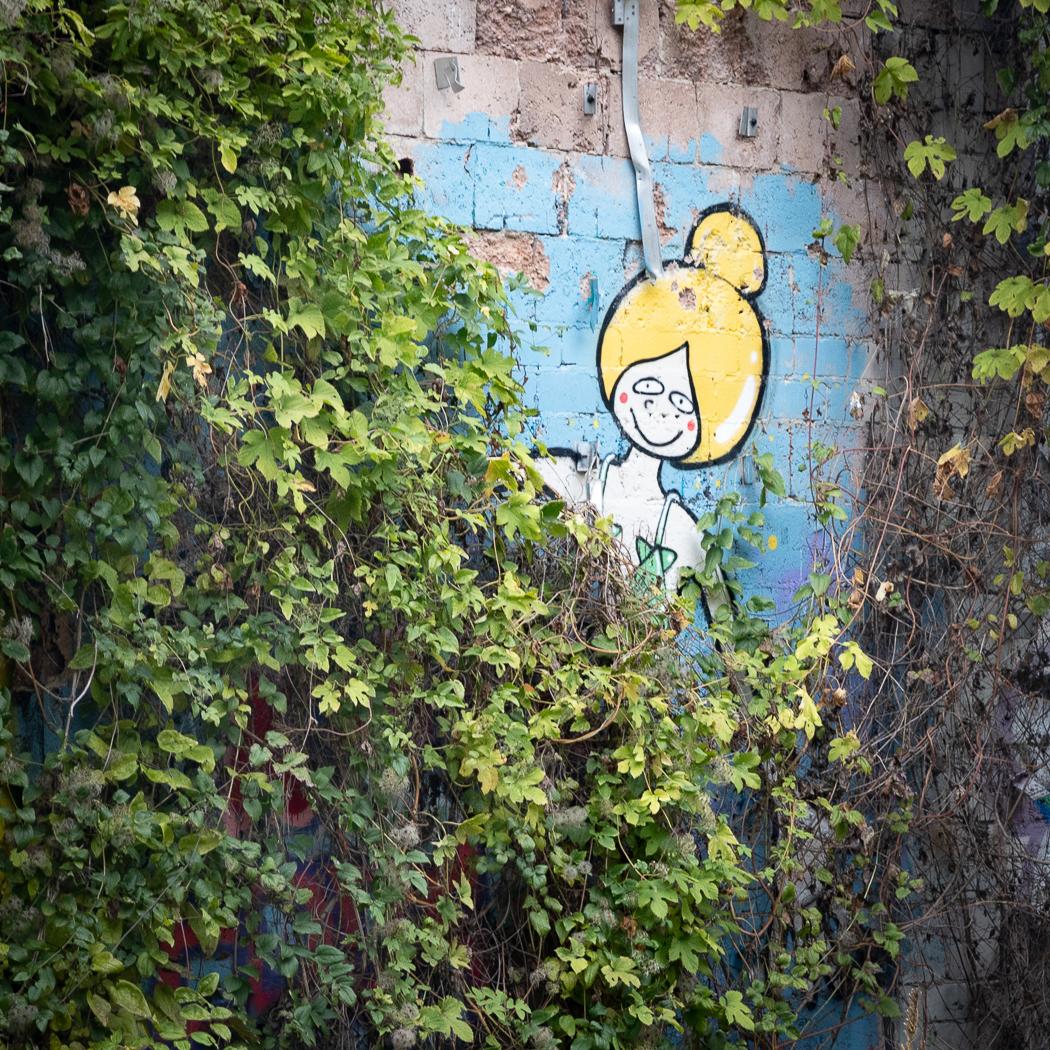
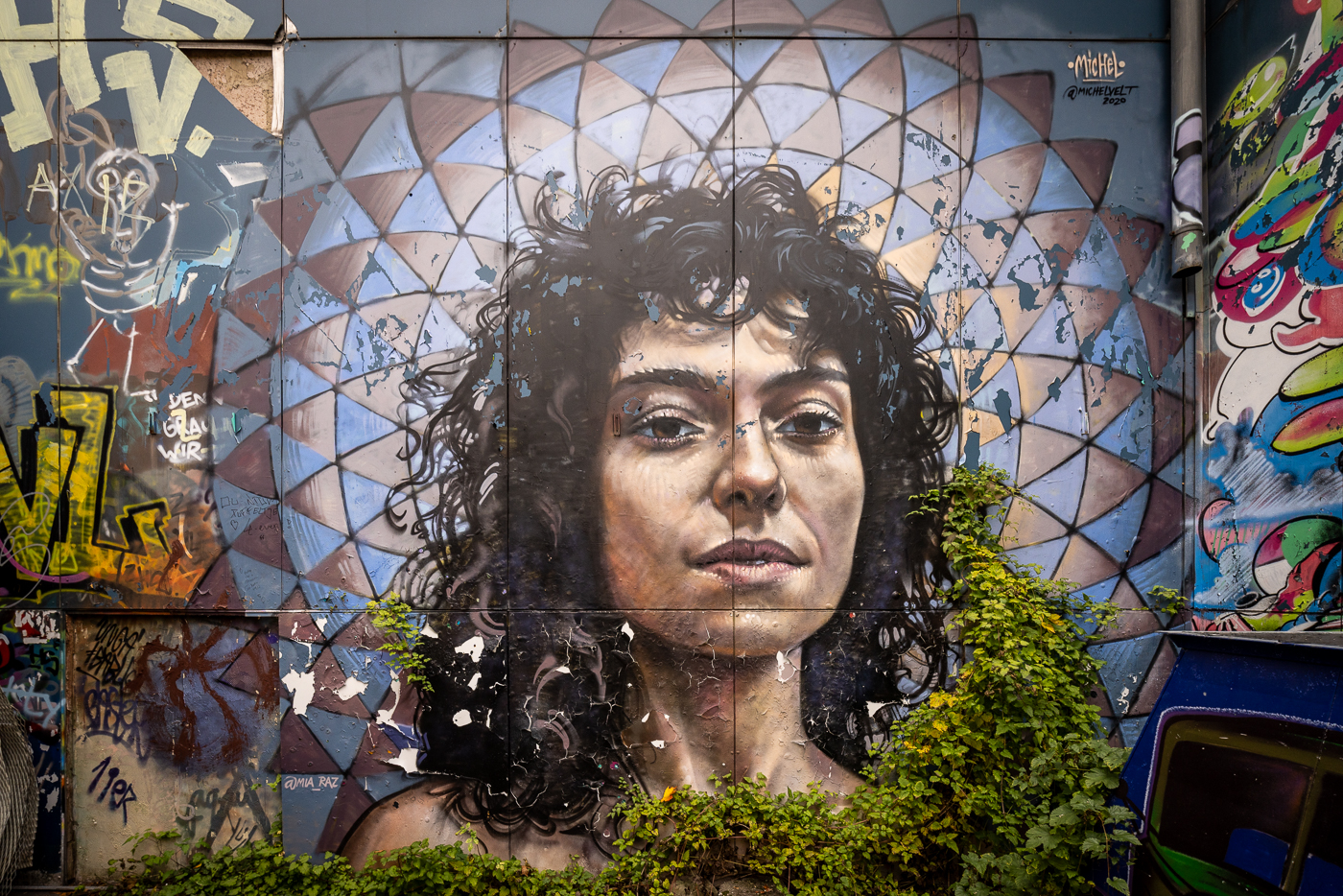
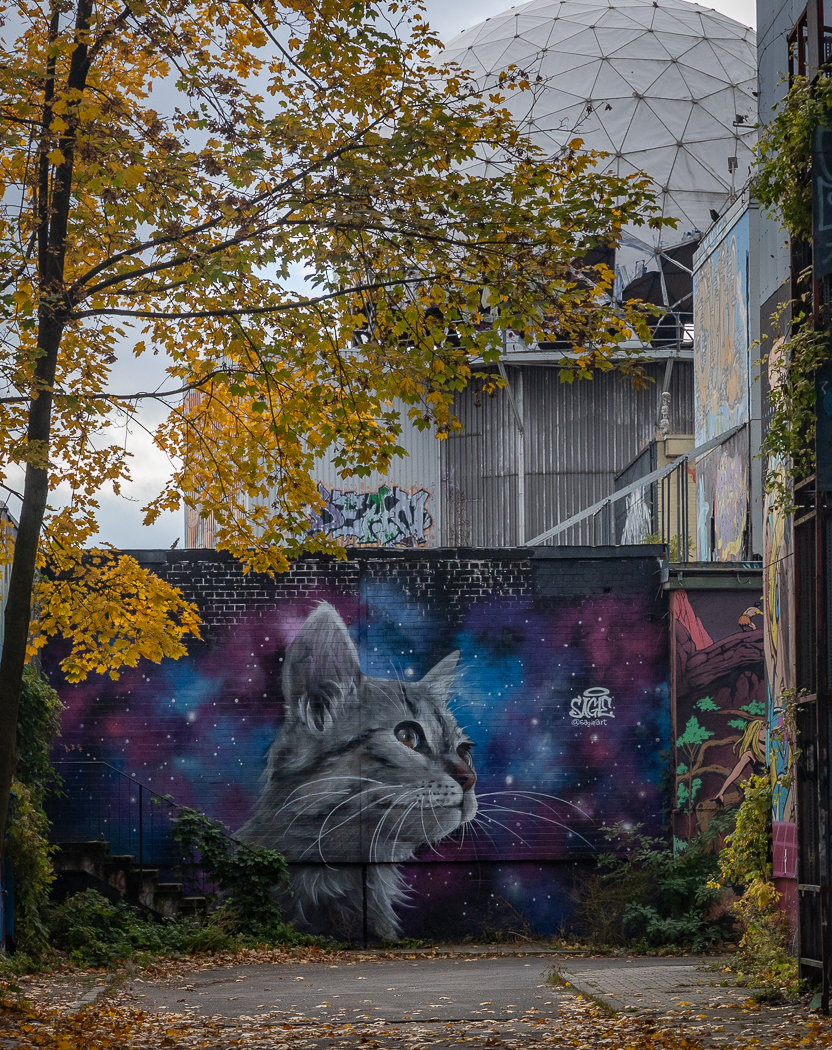
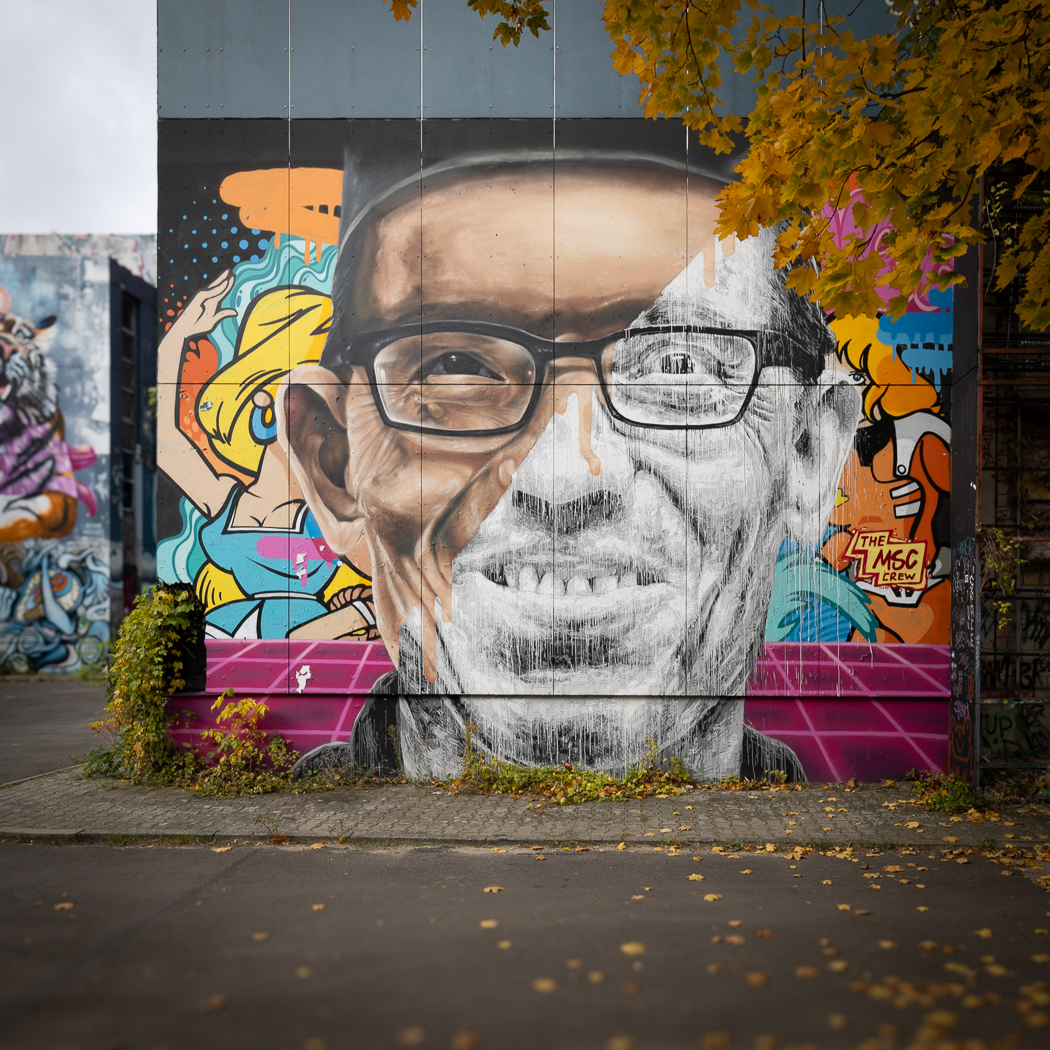
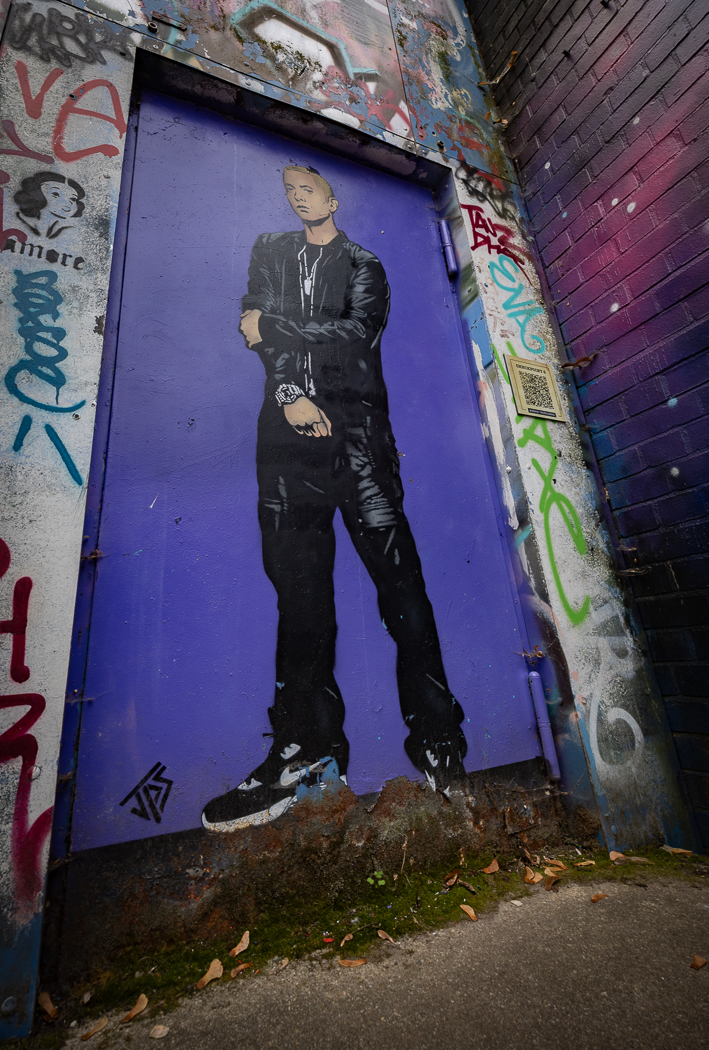
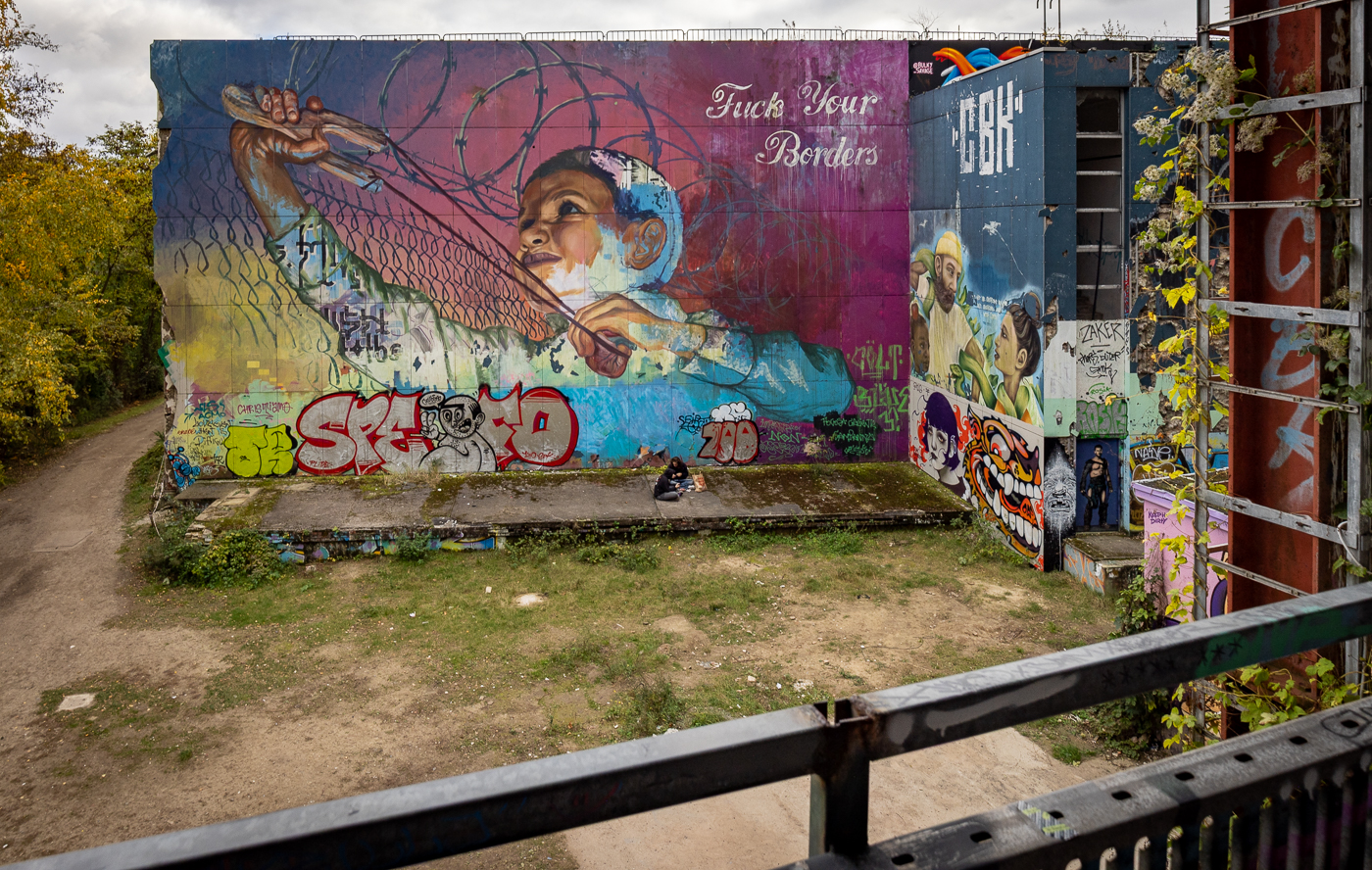
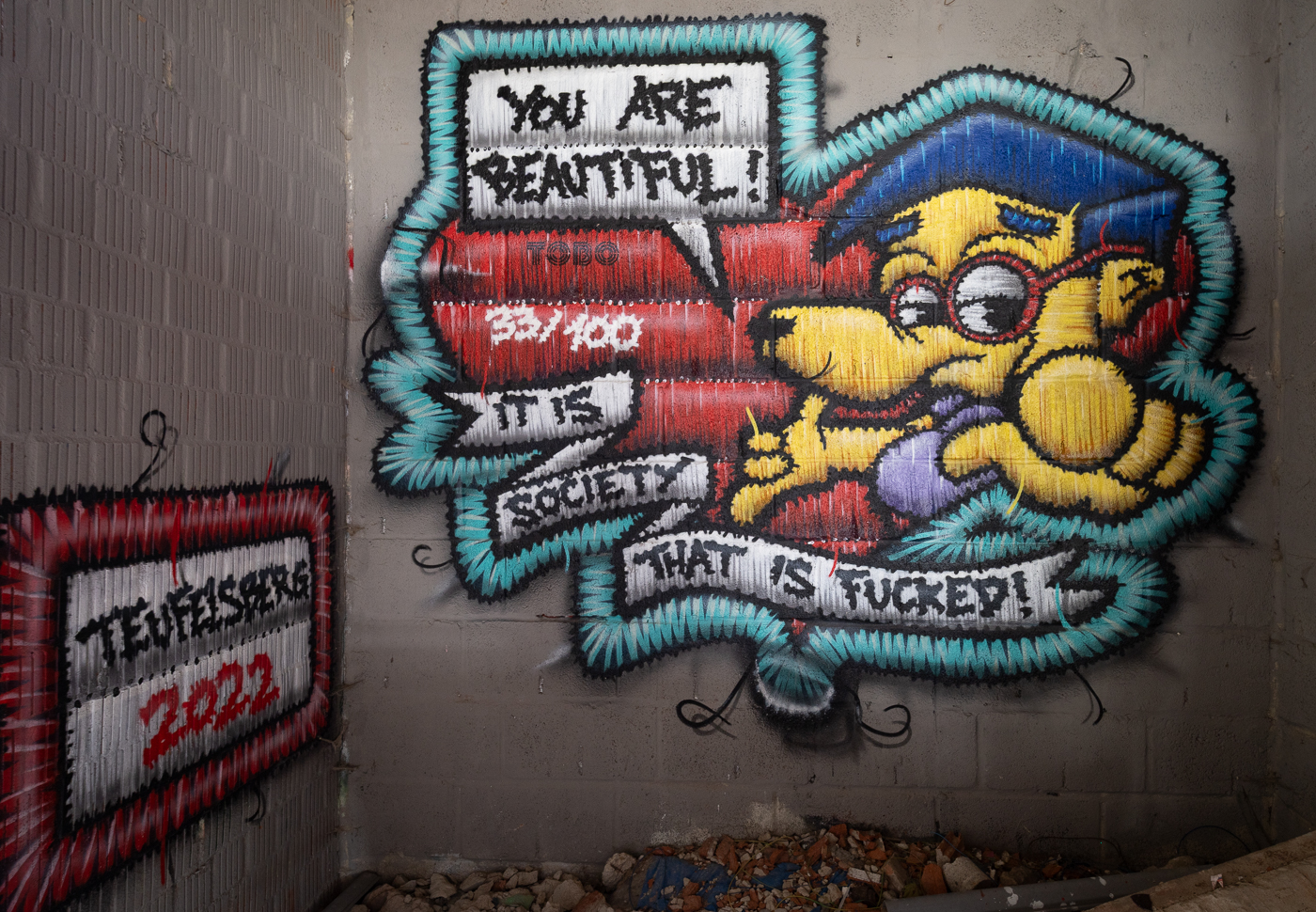
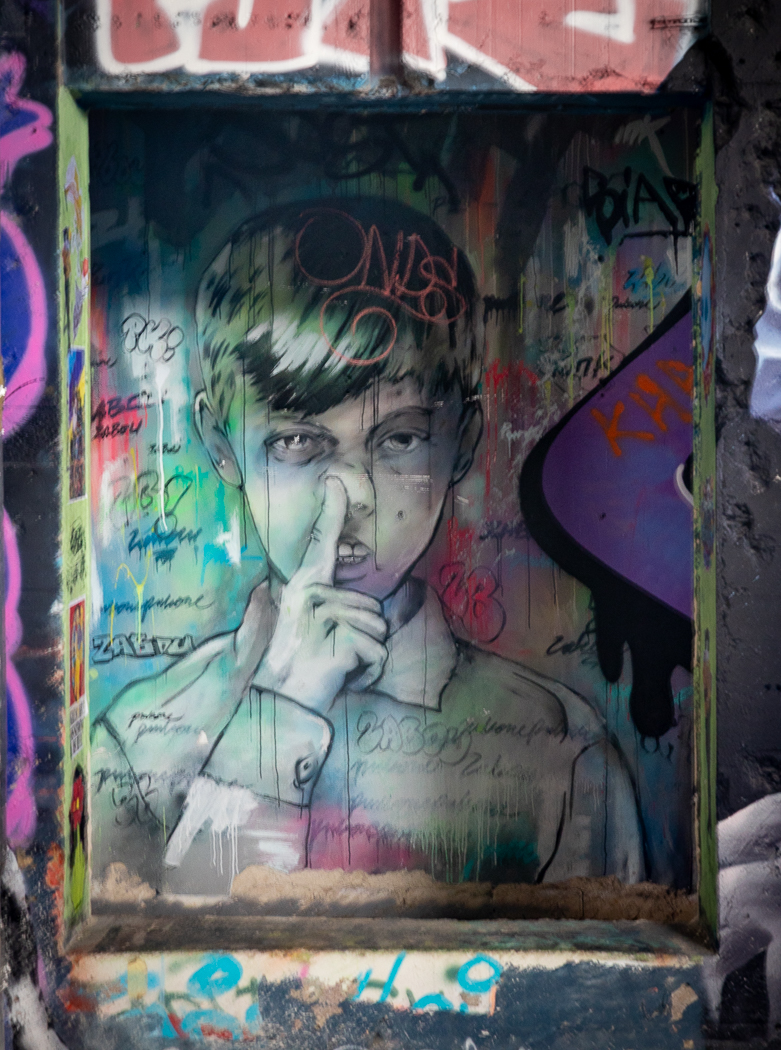
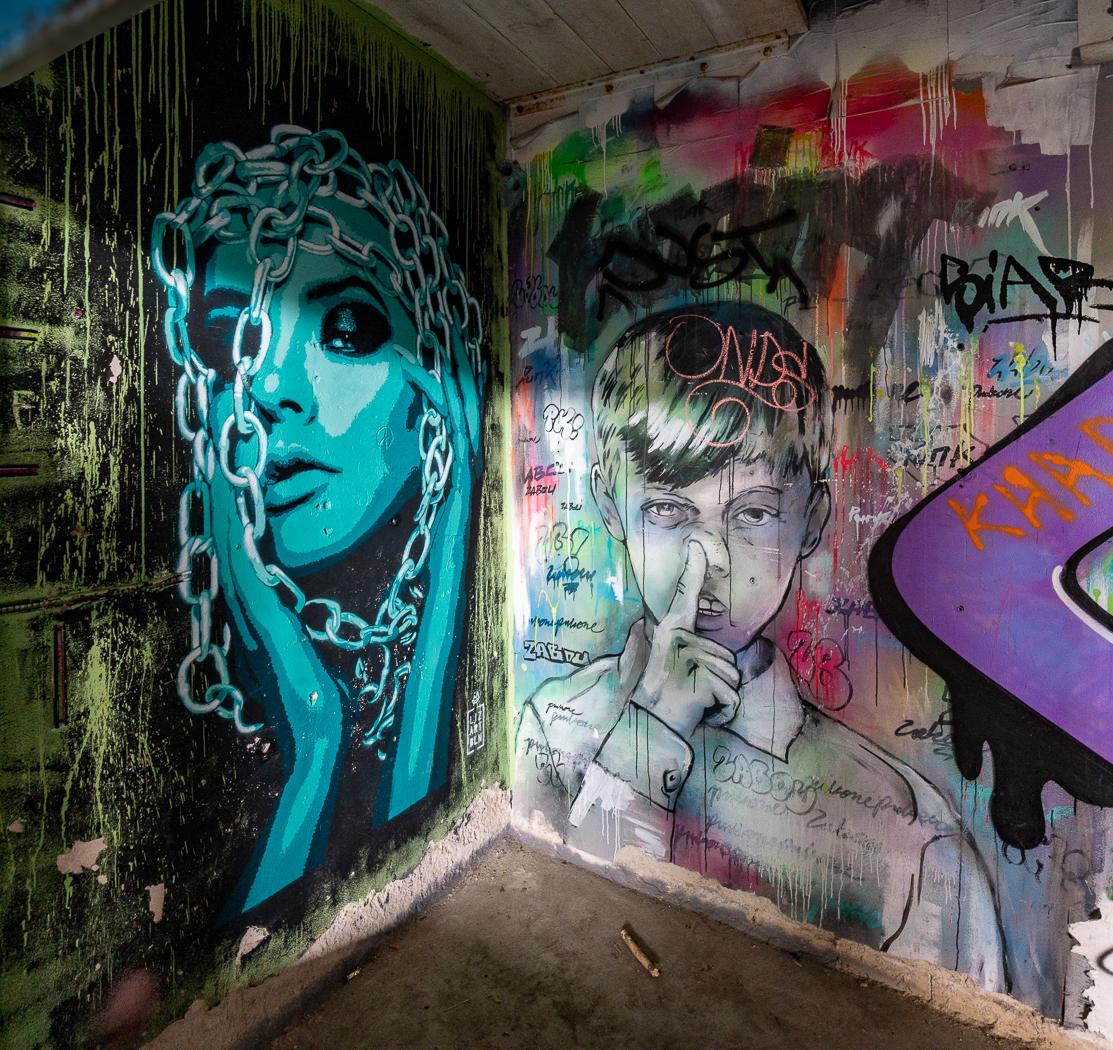
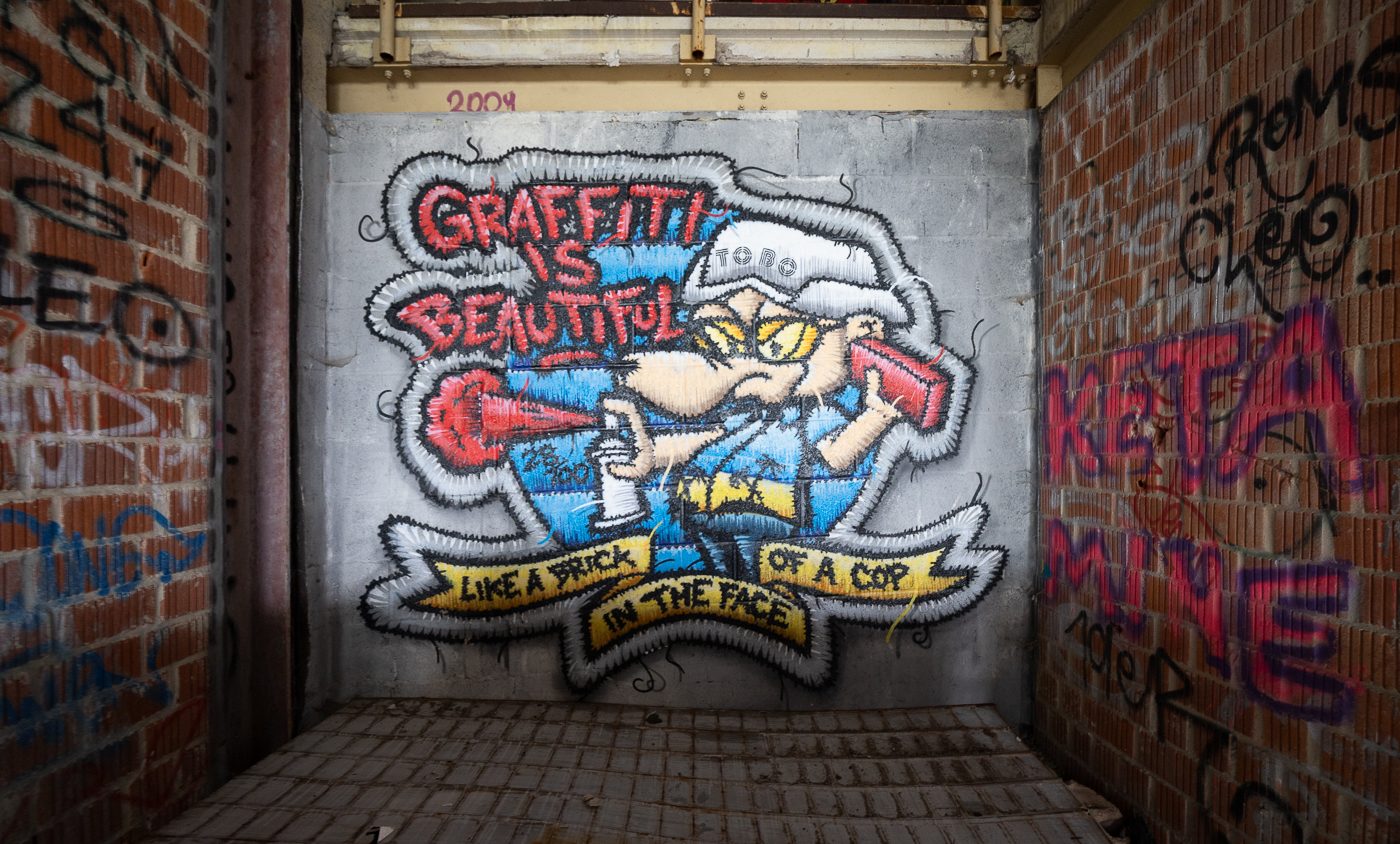
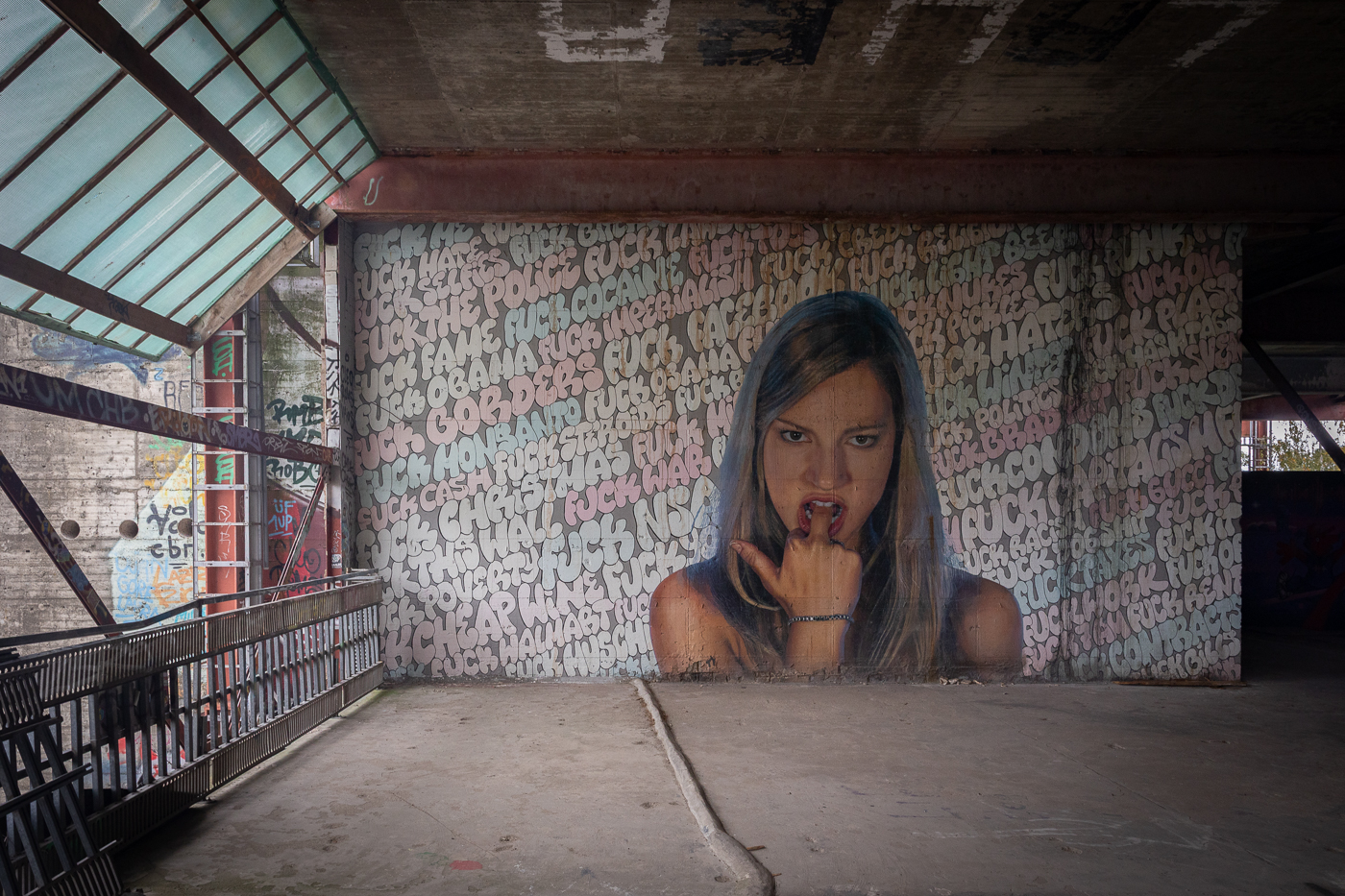
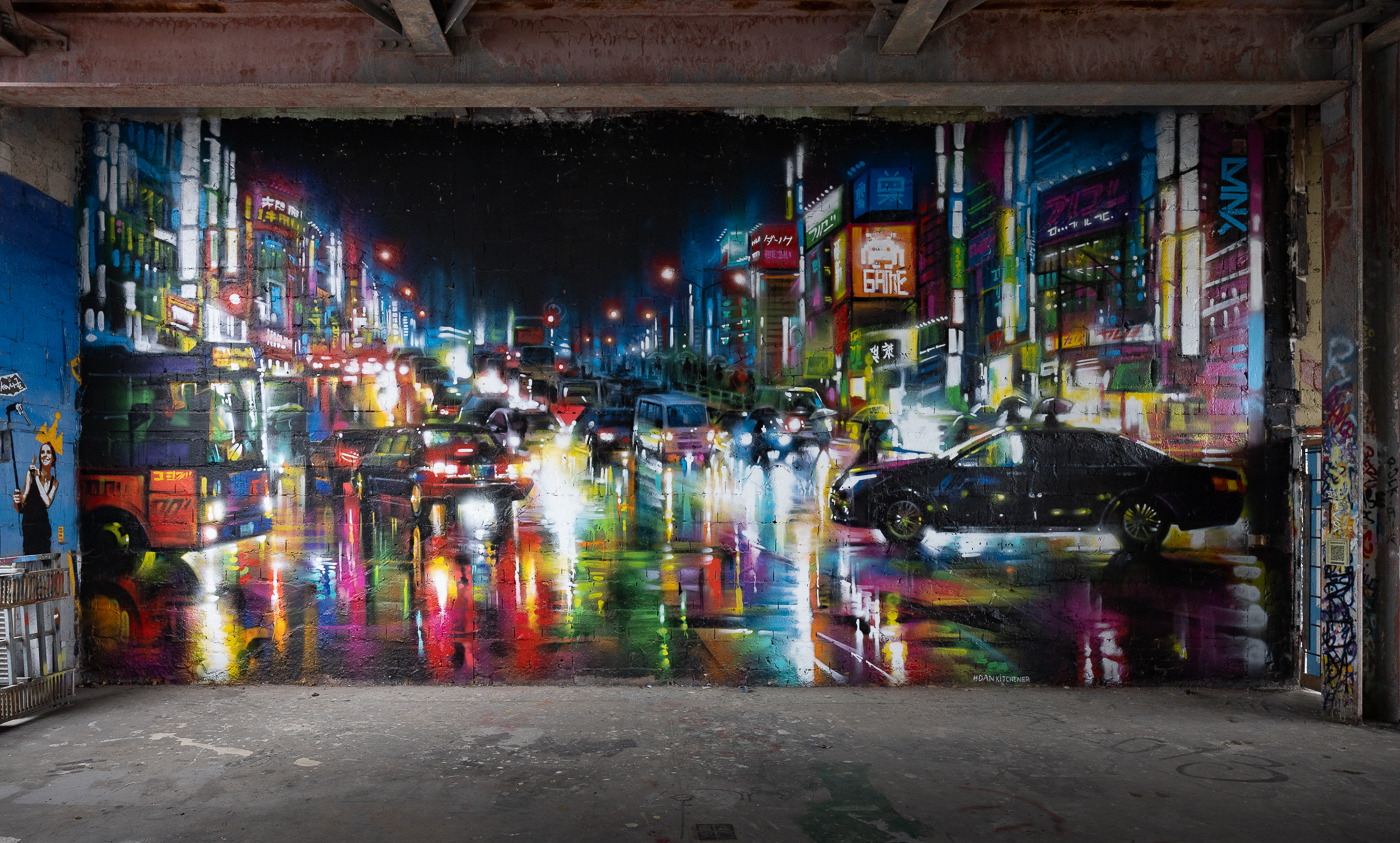
Almost every surface is painted: outbuildings, stairwells, doors, the walls of the main hall and the bases of the towers. There are huge photorealistic portraits, cartoon characters, paste-ups, stencils and slogans. The work changes all the time as new pieces cover the old ones, so no two visits are the same. Familiar names keep turning up, such as TOBO’s cats with their deadpan speech bubbles, and red devils with one-liners of their own. Elsewhere, a stencil quotes Kurt Tucholsky: in Germany, the person who points out the dirt is seen as far more dangerous than the one who made it.