Hubertusbad
A photographic exploration of Hubertusbad, a magnificent Art Deco bathhouse in Berlin’s Lichtenberg district. Built in 1928 and closed in 1991, this architectural gem remains frozen in time, preserving nearly a century of social bathing history within its tiled walls.
A Monument to Public Bathing
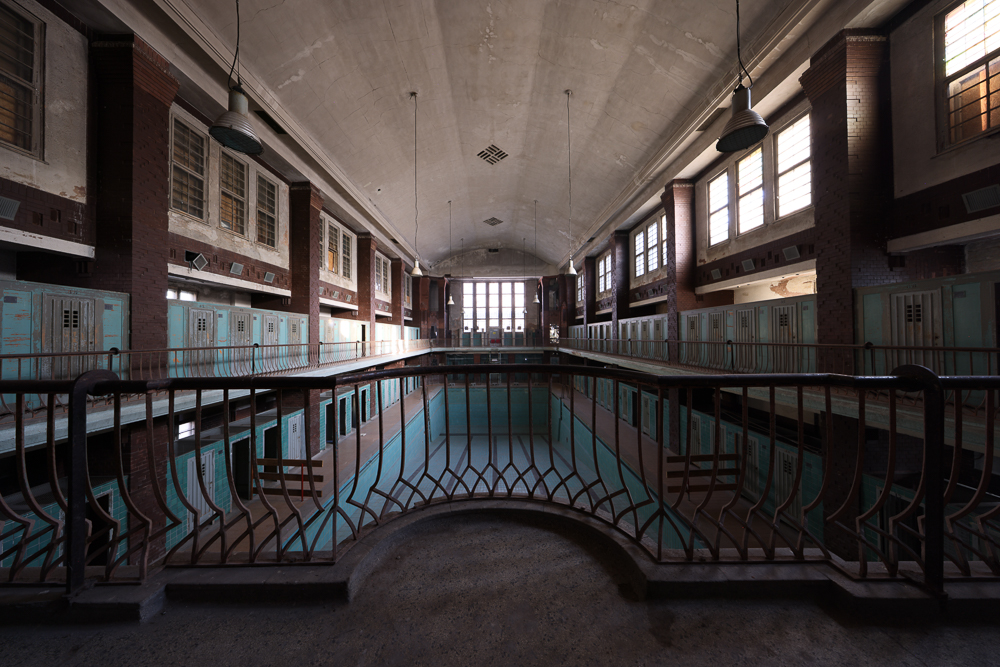
Hubertusbad opened its doors in 1928, representing the height of Berlin’s commitment to public health and social welfare during the Weimar Republic. The facility was designed as a comprehensive bathing complex, serving the working-class communities of Lichtenberg with modern hygiene facilities that few could afford at home.
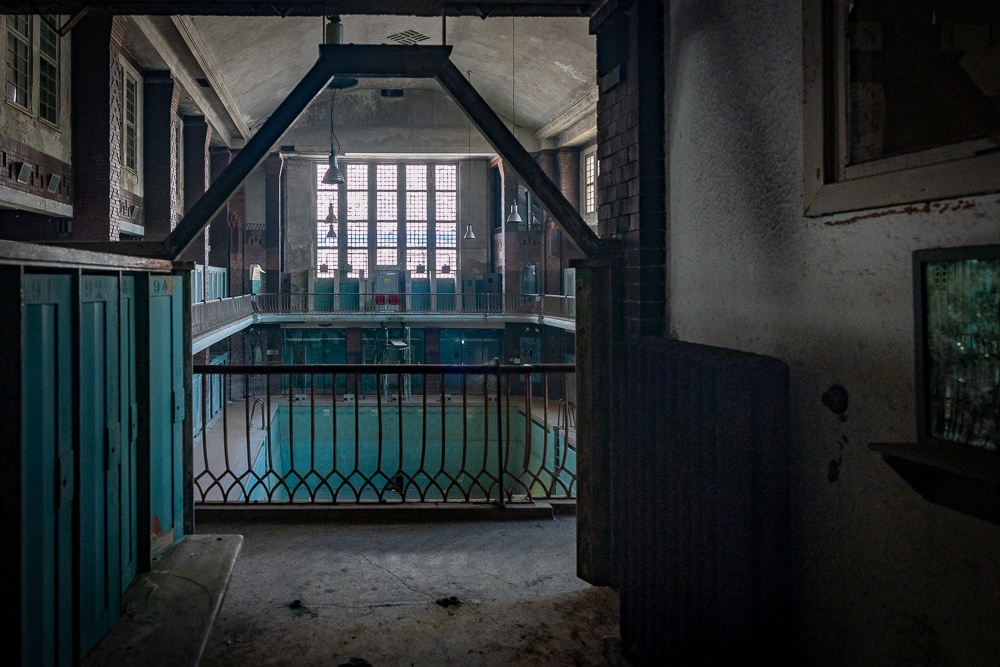
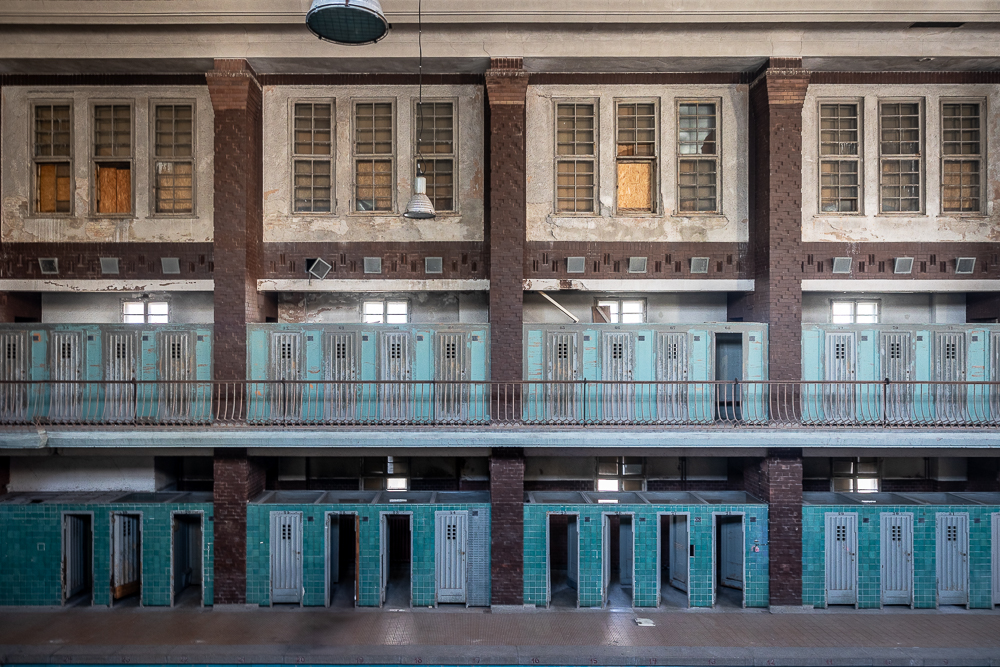
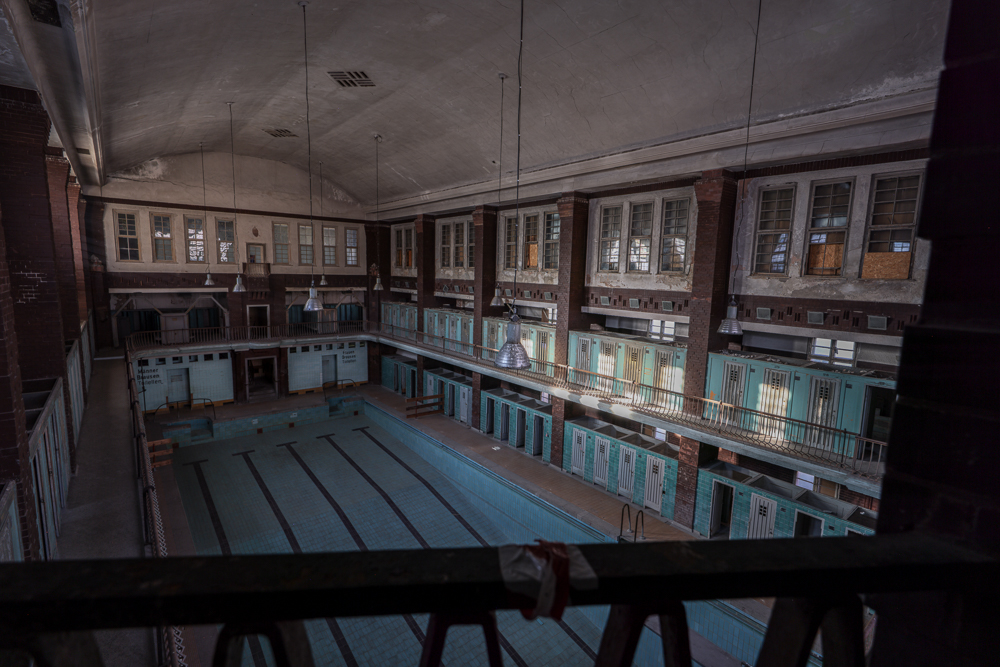
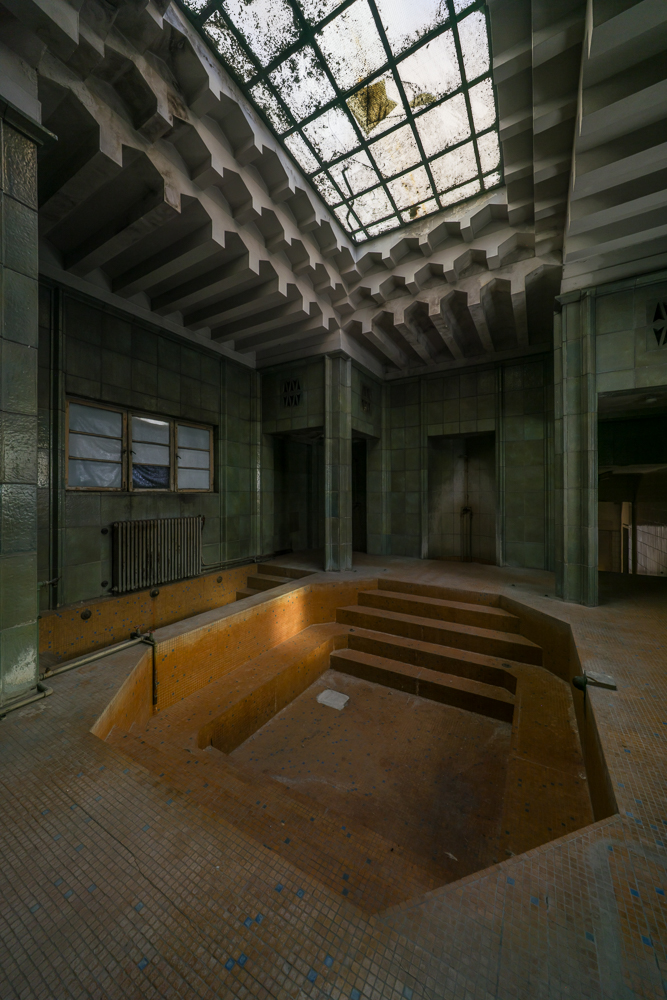
The architecture reflects the functional modernism of the era, with clean lines and extensive use of tile work that was both practical and beautiful. The building contained separate swimming pools—a 25-meter pool for men and a 20-meter pool for women, reflecting the social conventions of the time.
The Bathing Experience
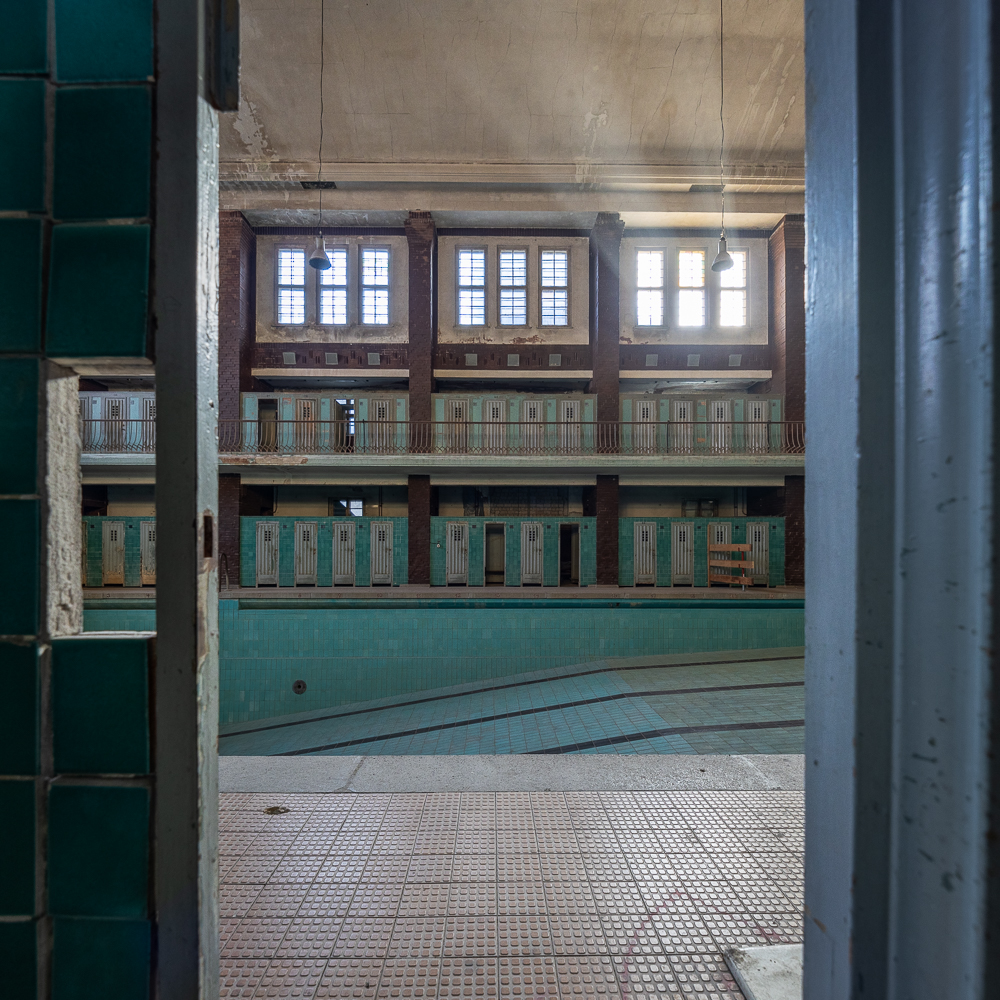
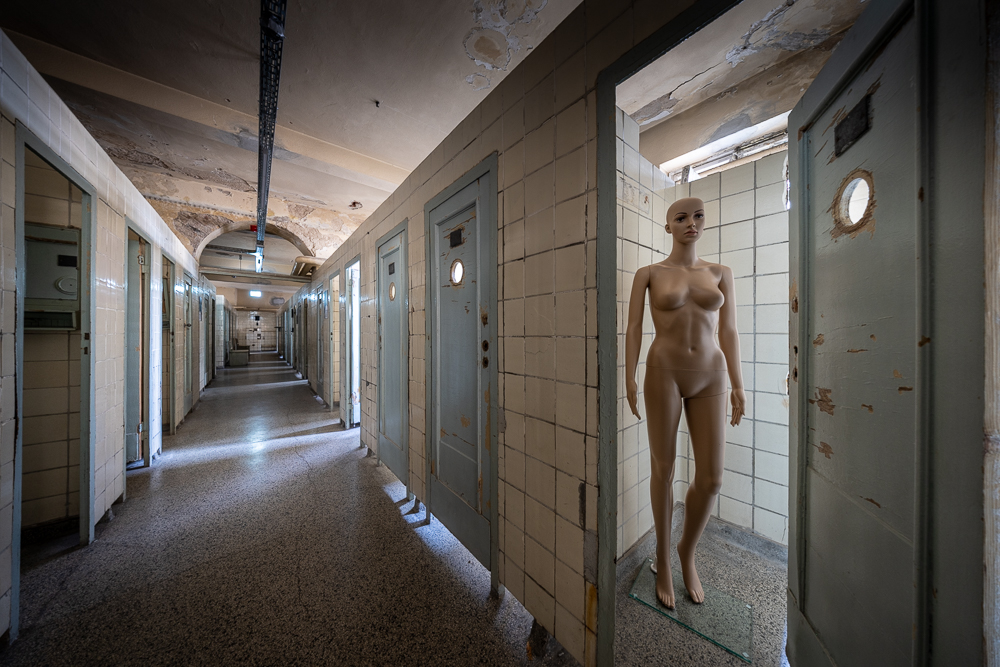
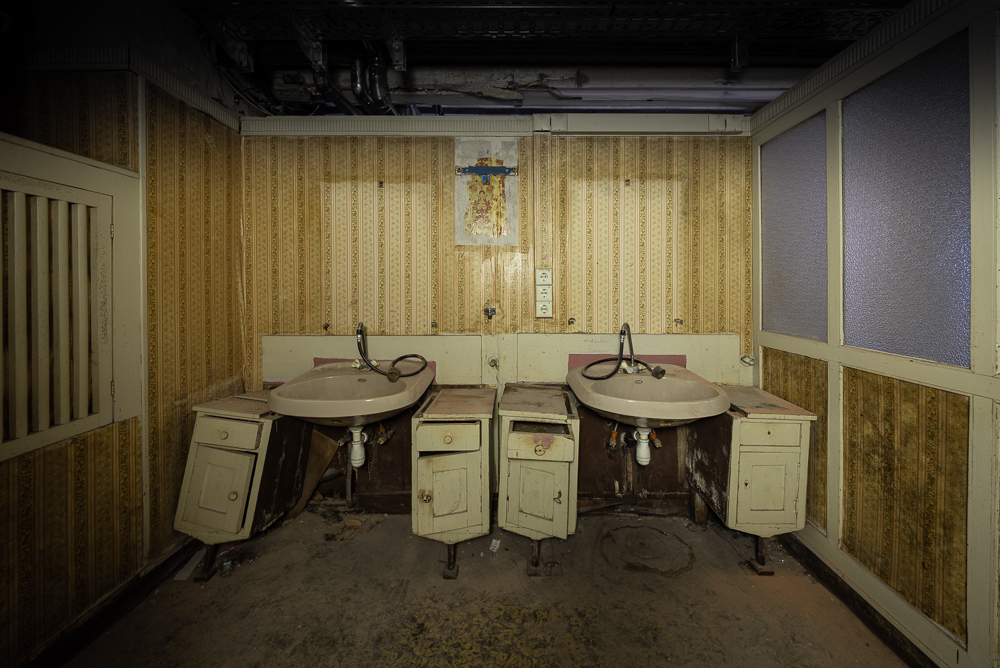
Beyond the swimming pools, Hubertusbad offered a complete range of bathing services. Sixty-eight individual changing cabins lined the upper floors, each equipped with its own enamel bathtub—a luxury for residents of tenement buildings without private bathrooms. The Russian-Roman bath section provided sauna, steam rooms, and cold plunge pools, continuing centuries-old traditions of therapeutic bathing.
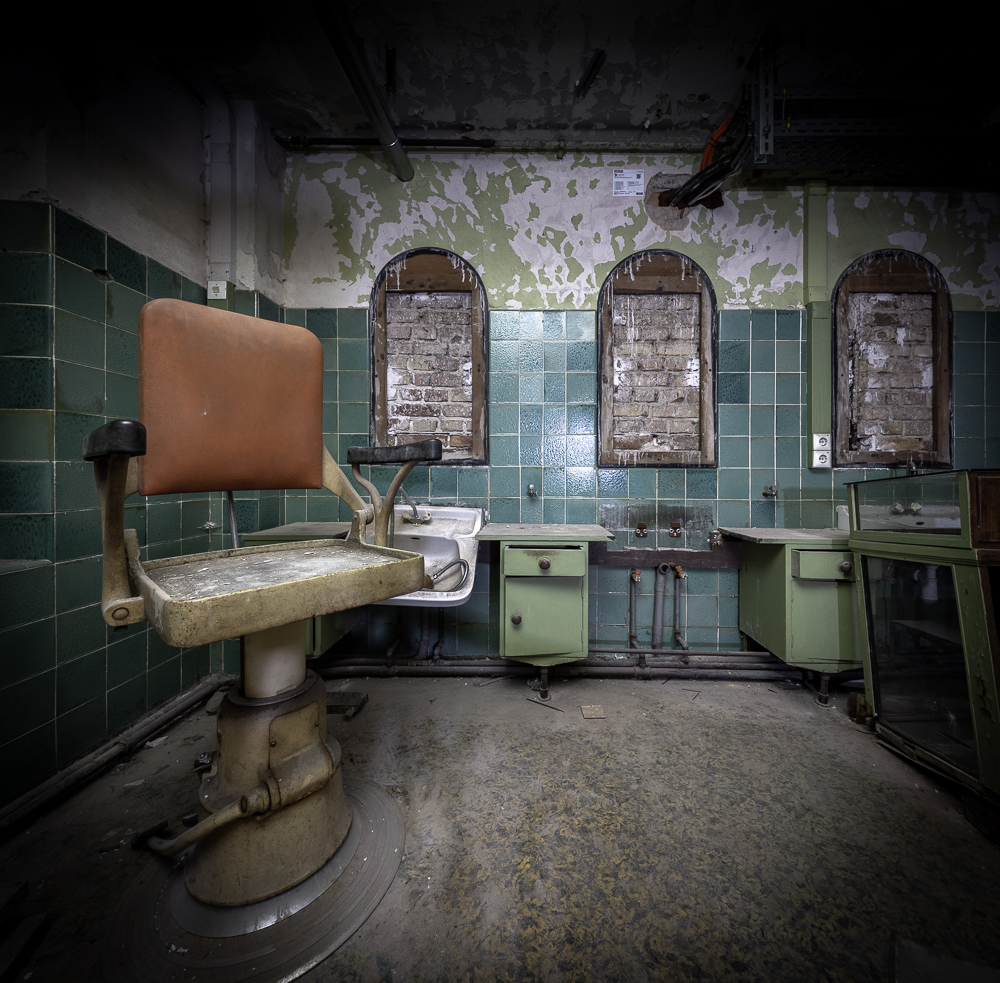
Underground machinery rooms housed the complex systems required to heat water, maintain temperatures, and filter the pools. These technical spaces reveal the engineering sophistication behind what appeared to visitors as a seamless bathing experience.
Frozen in Time
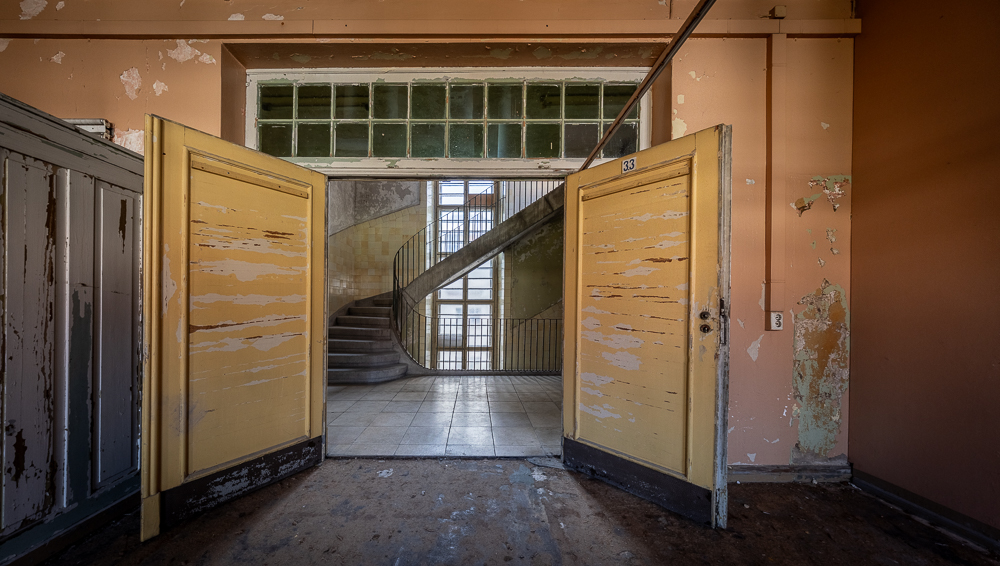
When Hubertusbad closed in 1991, requiring extensive repairs that never materialized, it became an unintentional time capsule. The original tiles, fixtures, and architectural details remain largely intact, offering a rare glimpse into pre-war public bathing culture.
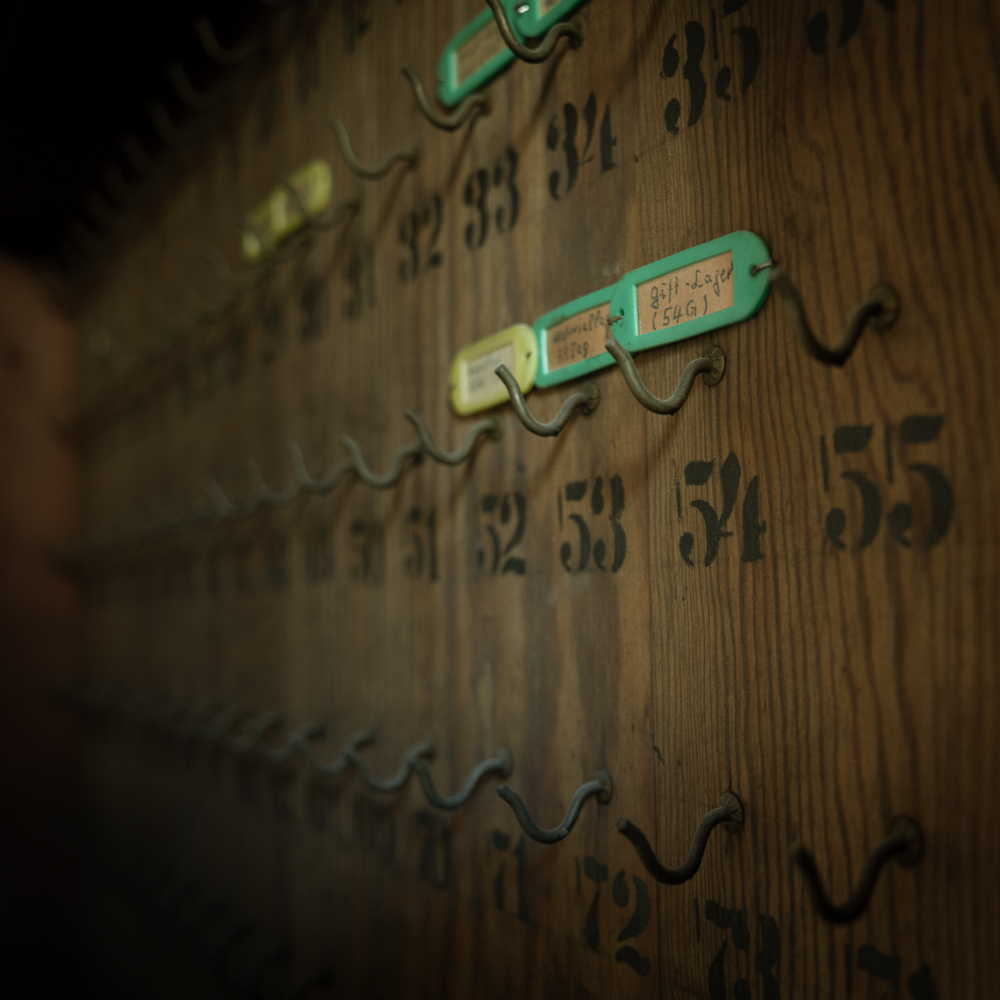
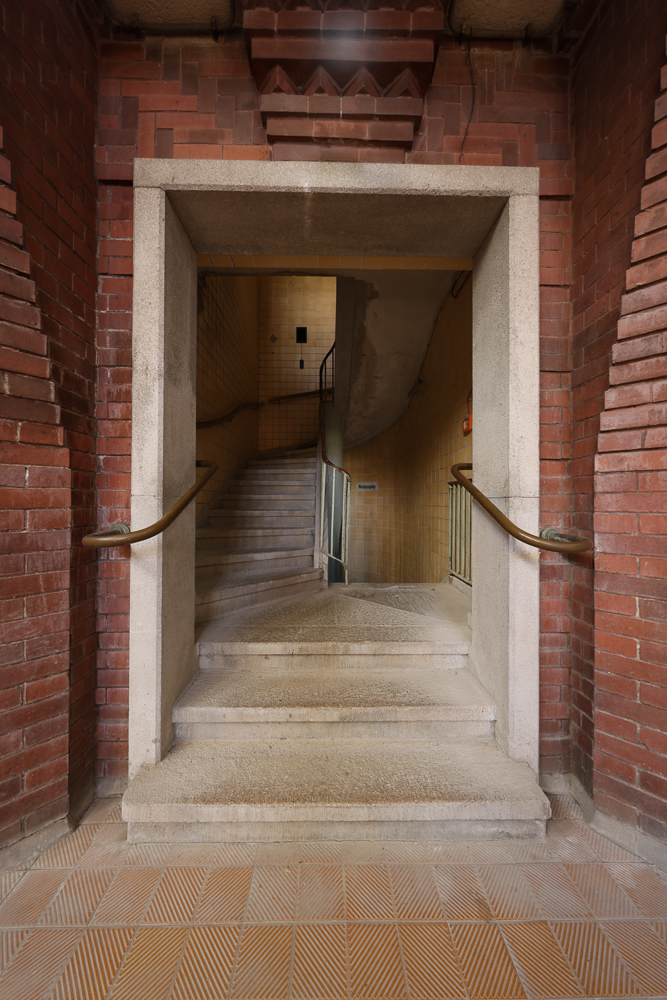
Walking through the empty pools and silent changing rooms today, you can almost hear the echoes of splashing water and conversation that once filled these spaces. The Art Deco details—geometric tiles, period signage, and carefully crafted metalwork—speak to an era when even utilitarian public buildings were designed with aesthetic consideration.
Preservation and Future
These photographs, captured in October 2024, document the bathhouse in its current state of suspended animation. While the building awaits decisions about its future, there’s hope that any redevelopment will preserve the remarkable original features that make Hubertusbad such a significant piece of Berlin’s architectural and social history.
The question remains whether this monument to public health will be restored to serve the community once again, or if these images will become an archival record of a lost era of civic architecture and social bathing culture.