Heilstätte Grabowsee
A tuberculosis sanatorium in the pine forest north of Berlin, founded in 1896, used as a Soviet military hospital until 1991, and now slowly crumbling among the trees.
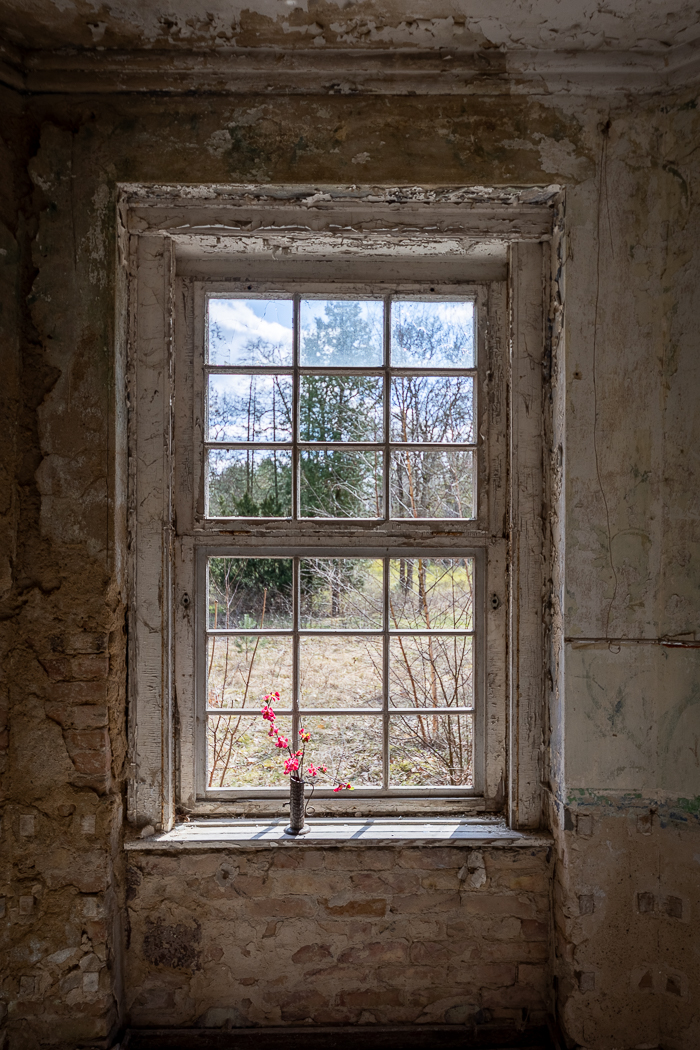
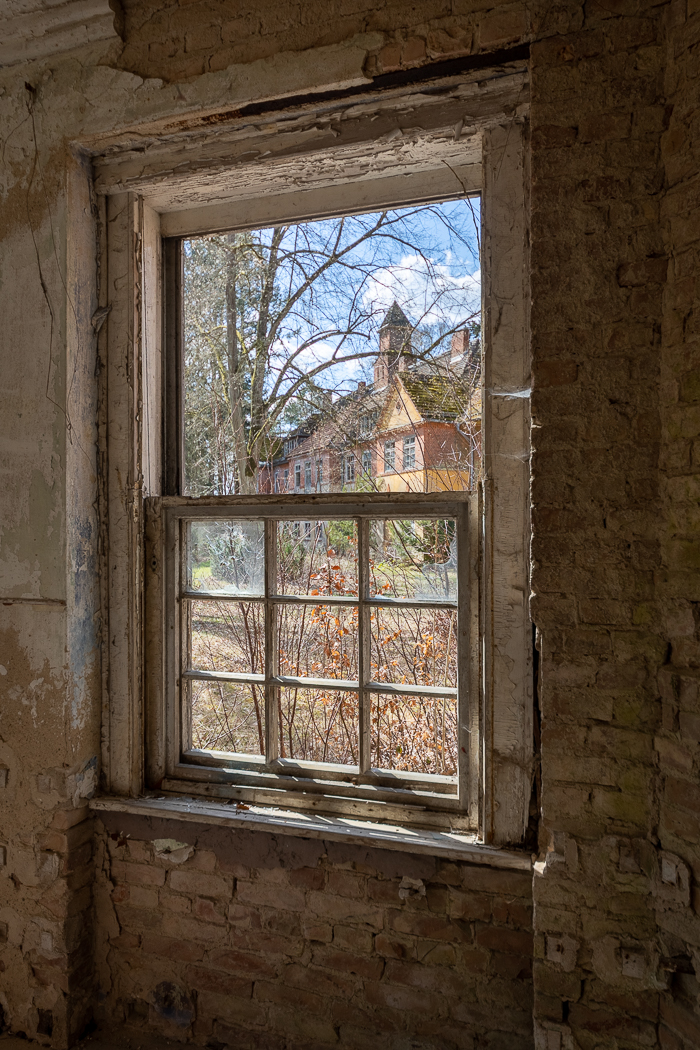
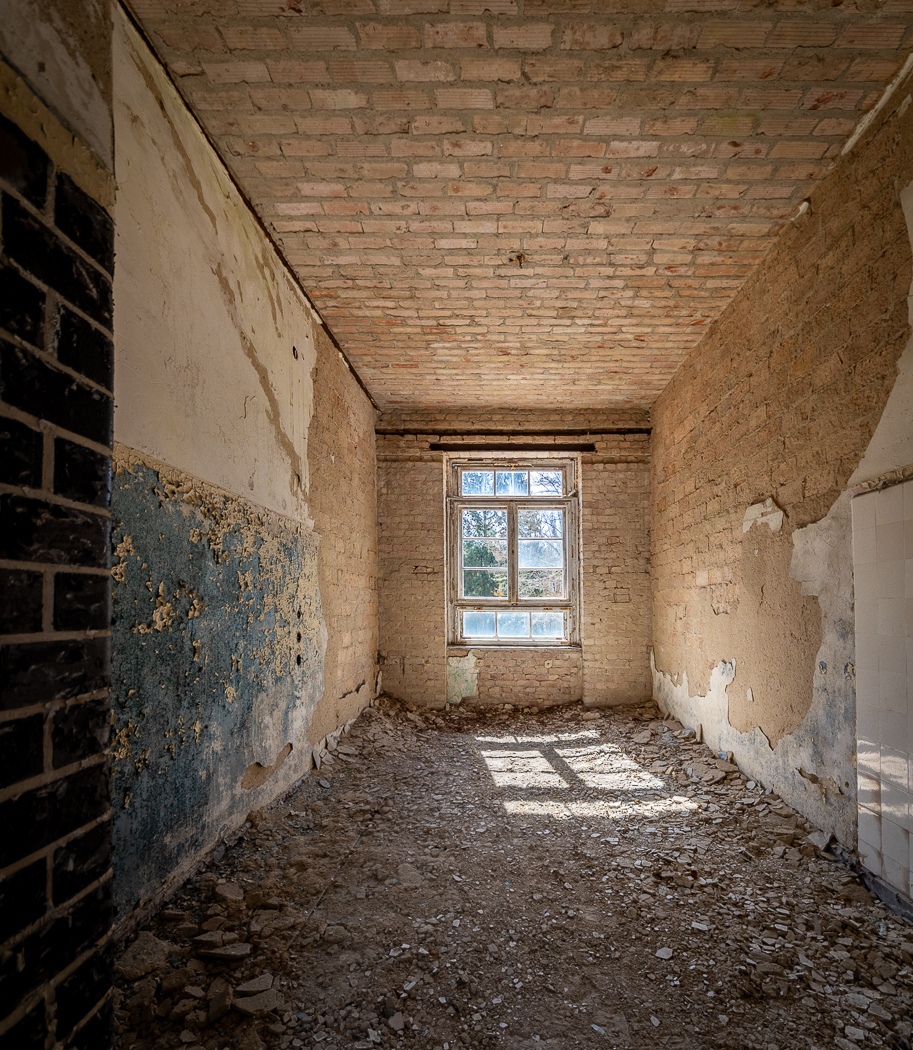
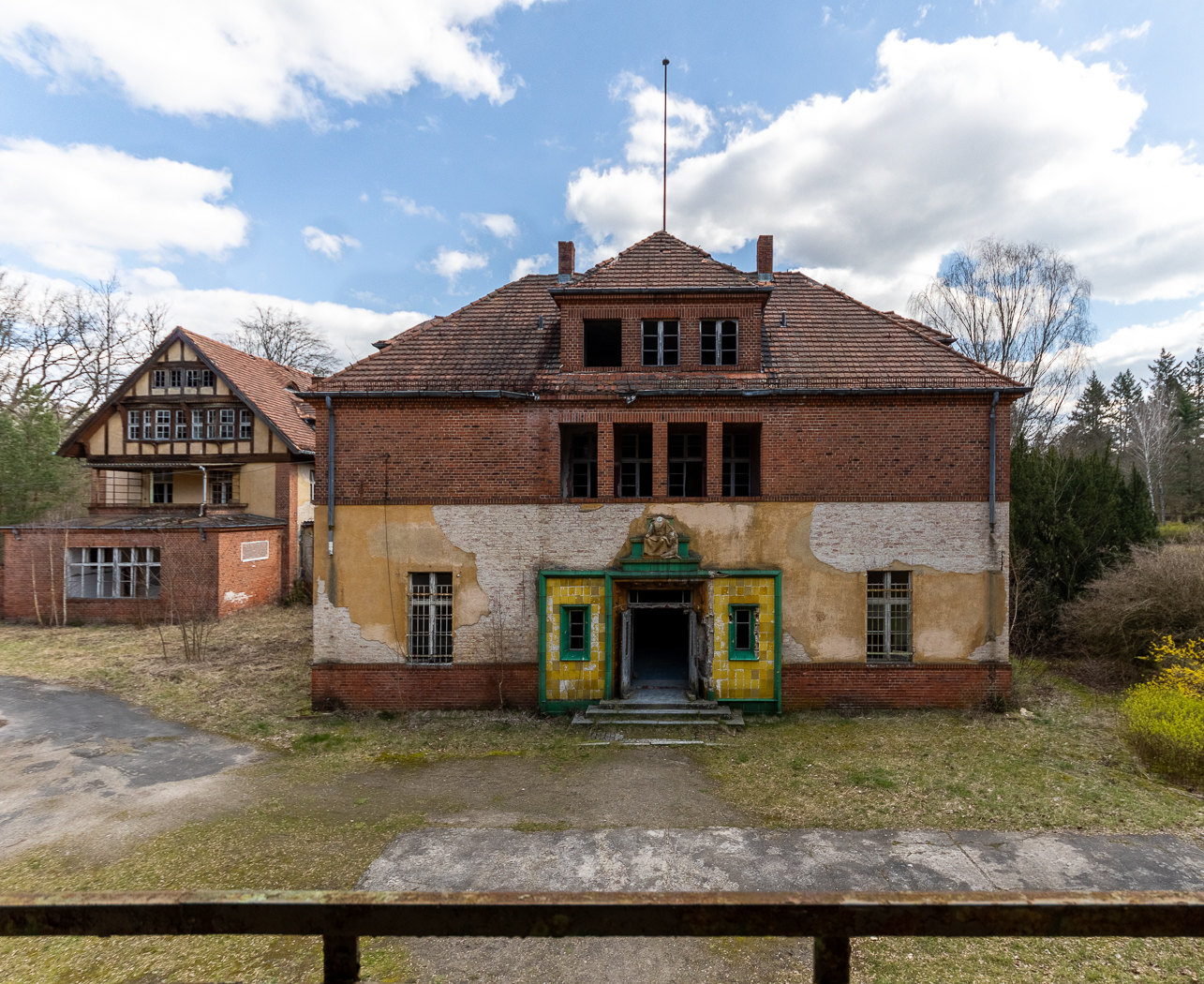
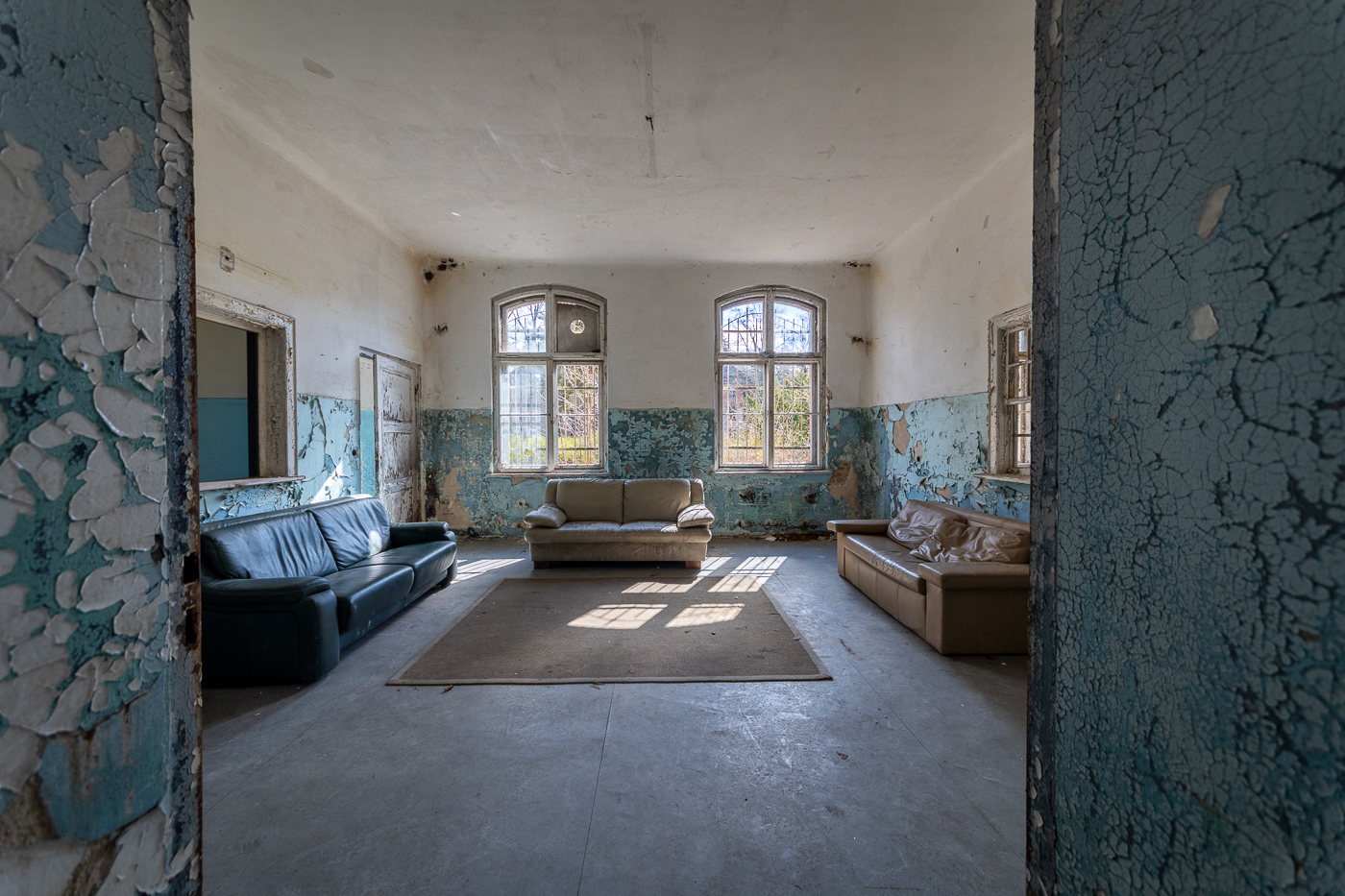
The Heilstätte Grabowsee lies in the pine forest beside the Grabowsee lake, just east of Oranienburg and north of Berlin. It was one of the first tuberculosis sanatoriums in the Berlin area. Today its villas, wards and halls stand empty and are slowly giving way to the forest. These photos are from a visit in April 2023, with a few from a return trip in October 2024.
A cure in the forest
At the end of the 19th century tuberculosis was a disease of the crowded tenements of Berlin’s working-class districts. The standard treatment was rest, good food and fresh air, and the pine forests of Brandenburg had plenty of fresh air. In 1895 the doctor Gotthold Pannwitz, working at the Imperial Health Office, began campaigning for a sanatorium for the city’s working people. His idea quickly found backers.
Grabowsee opened as a trial in March 1896. Barracks for lung patients went up among the trees, and about a month later the first 30 patients moved in. The experiment worked, and similar sanatoriums followed around Berlin, including Beelitz, Buch and Lychen.
The Red Cross years
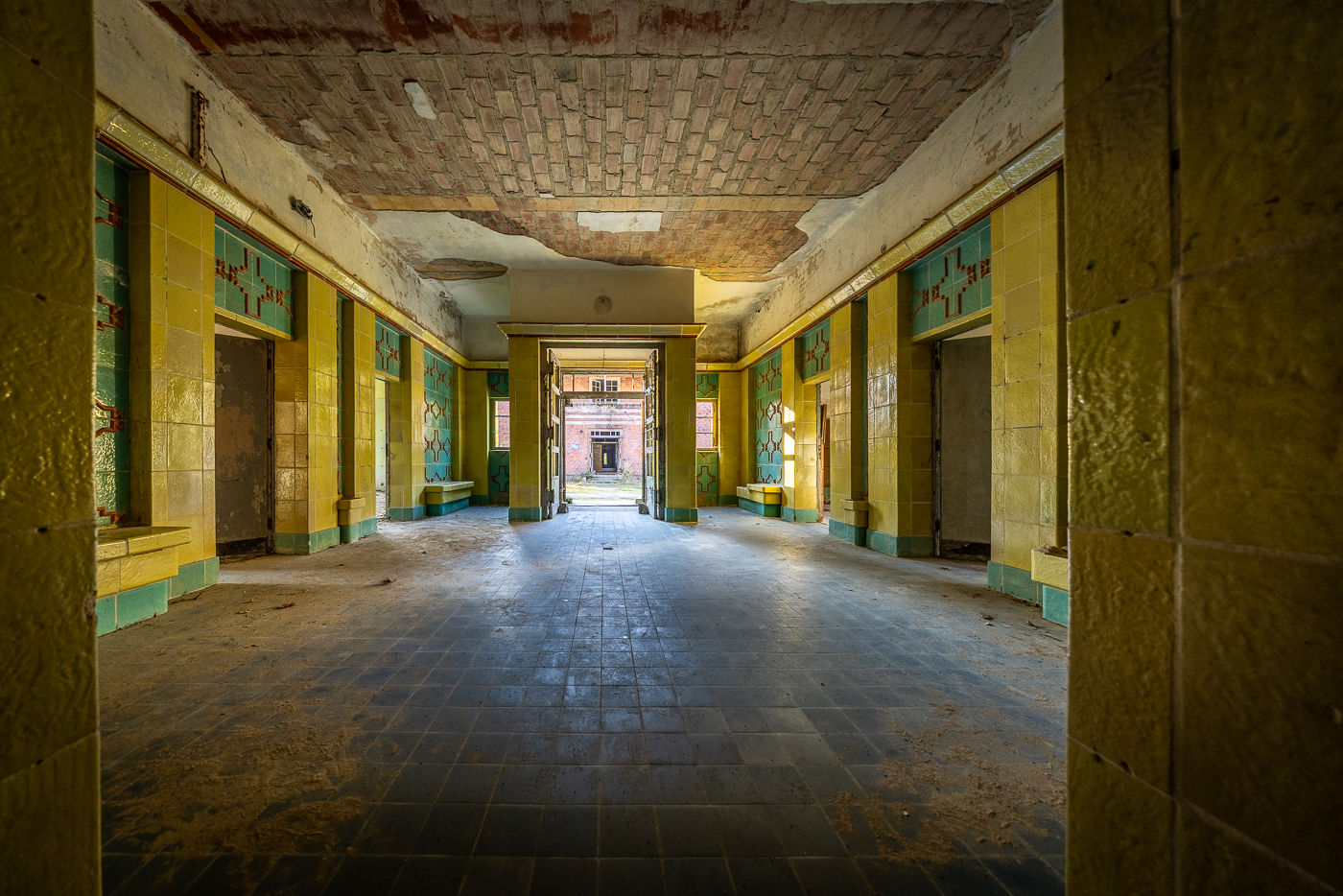
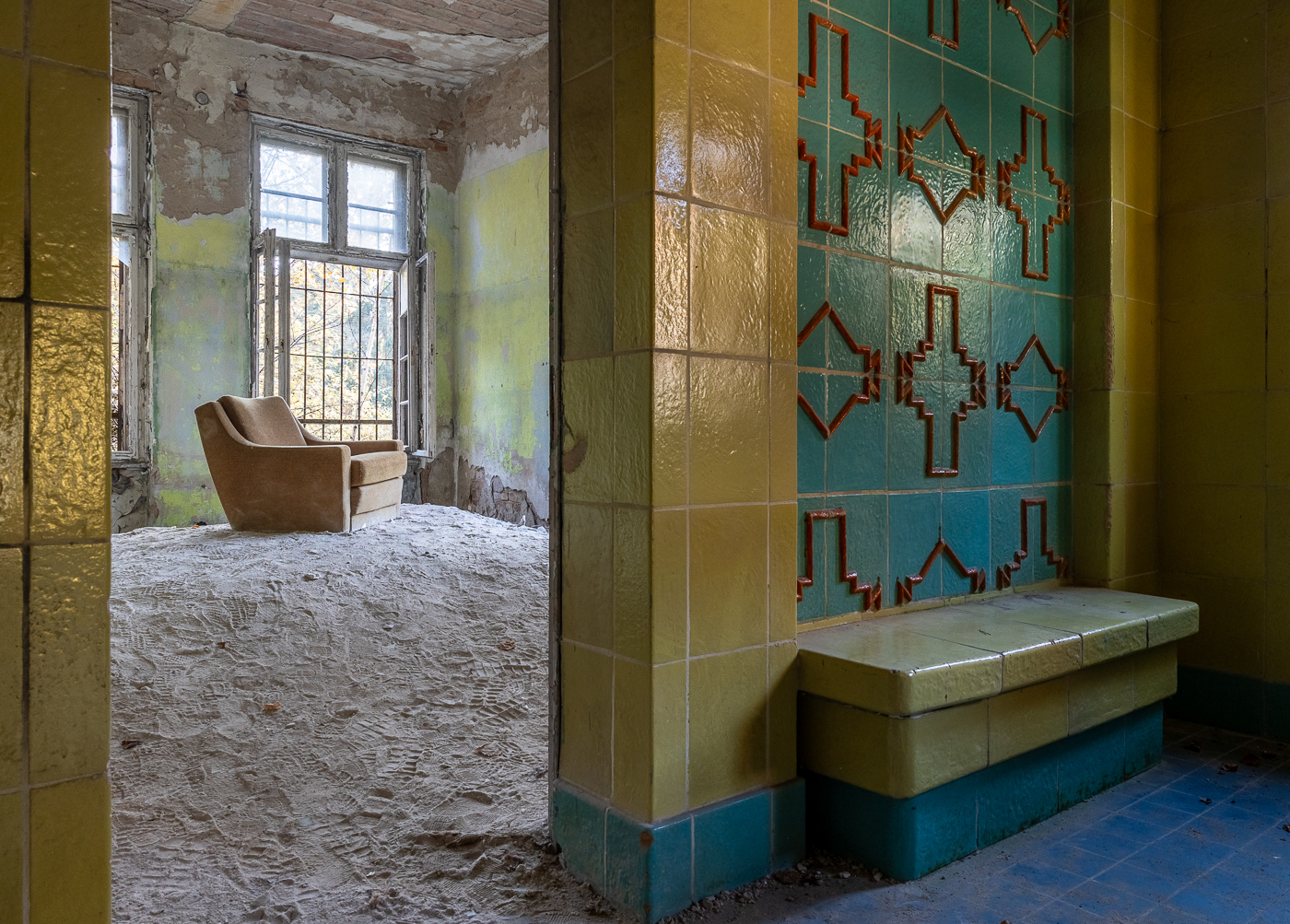
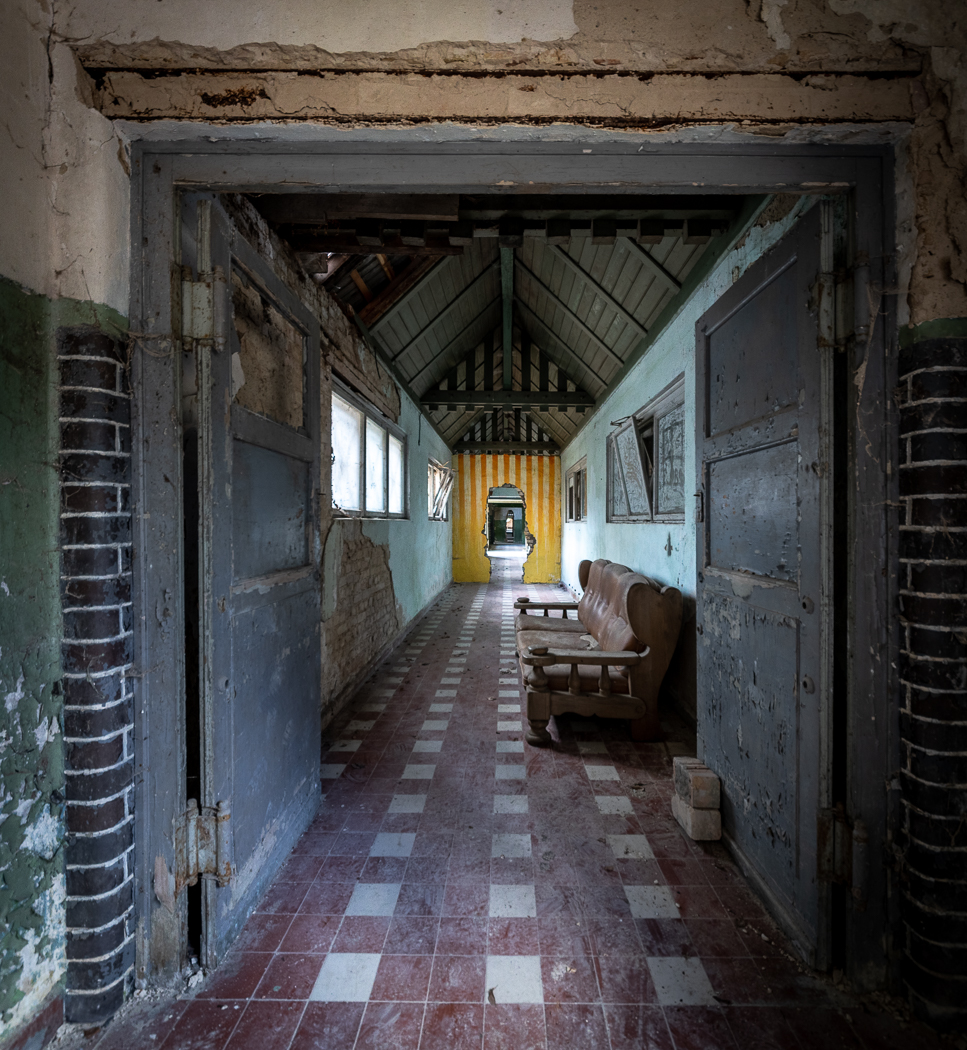
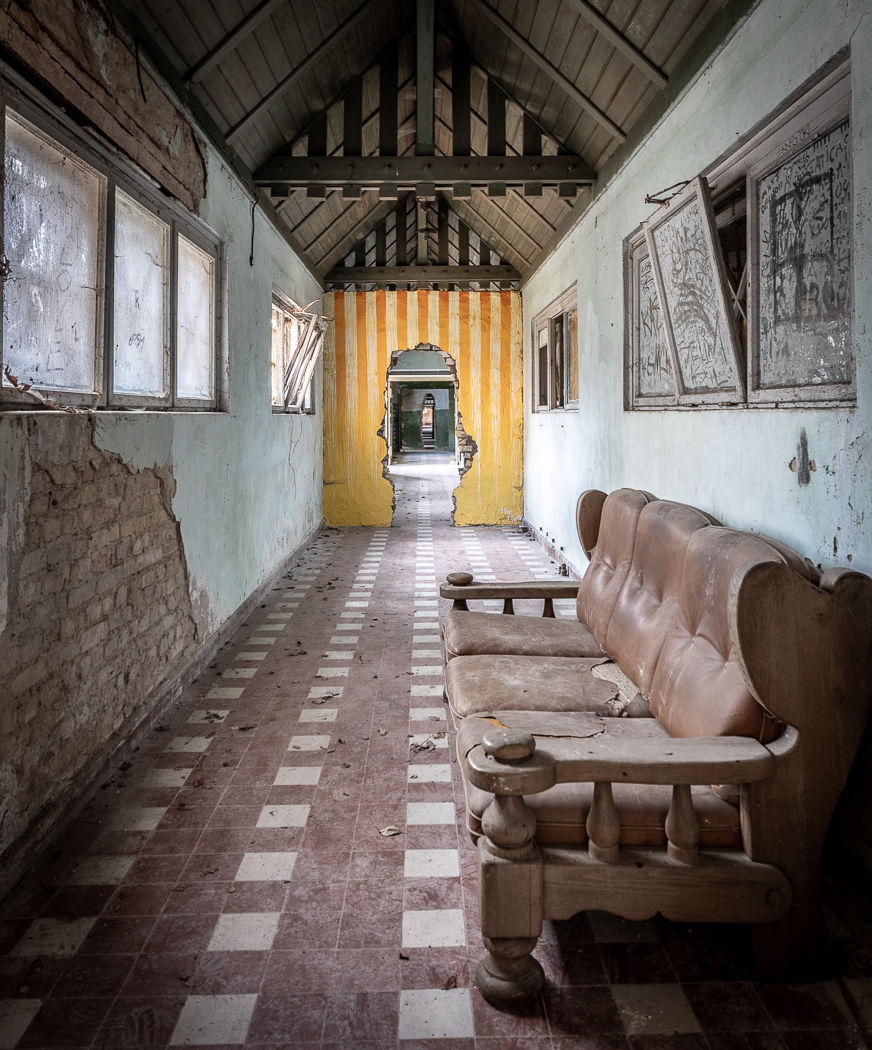
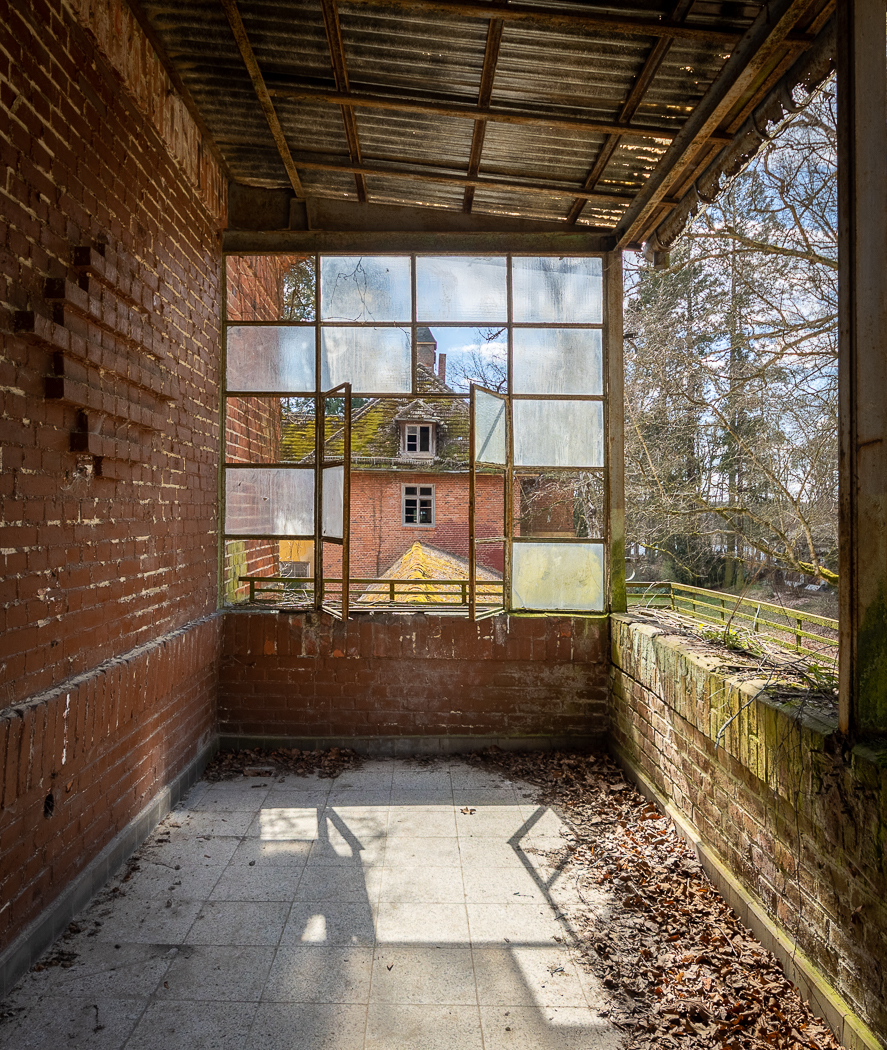
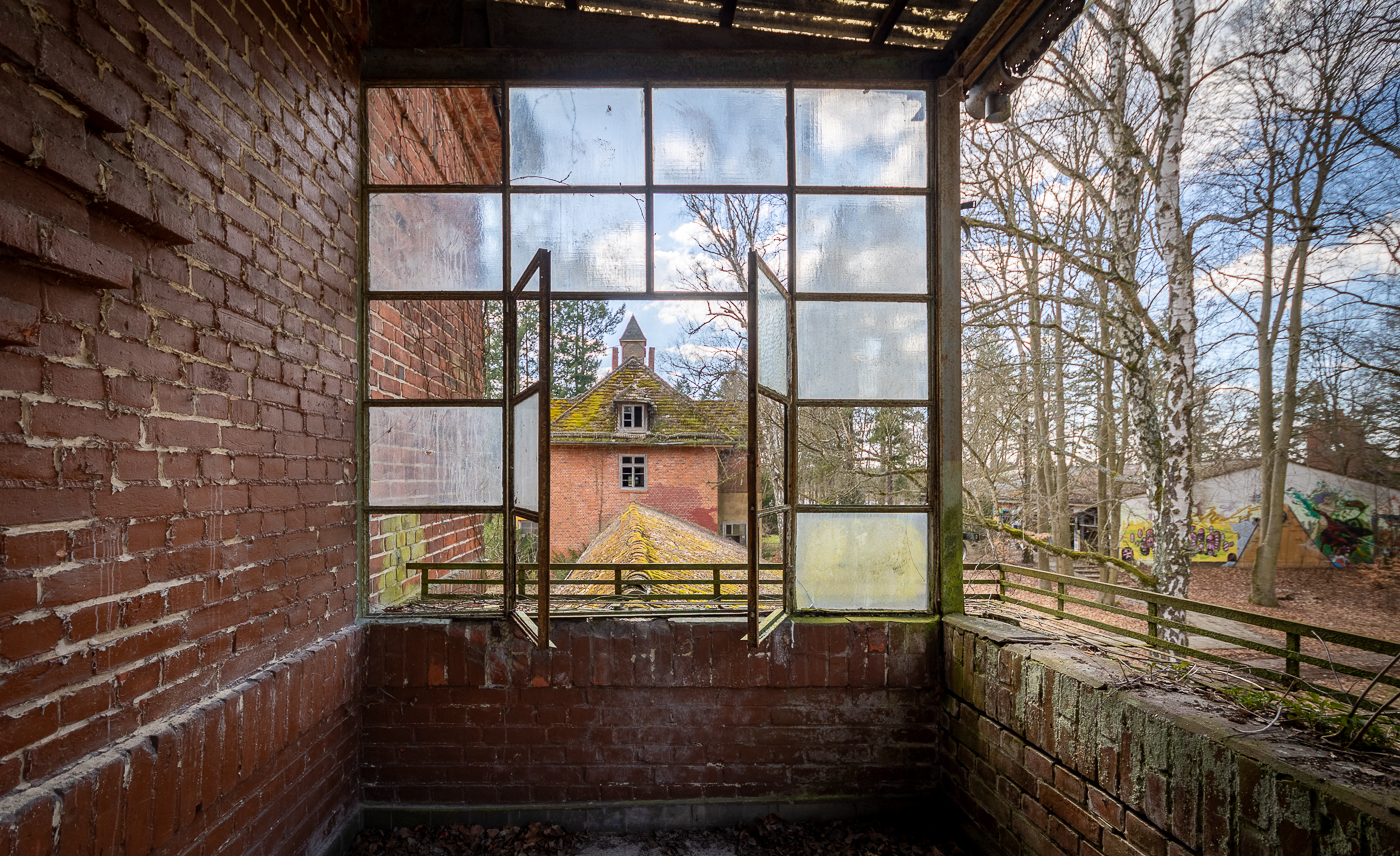
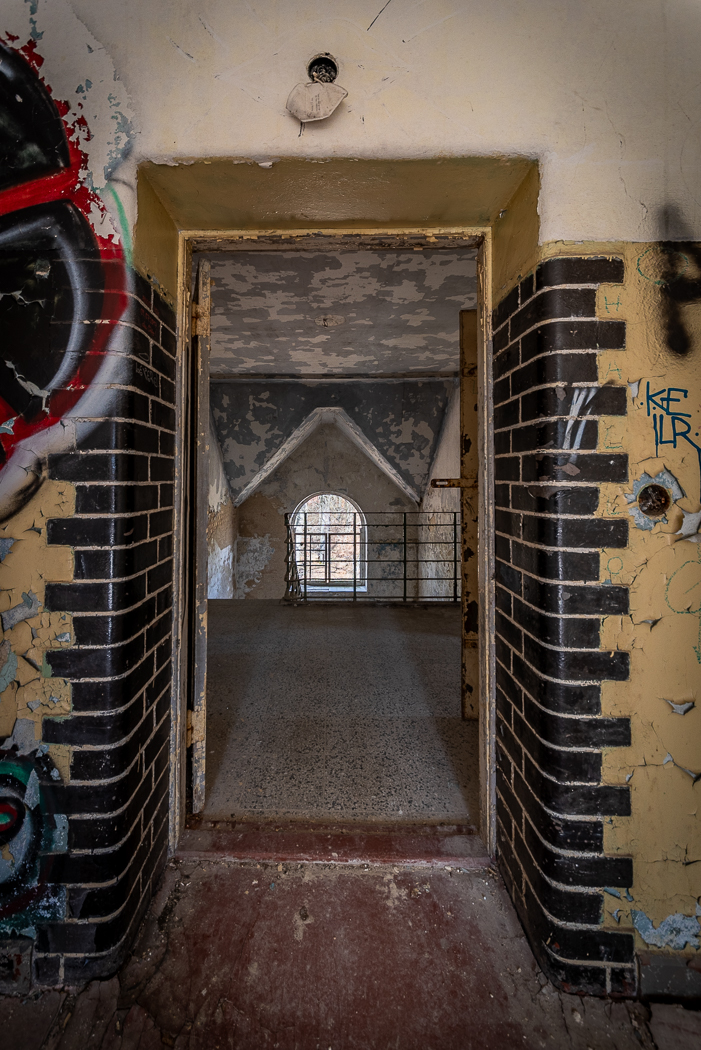
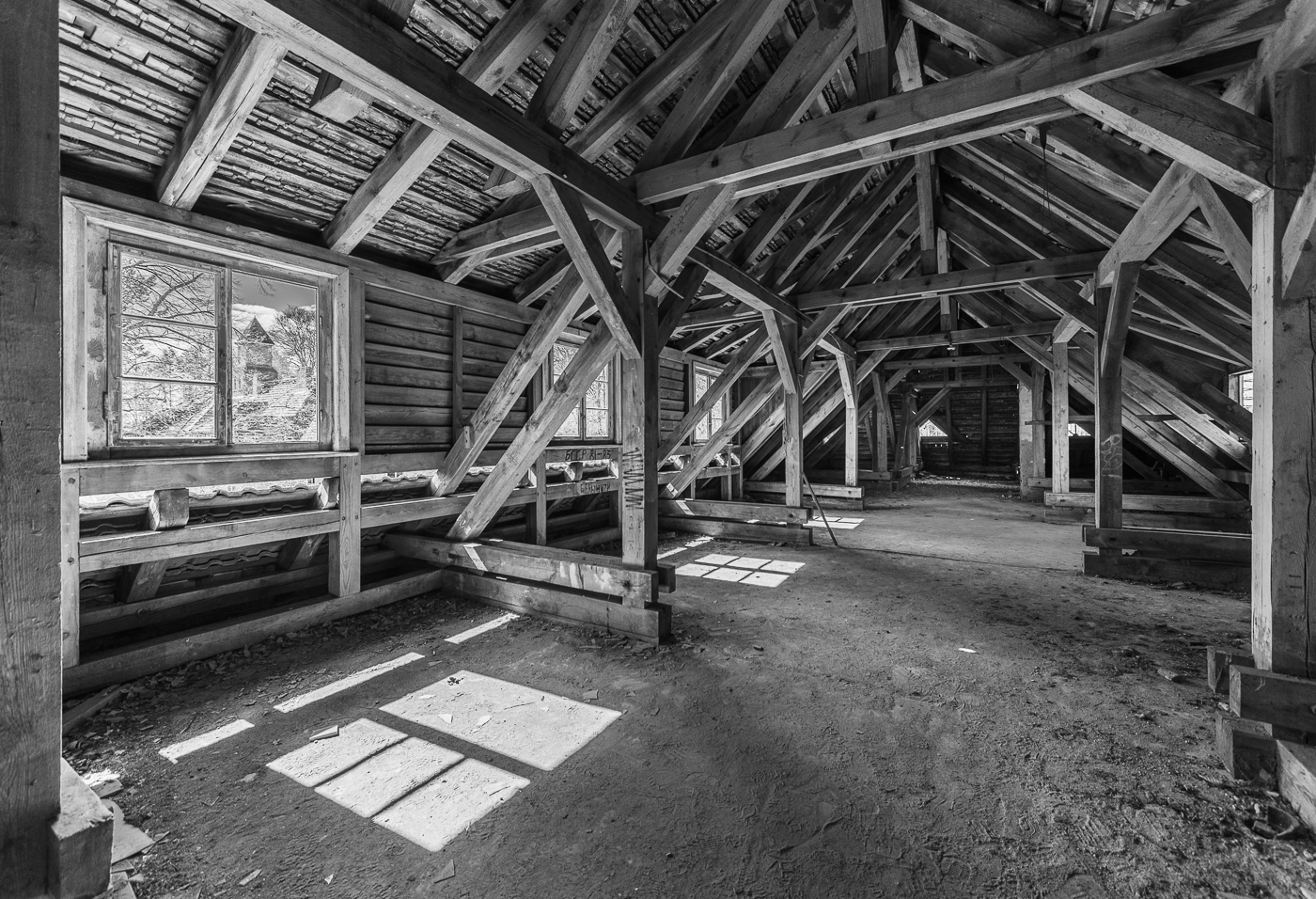
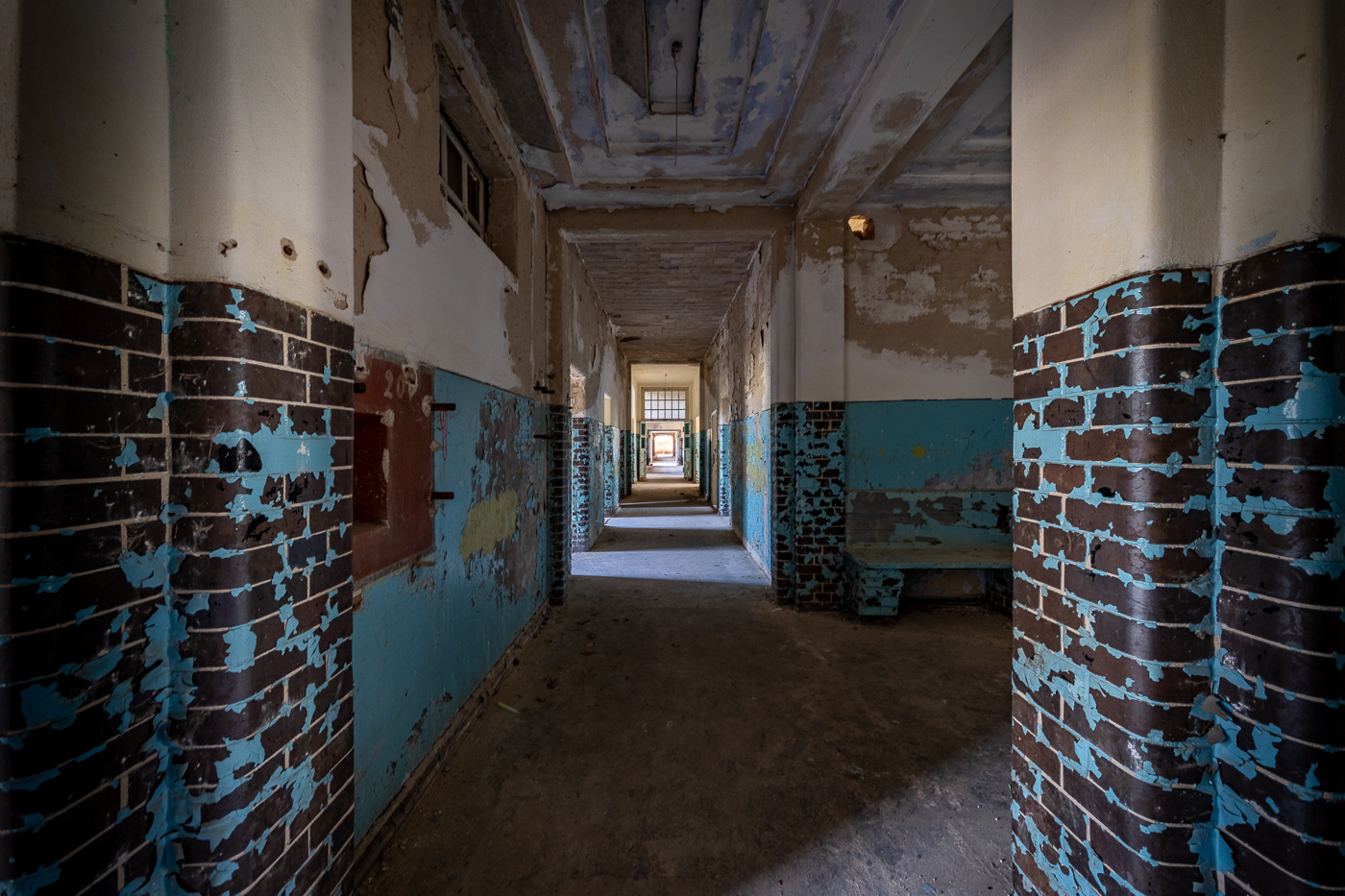
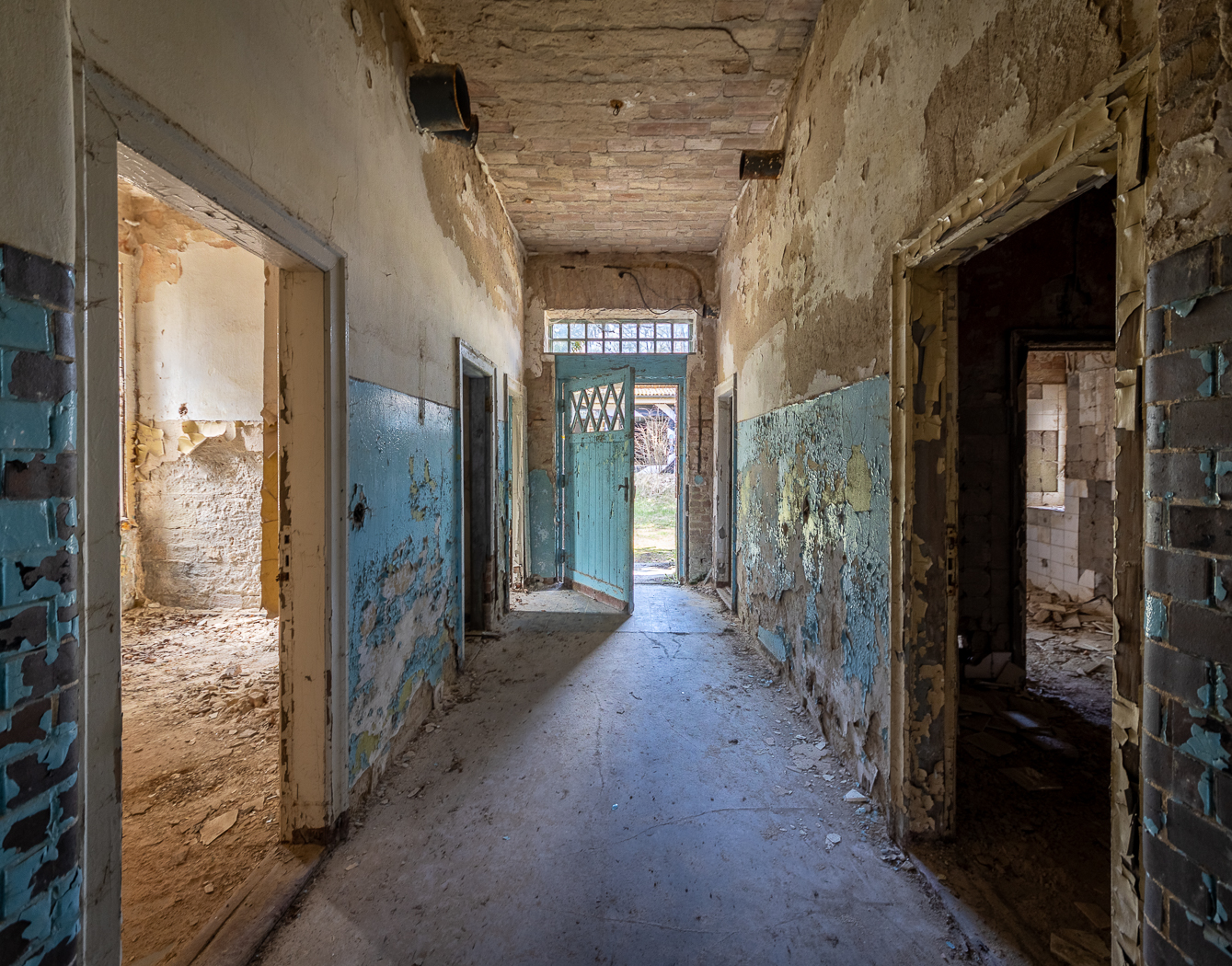
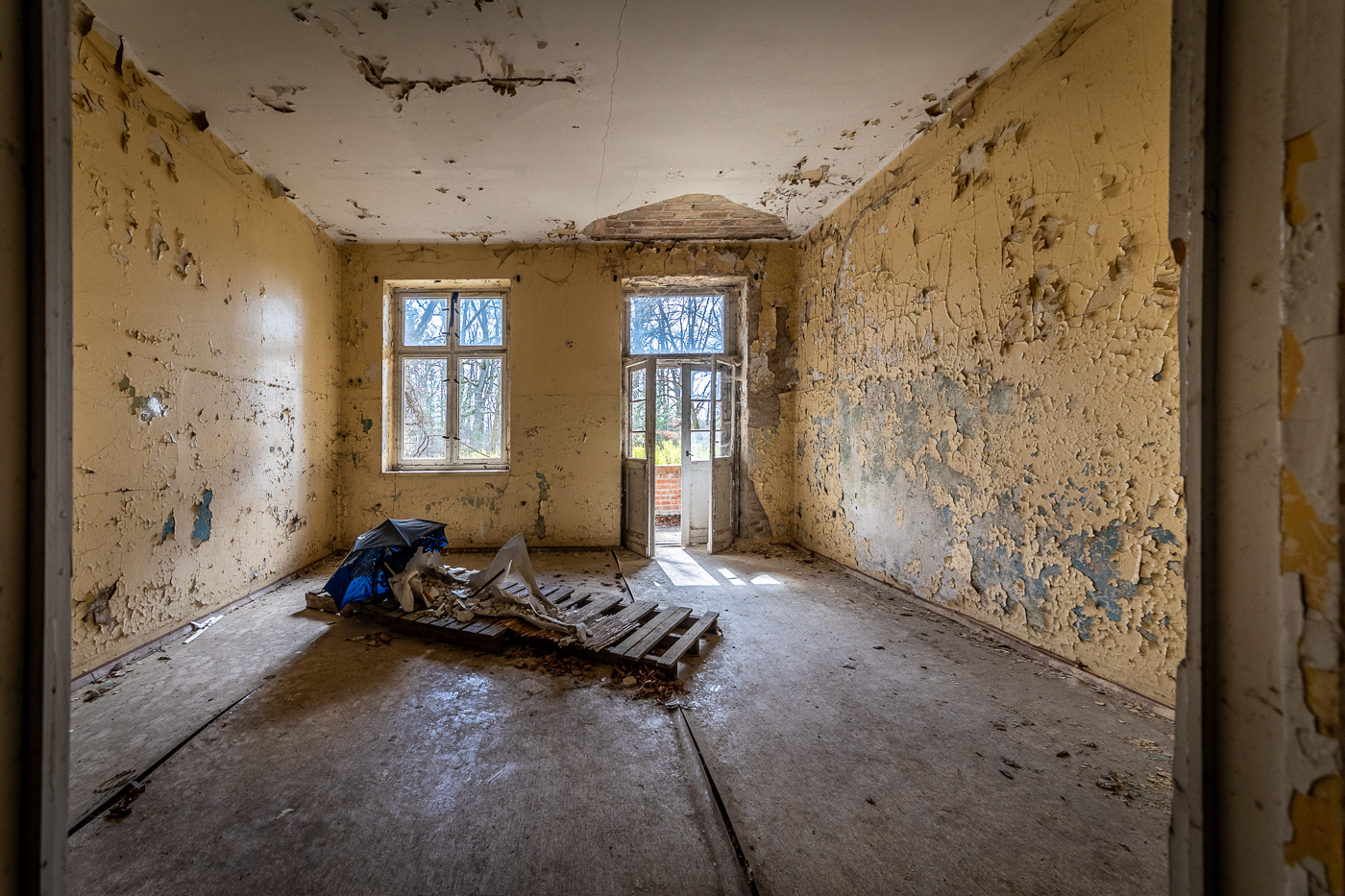
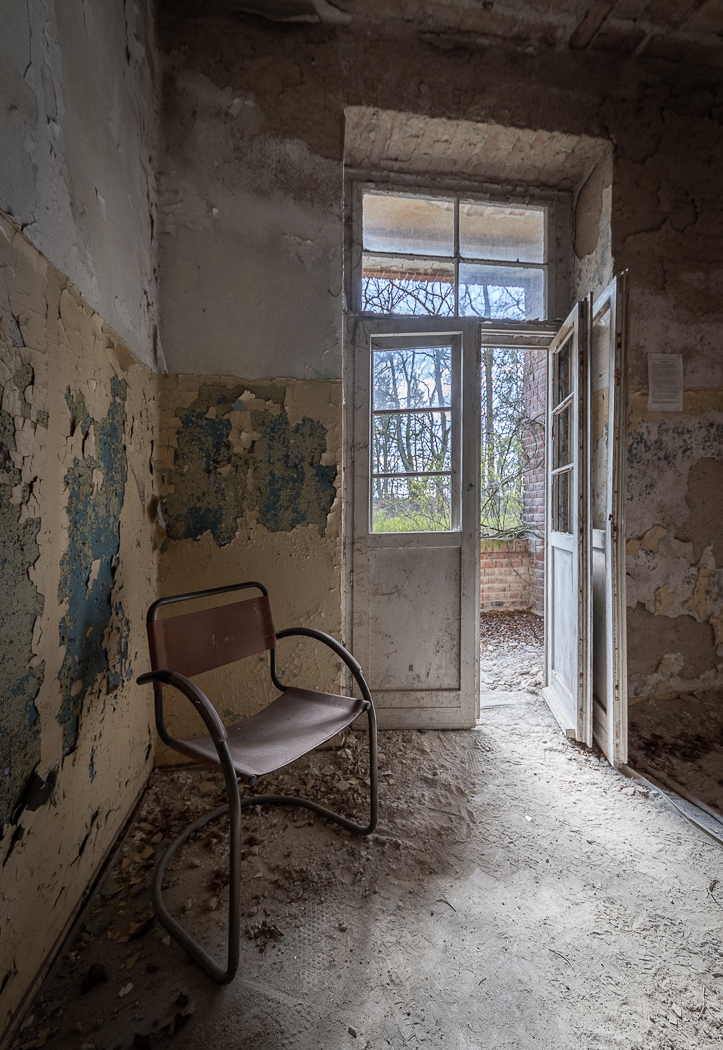
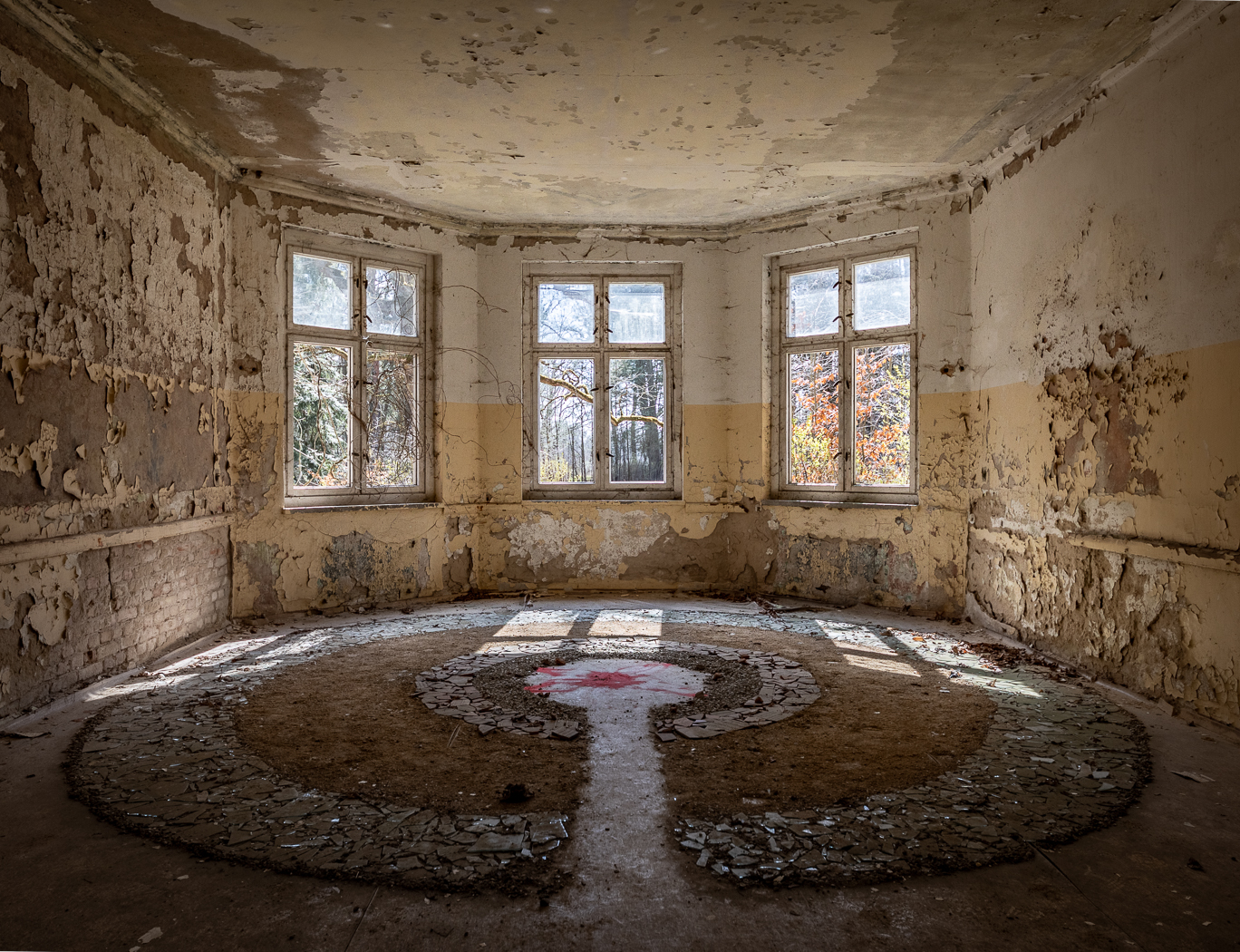
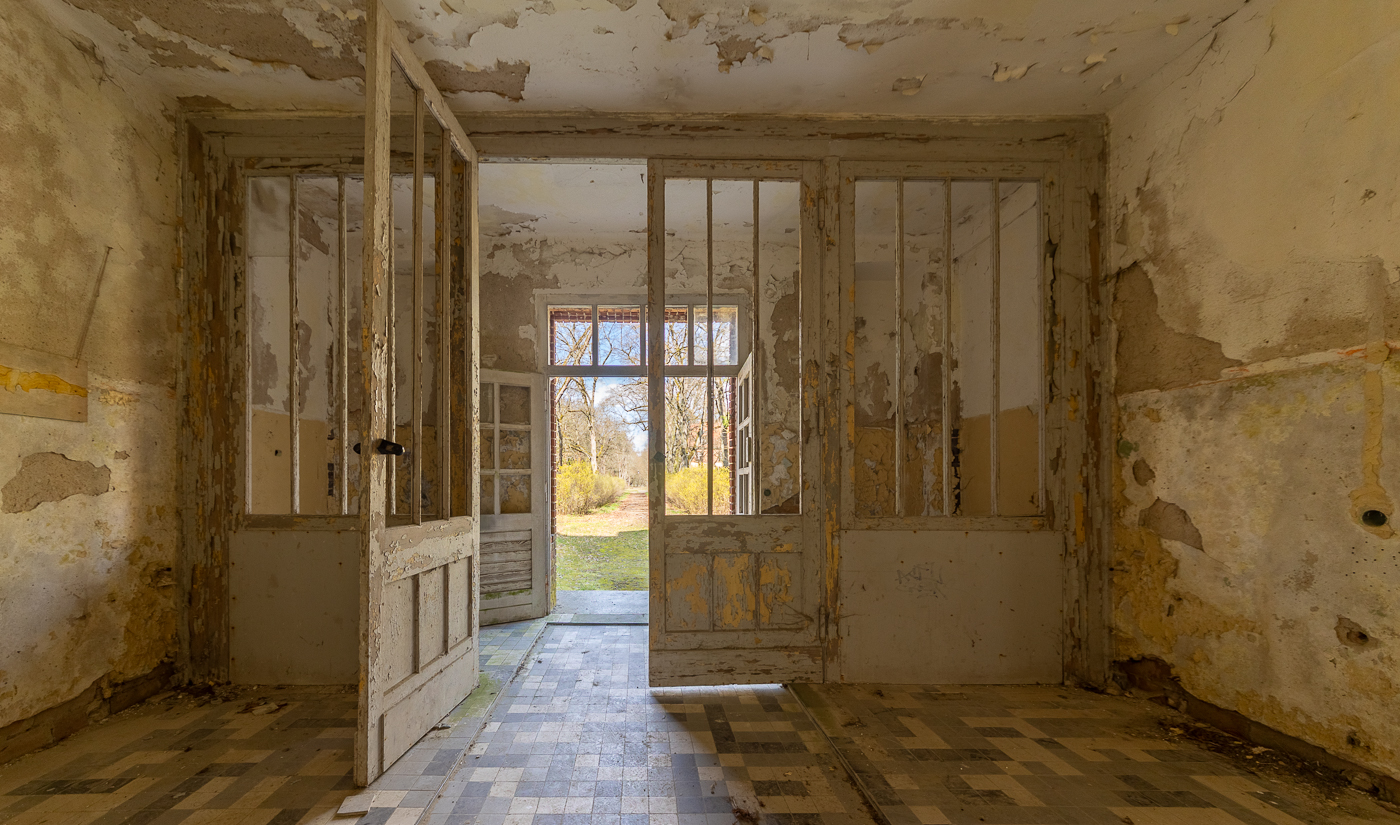
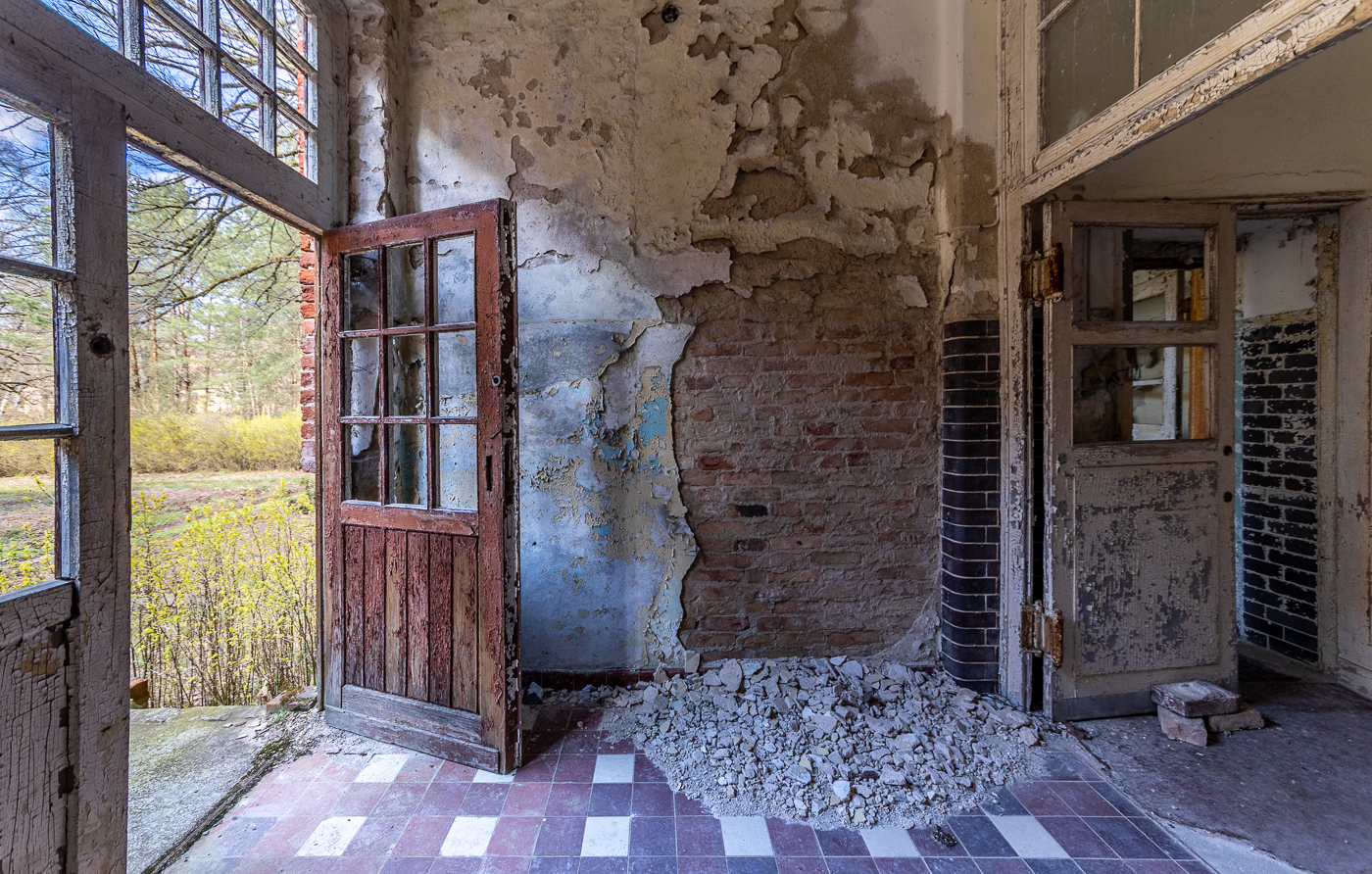
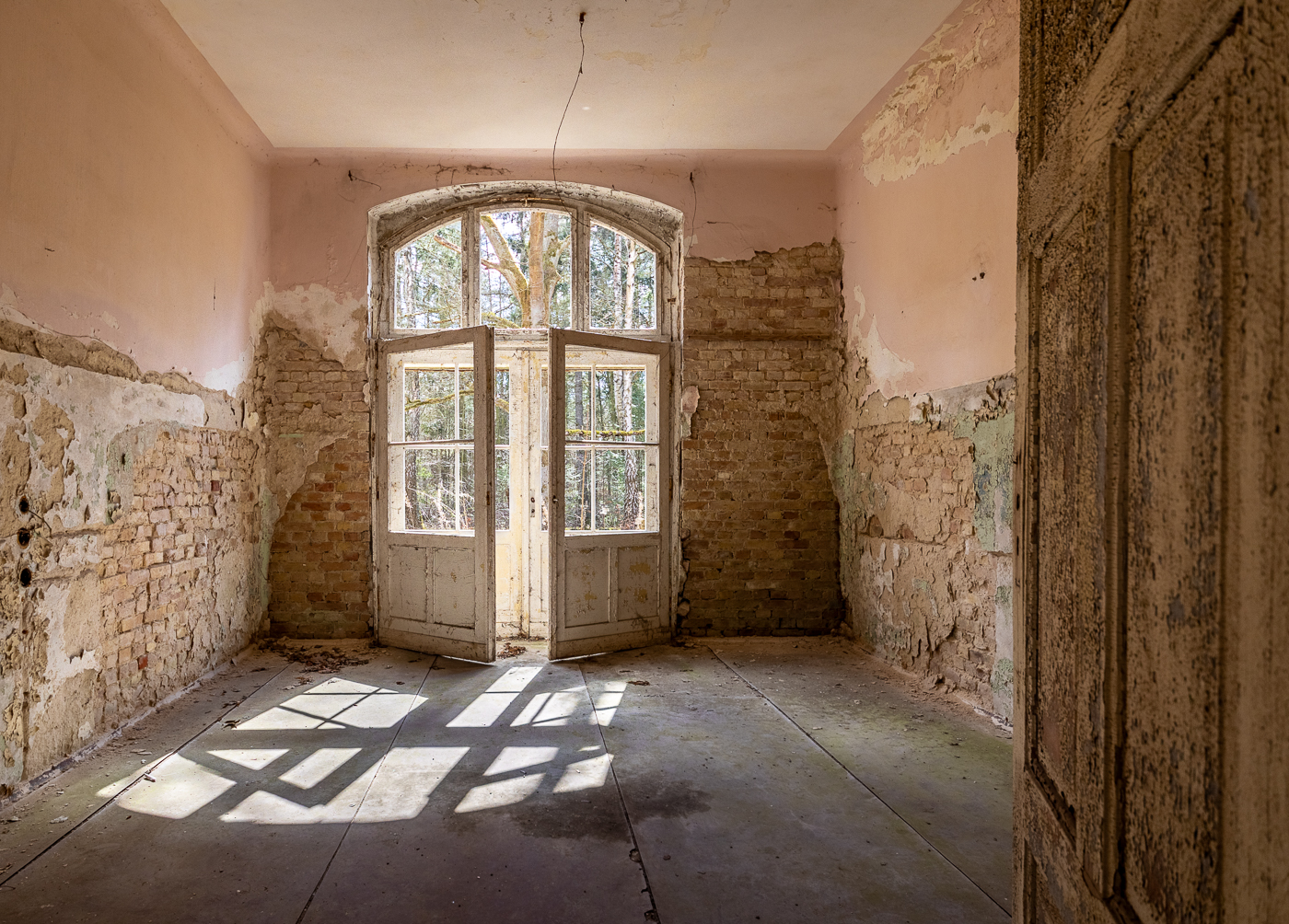
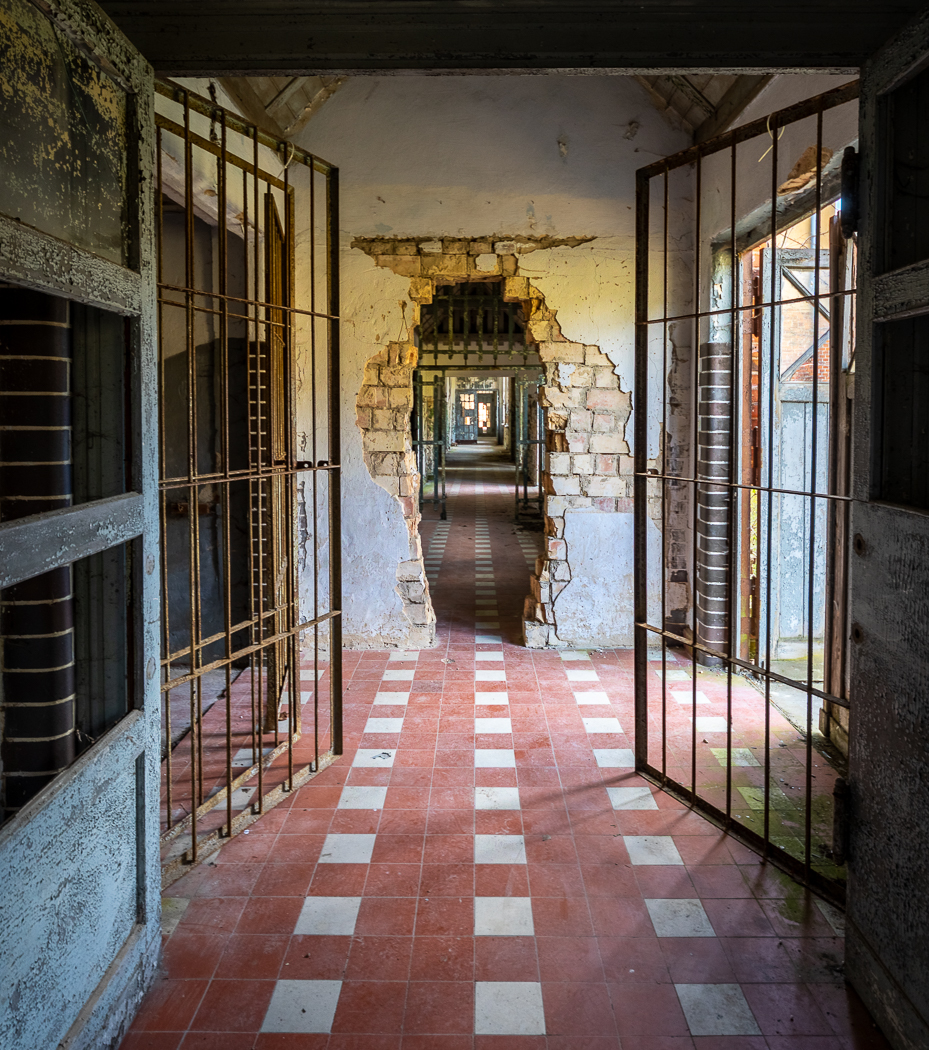
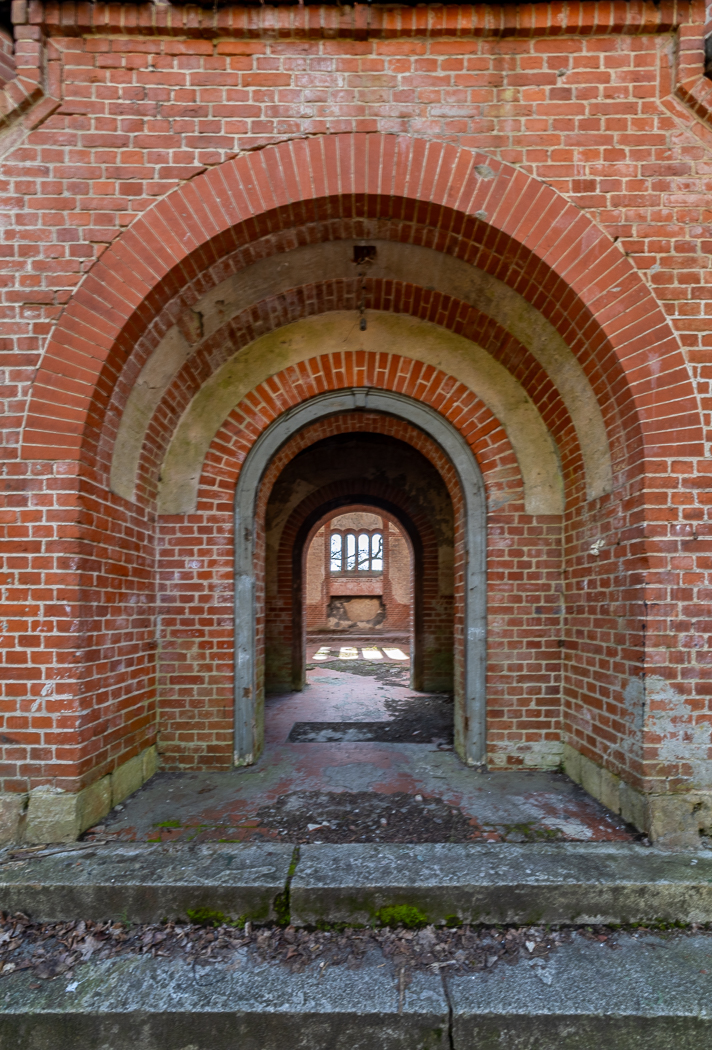
After the First World War the sanatorium was run by the Red Cross as a sanatorium for the working class. In 1920 the Brandenburg state insurance agency took it over, and the architect Arnold Beschoren expanded and rebuilt it. Most of what stands today dates from his work: brick villas with deep verandas and glazed sun terraces, tiled corridors and bright rooms facing the forest.
A Soviet military hospital
In 1945 the Red Army took over the site and turned it into a military hospital. The Soviets stayed for almost 50 years, all through the GDR era, and left only in 1991 after German reunification. Little is known about what went on here in that time.
After the Soviets
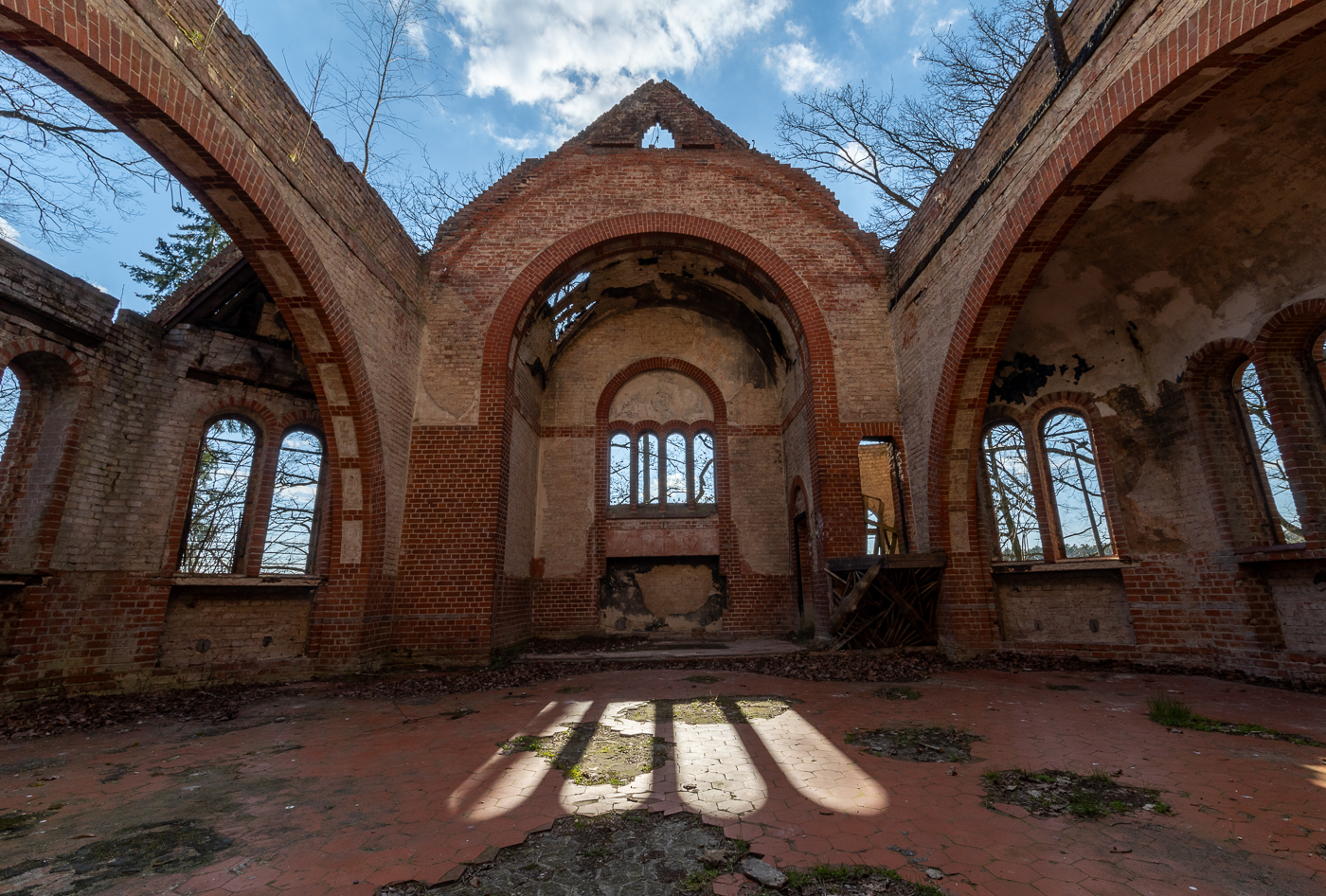
Attempts to put the site to commercial use came to nothing once the Soviets had gone, and the buildings started to decay. In 2007 the small church beside the lake burned down, leaving only its brick arches. Since 2006 the site has been owned by Kids Globe, a non-profit organisation that plans to turn it into a place for children and young people.
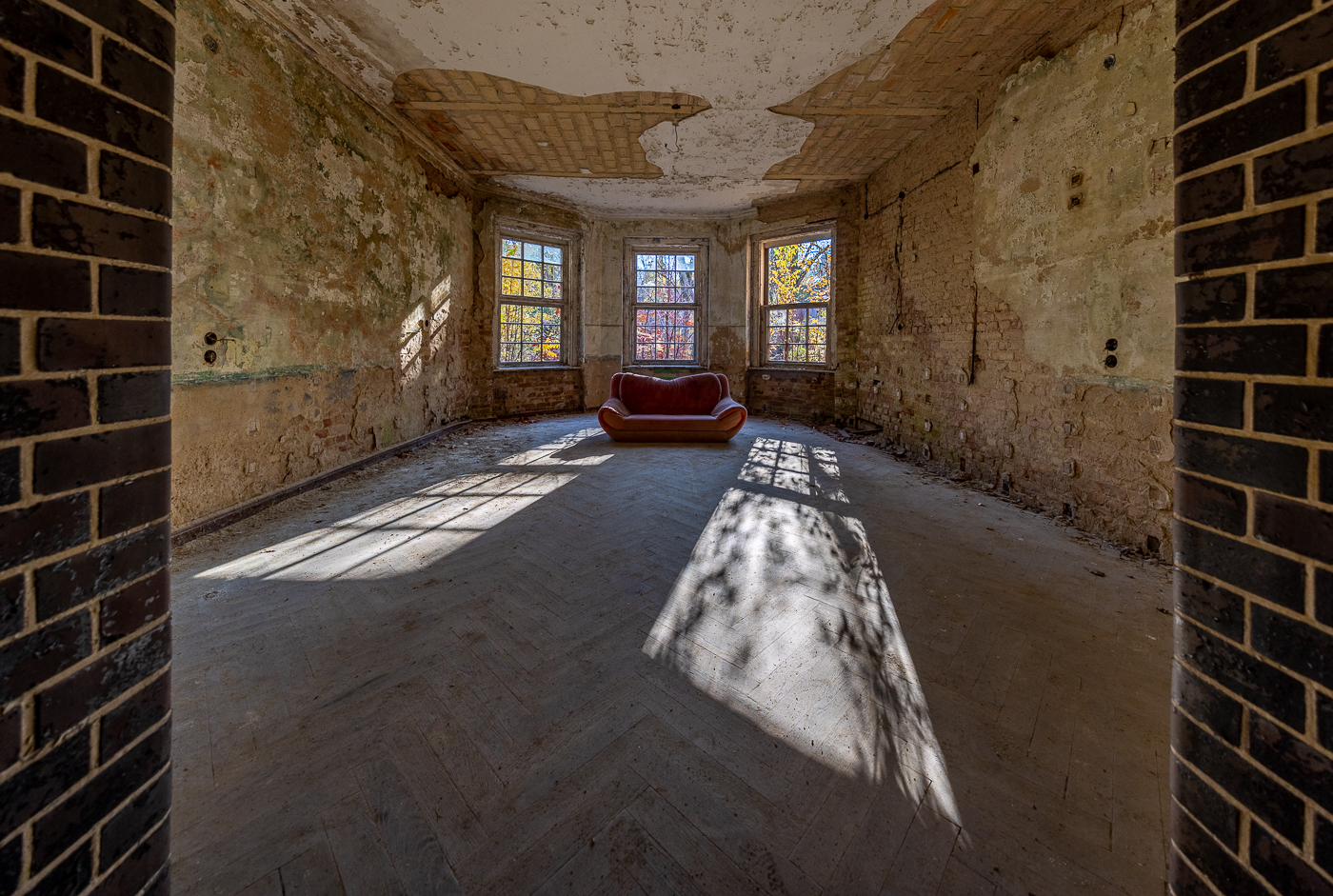
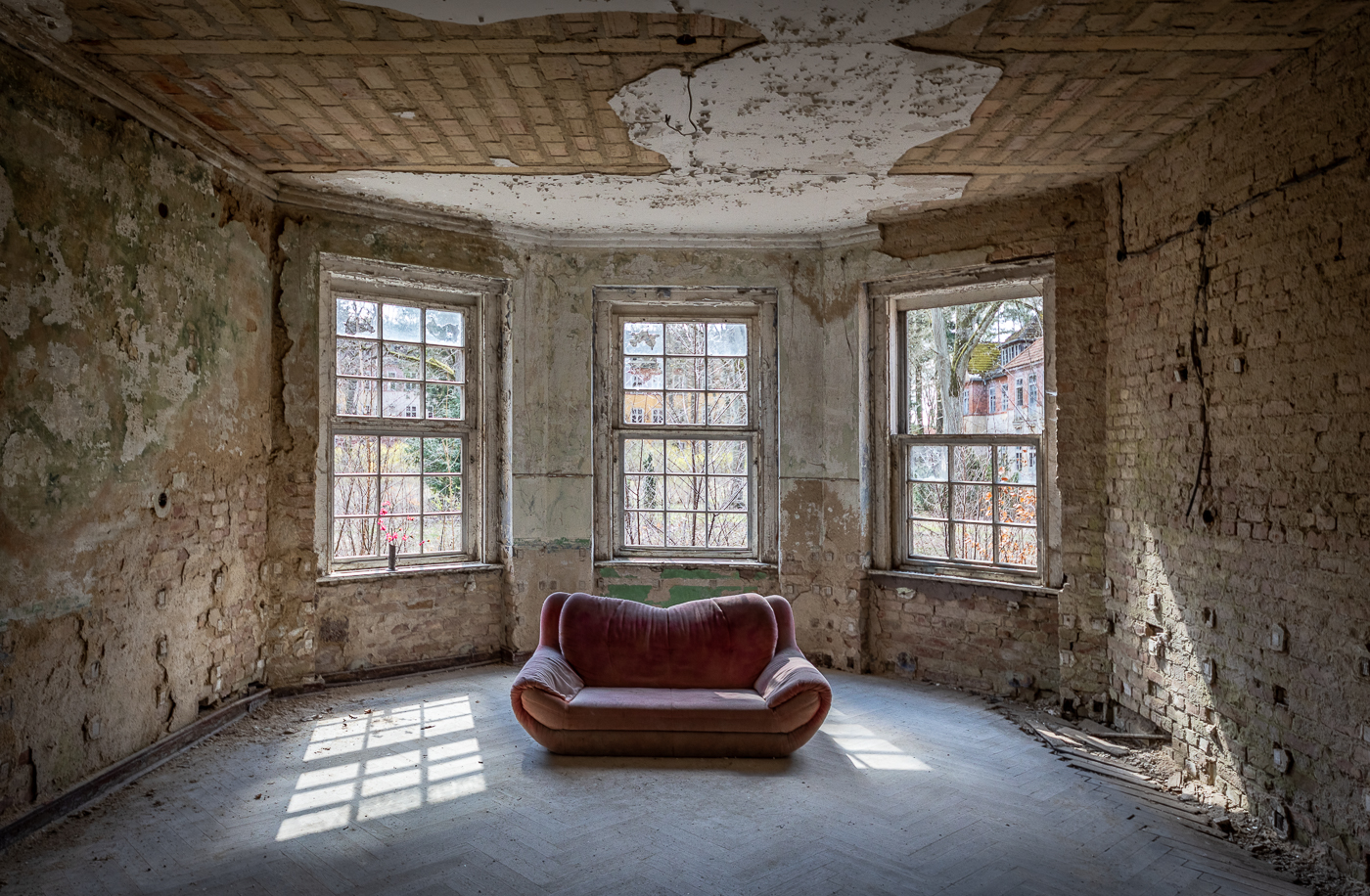
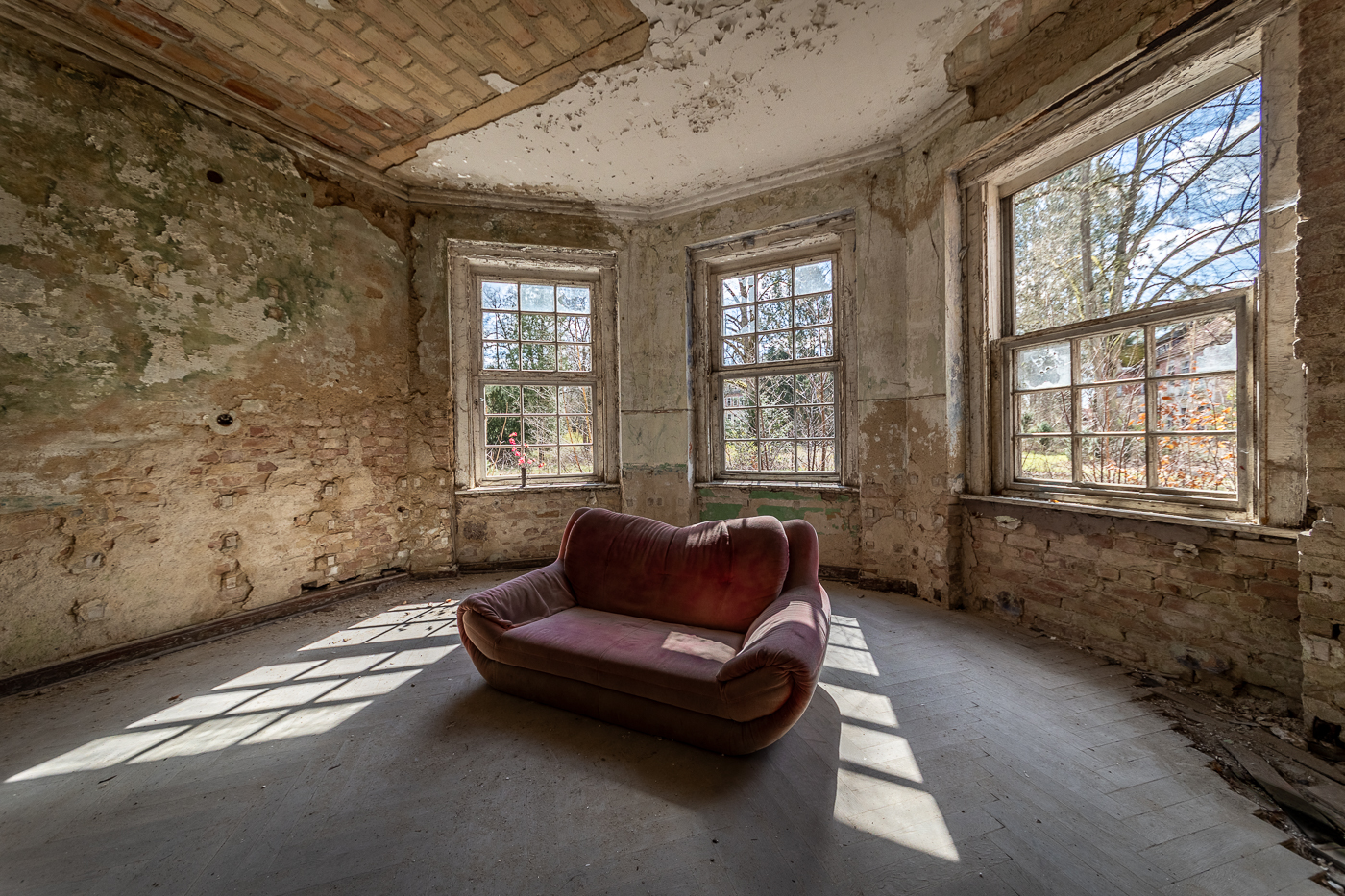
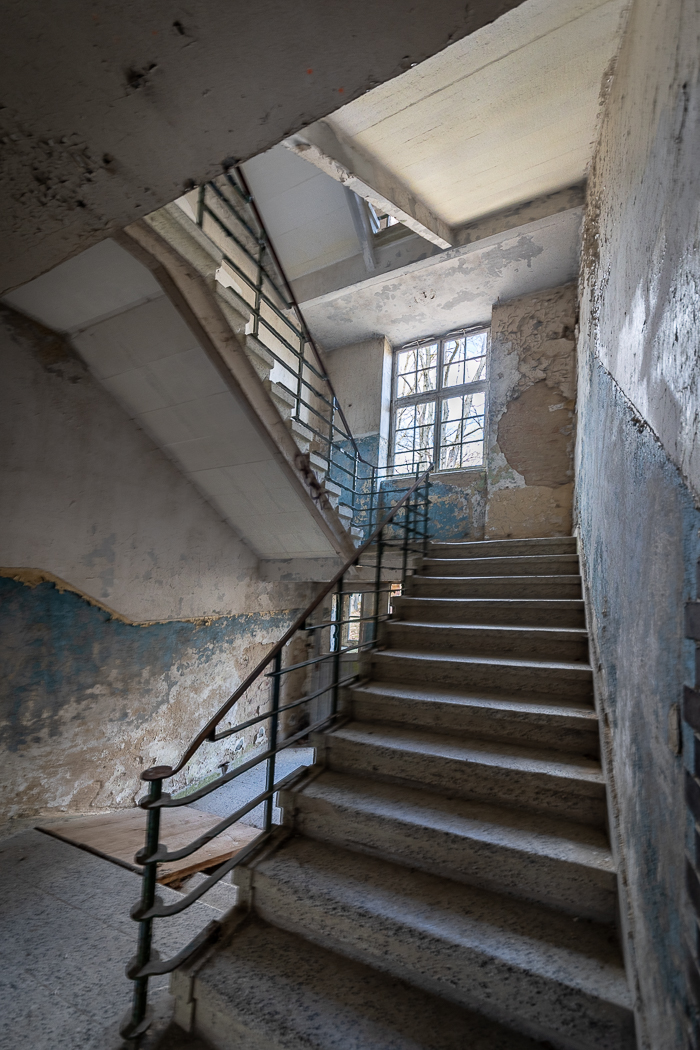
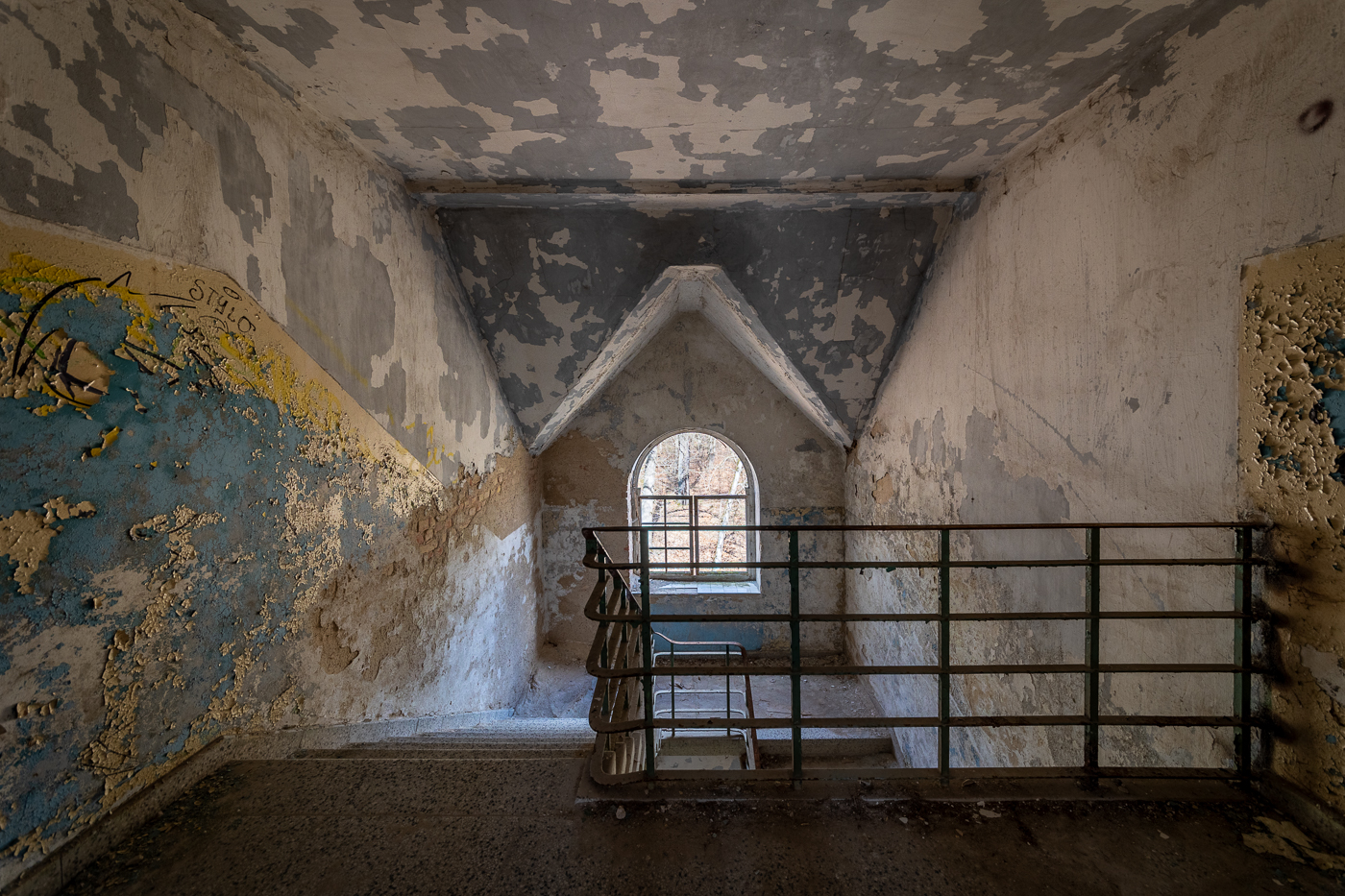
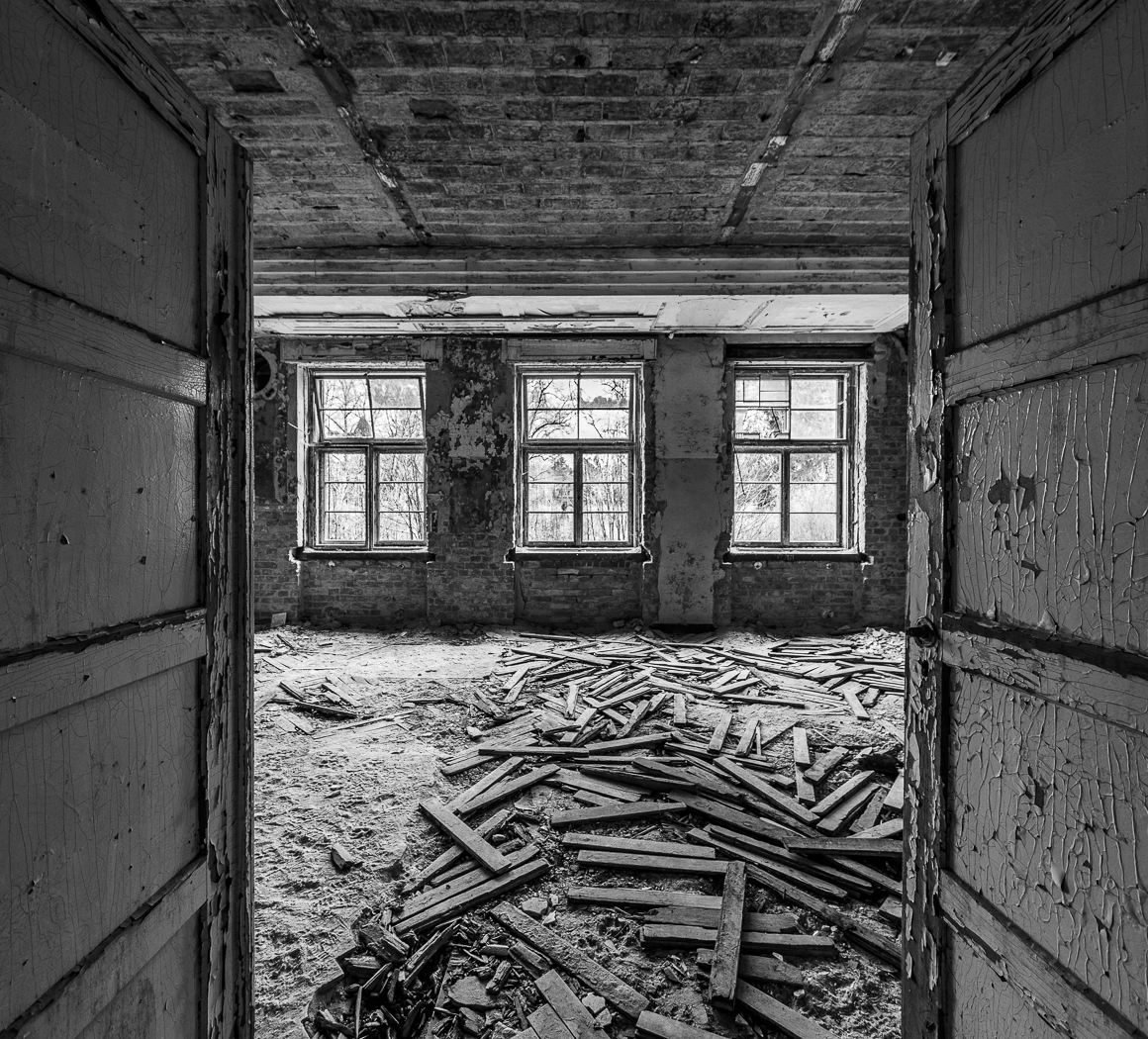
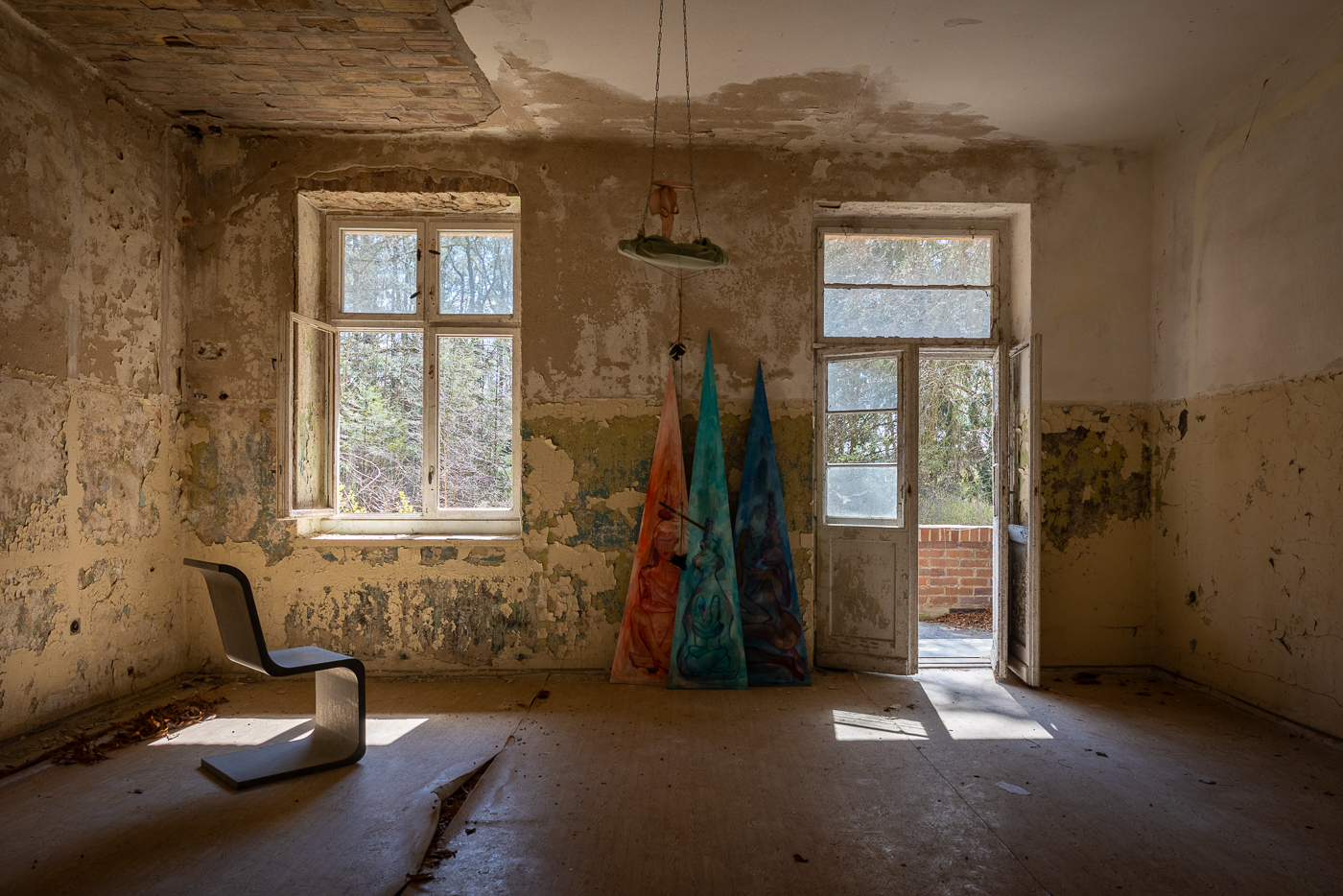
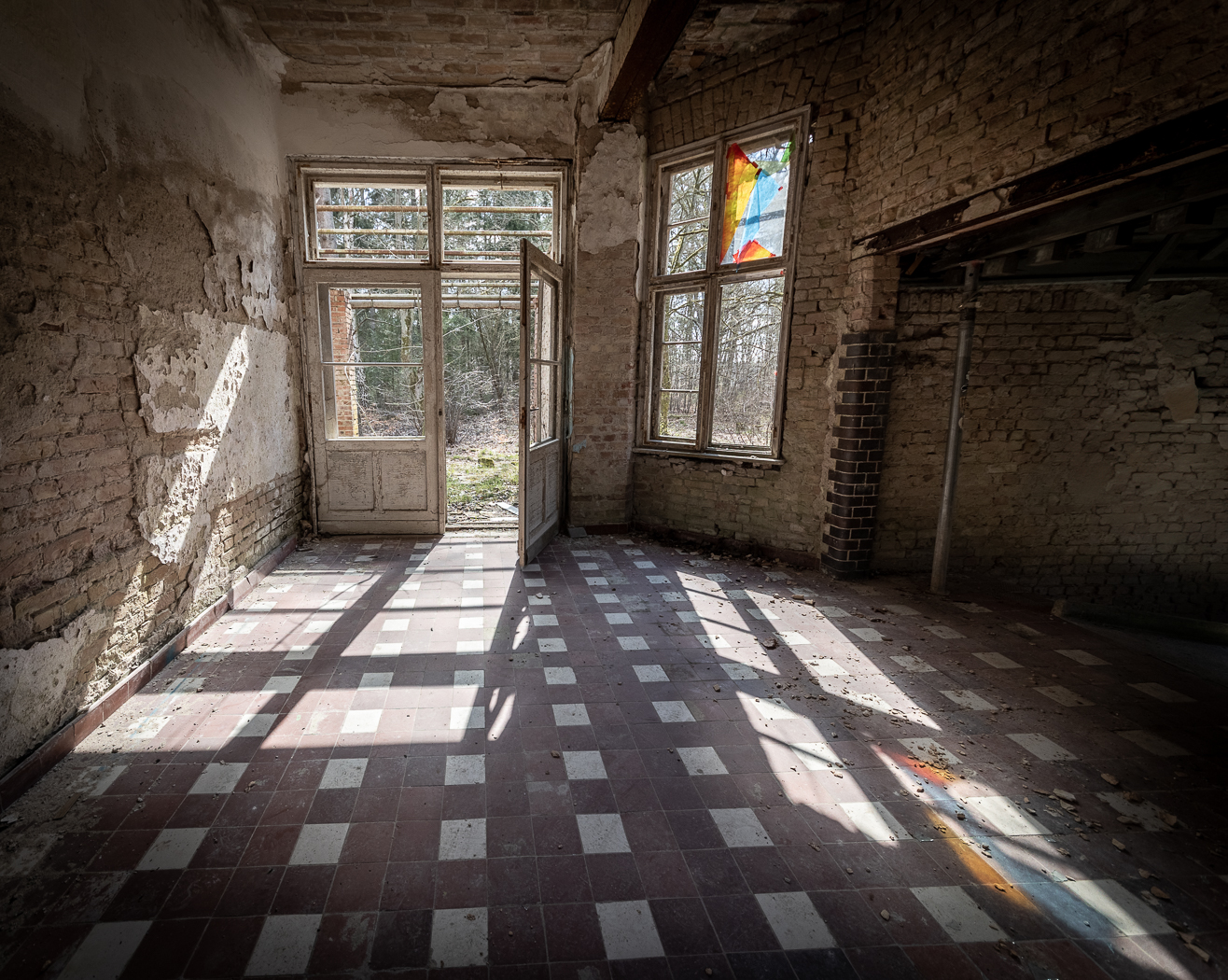
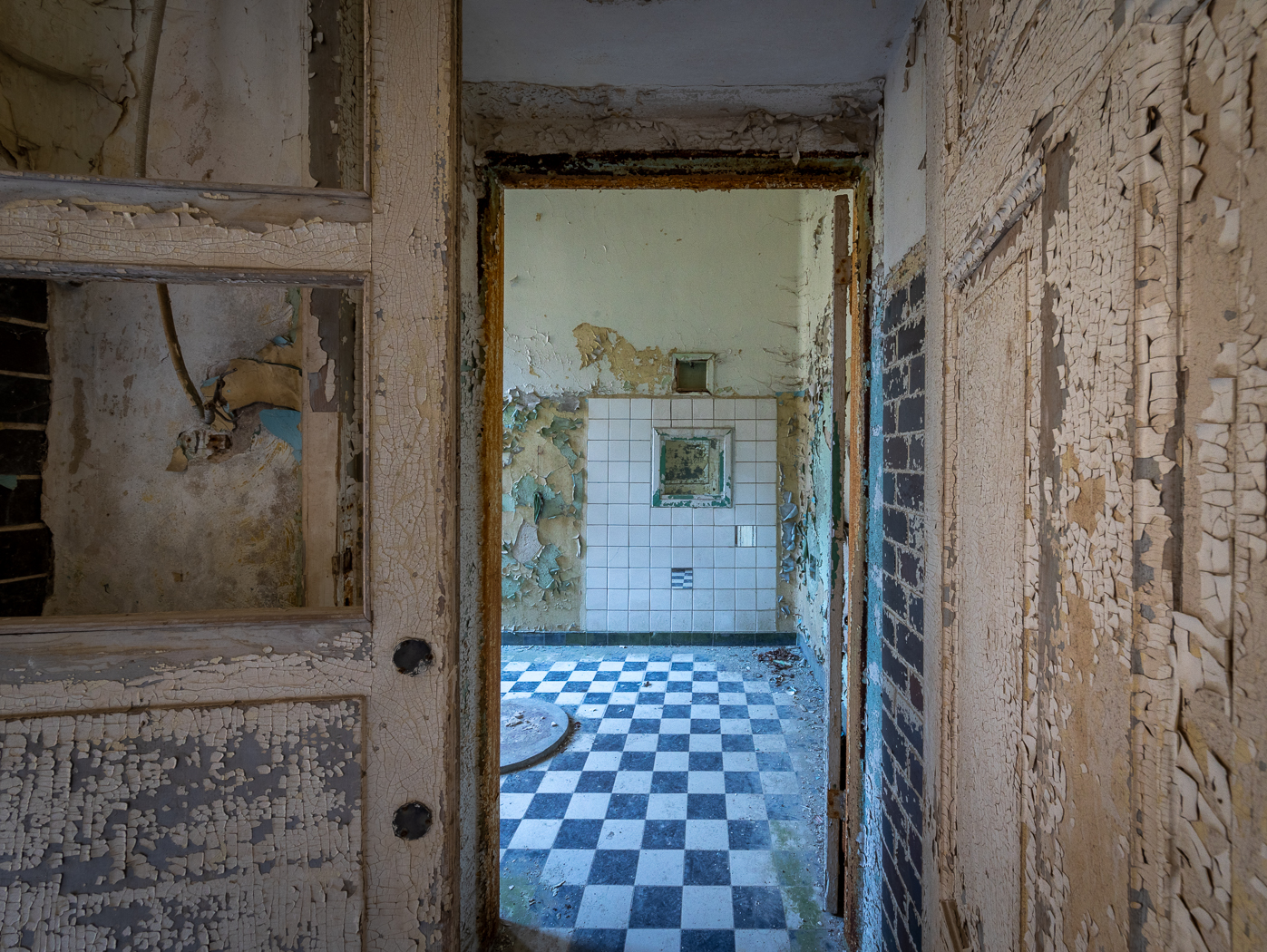
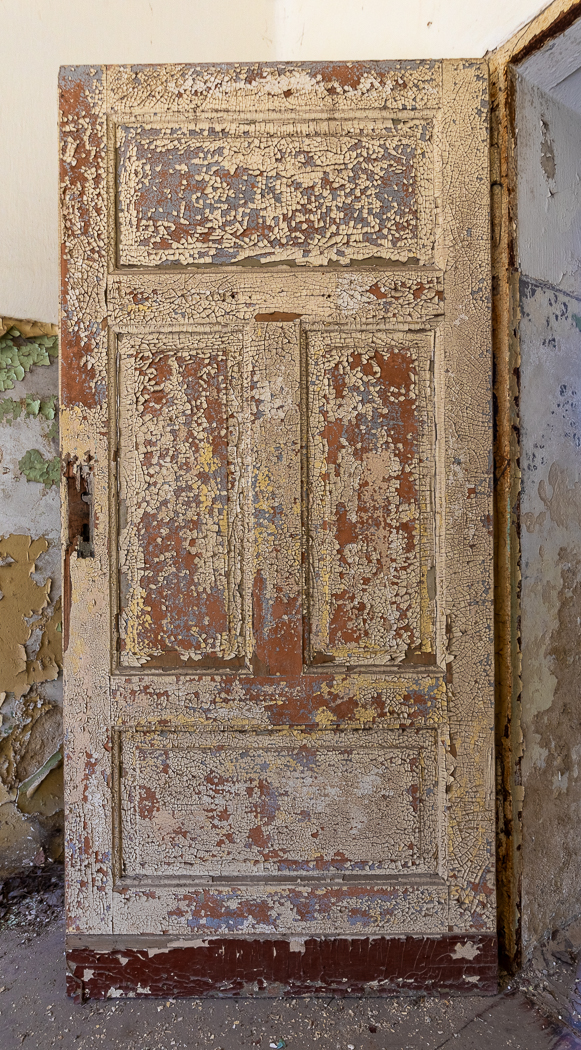
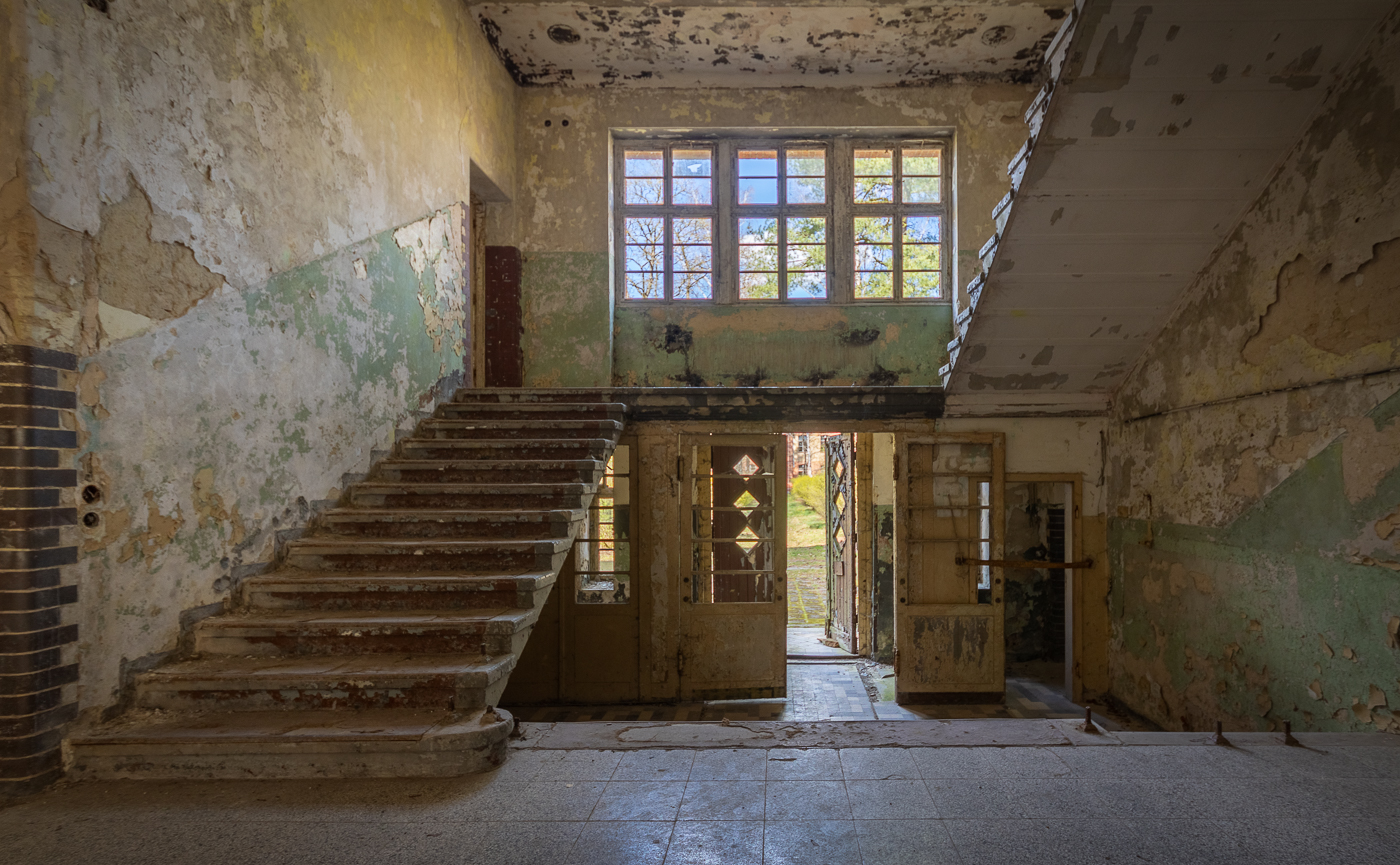
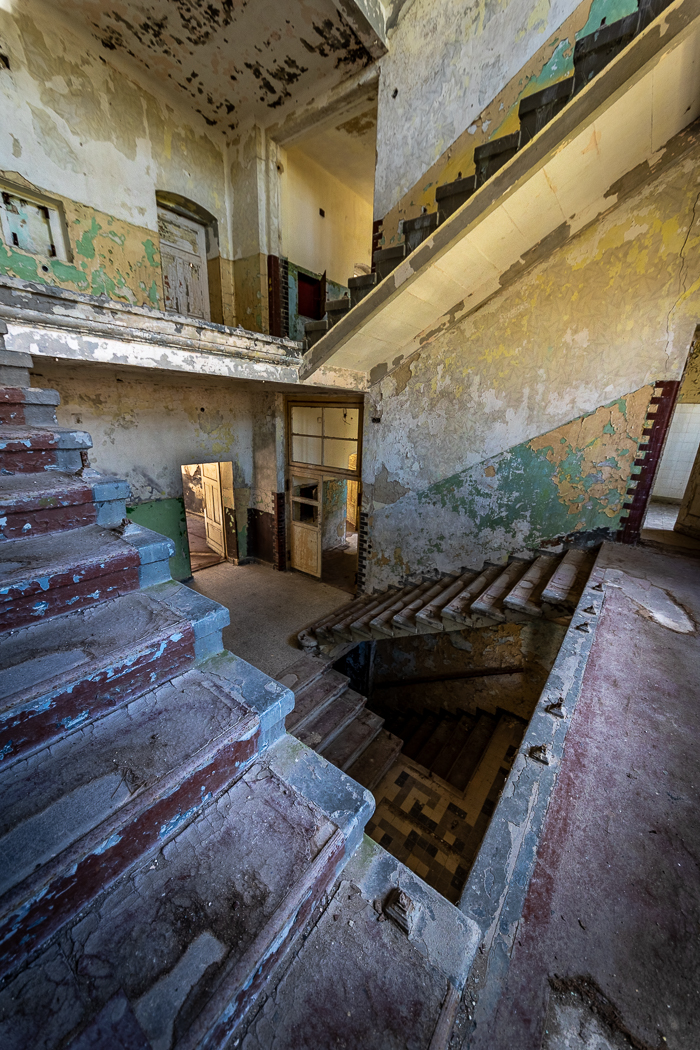
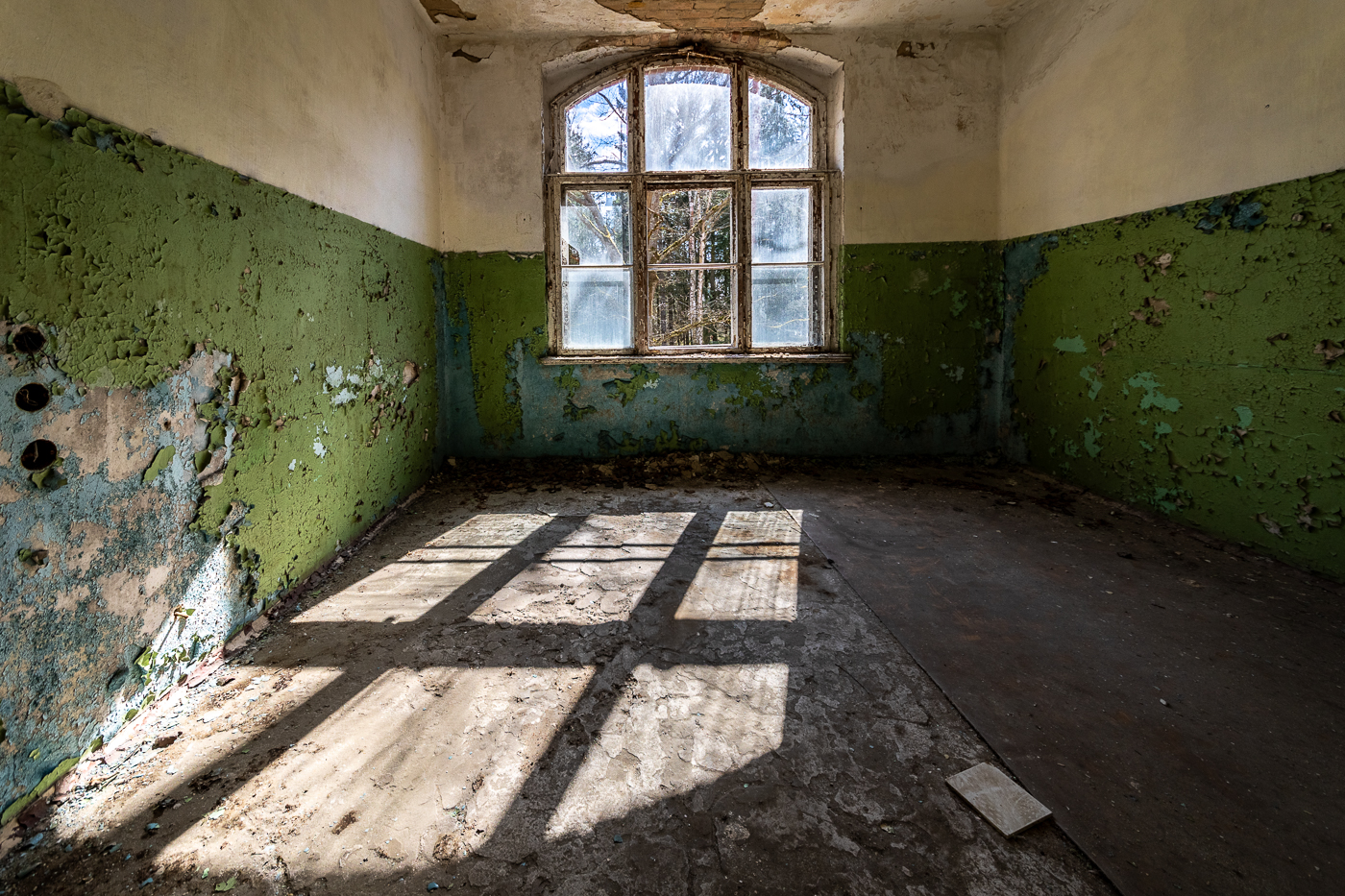
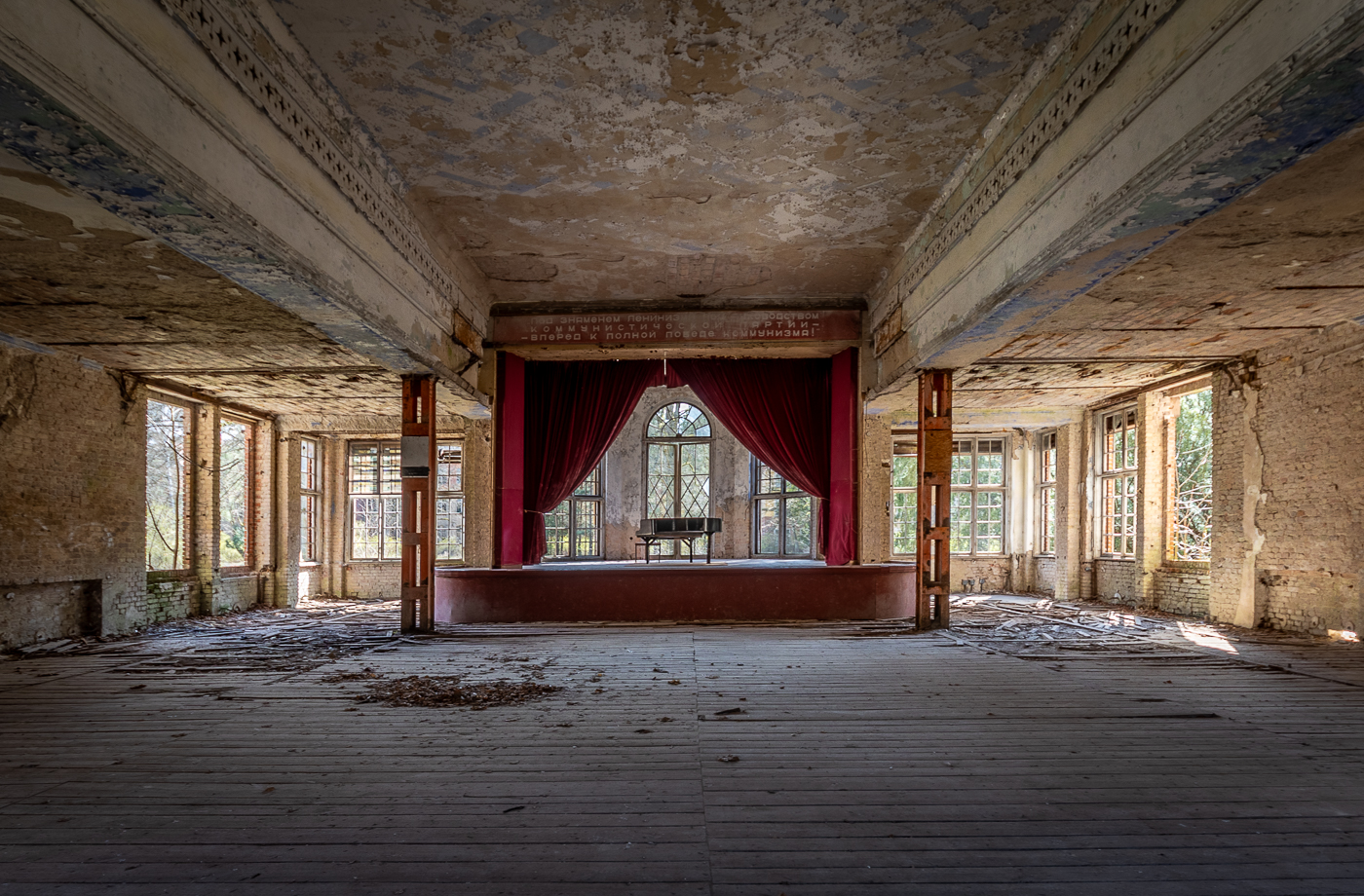
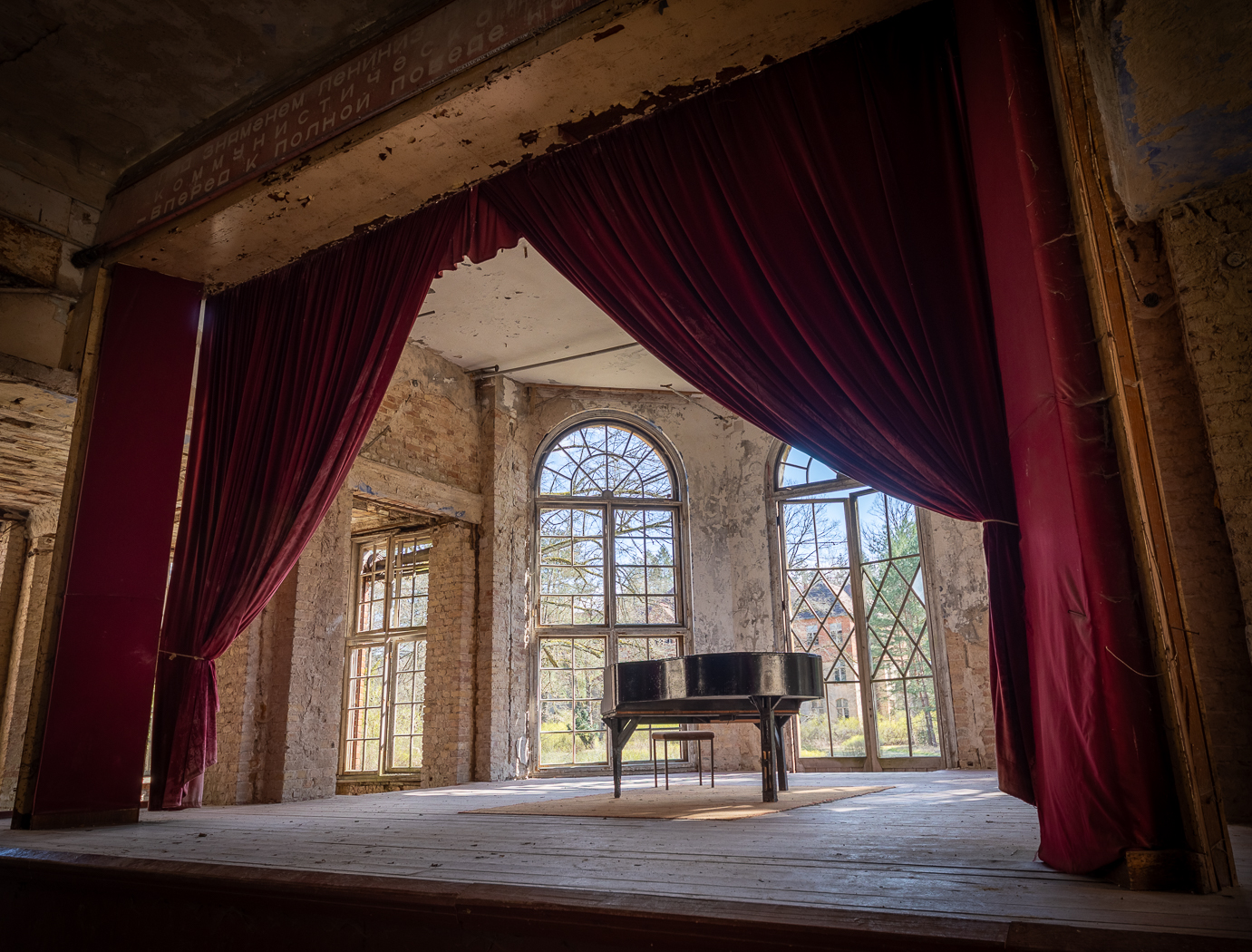
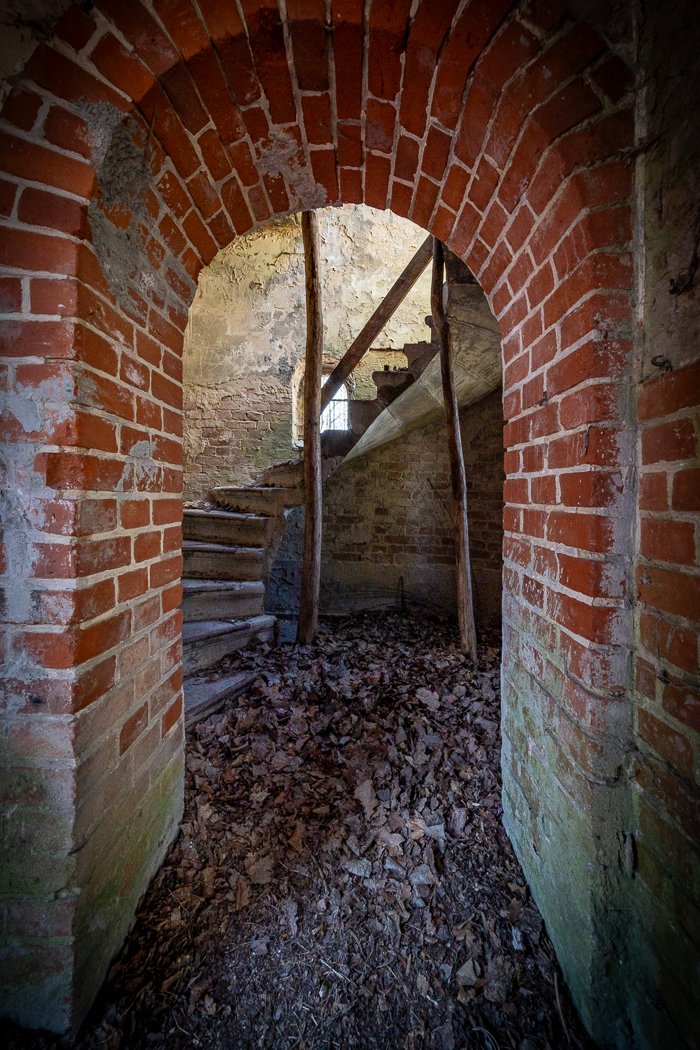
Inside, the buildings are fragile. Ceilings are falling in, staircases are broken, and plaster lies in heaps on the floors, yet much survives: chequered tiles, stained glass, a grand staircase and a theatre hall with its red curtains and a piano still on the stage. There is also a local legend that the lost town of Grabow sank beneath the lake, and that on clear days you can still see its towers.
Art among the ruins
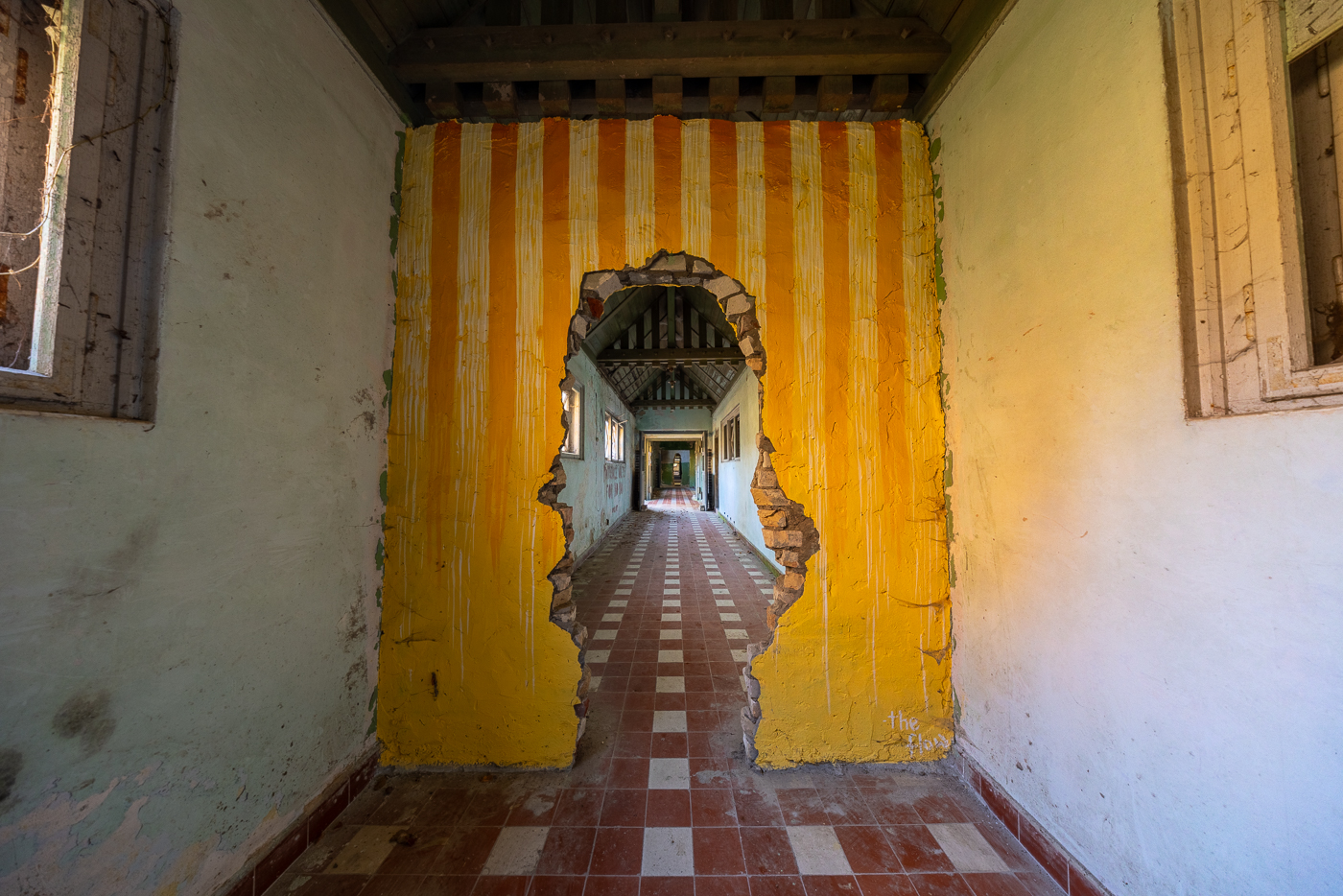
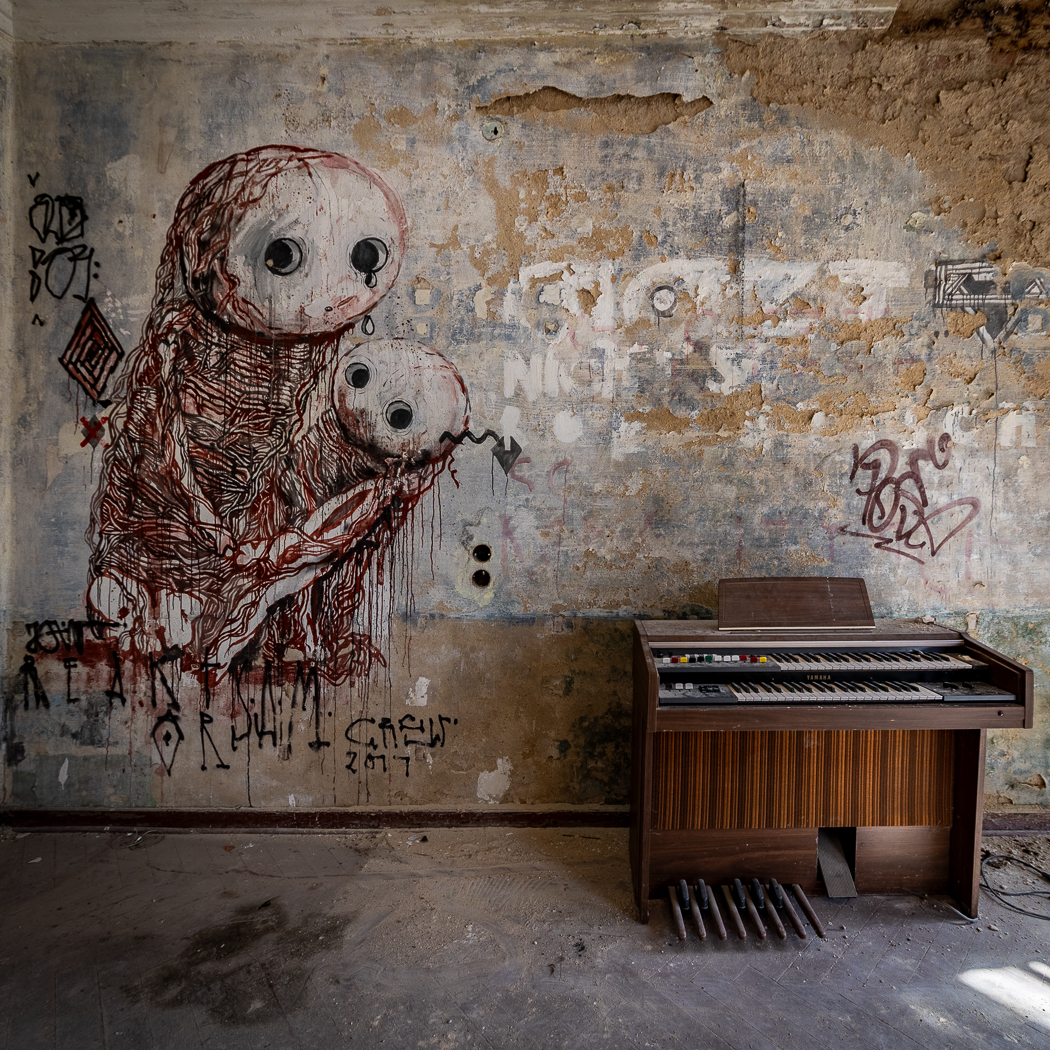
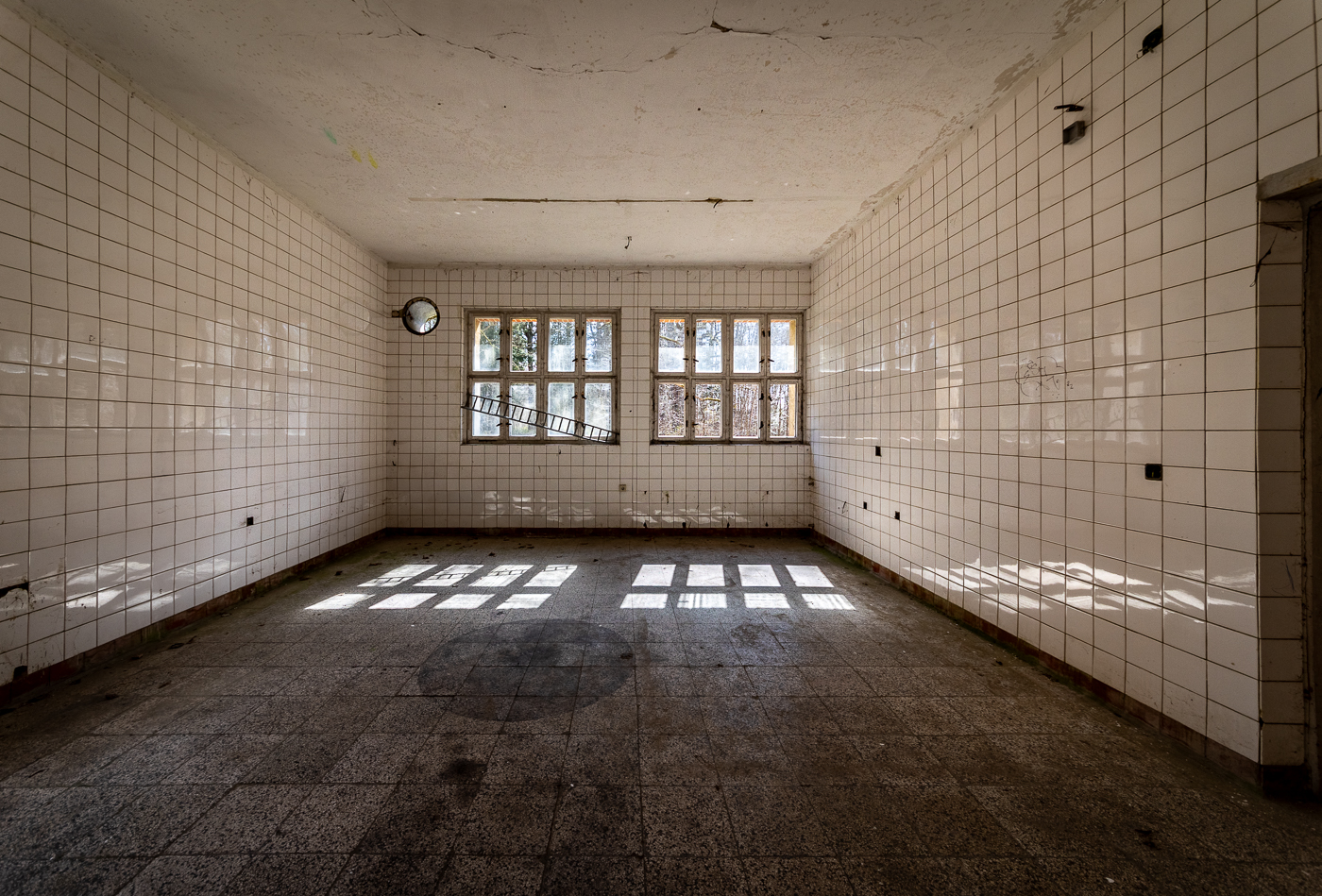
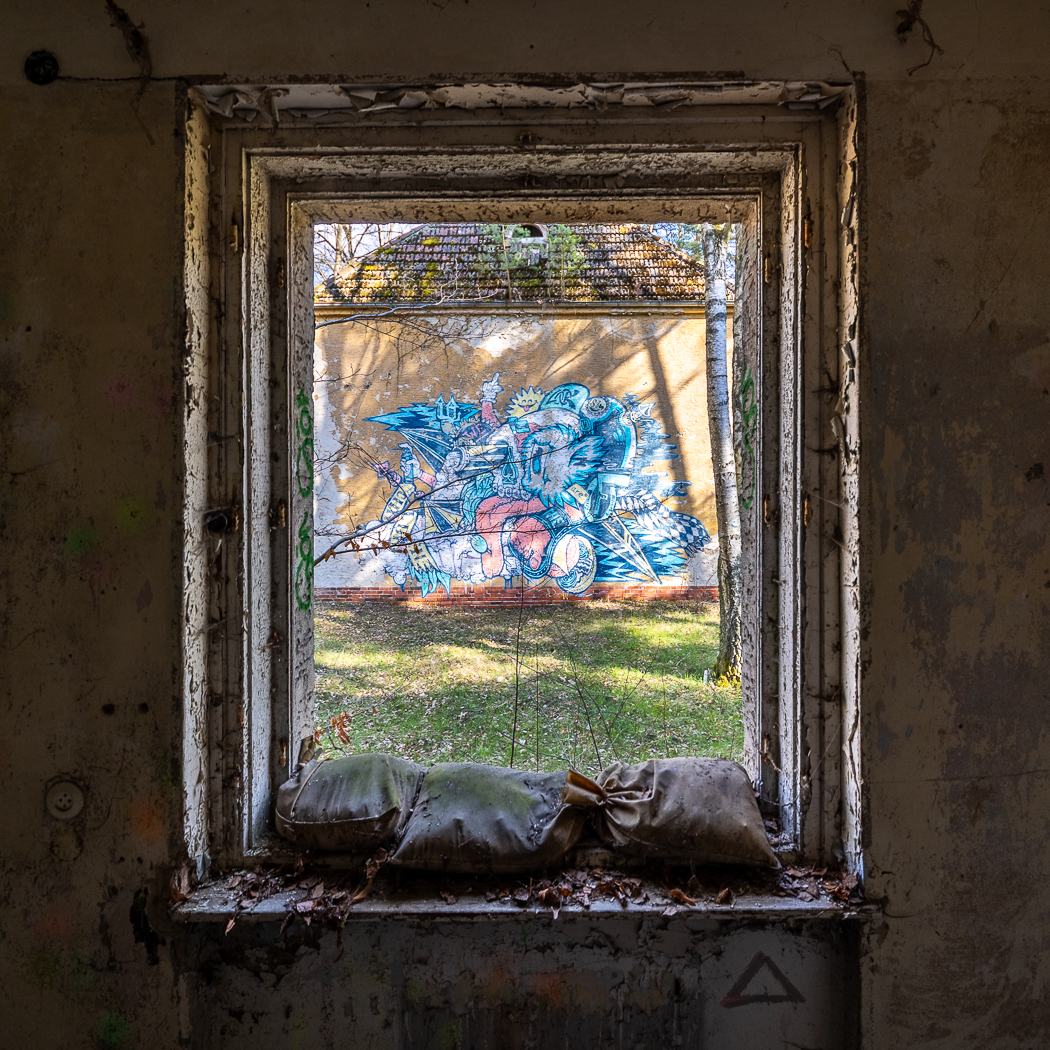
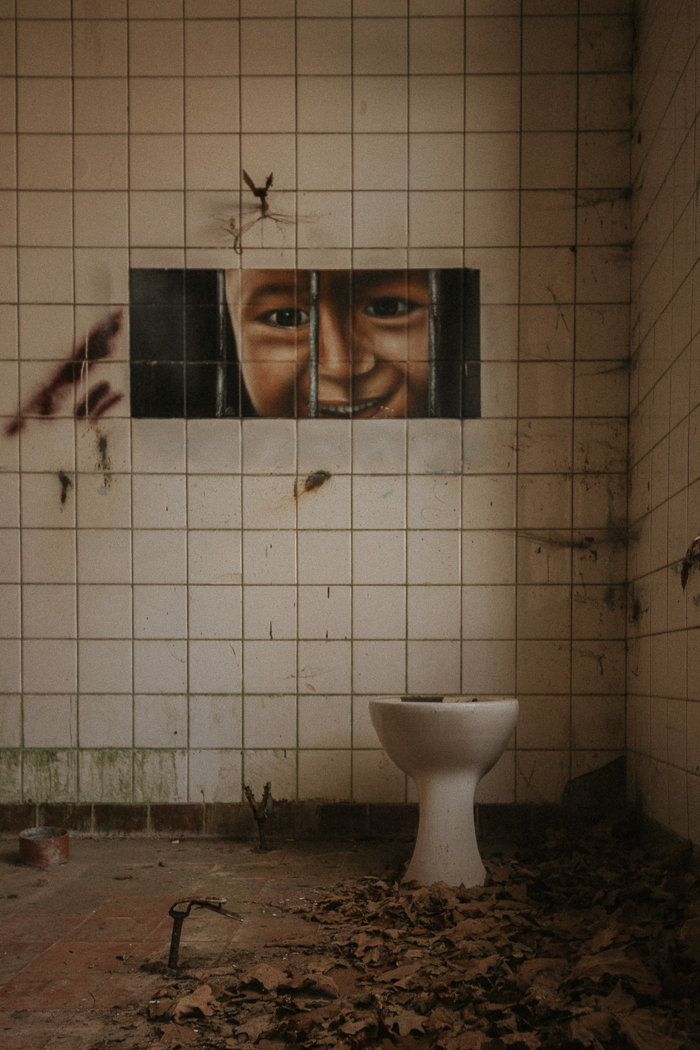
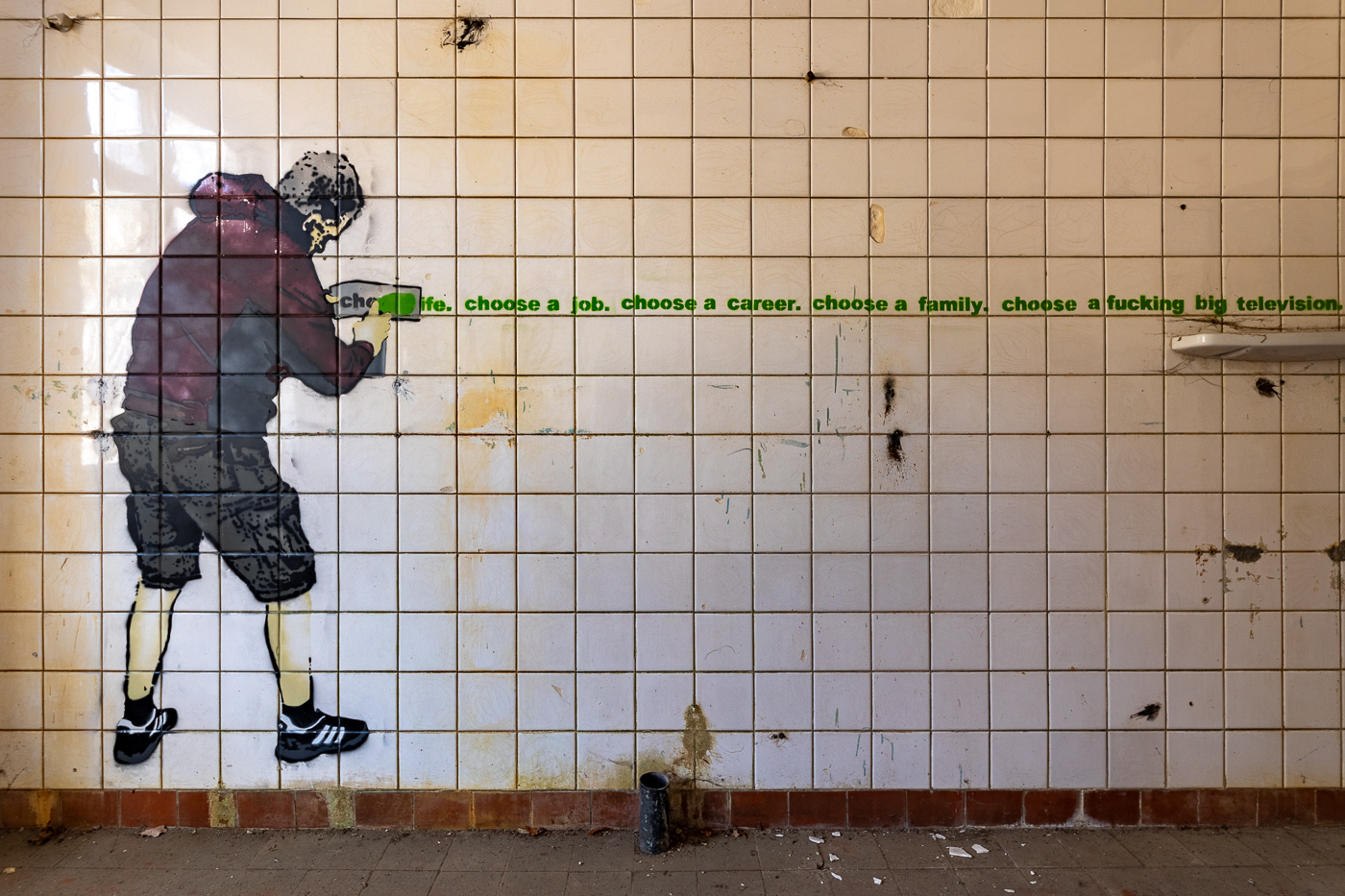
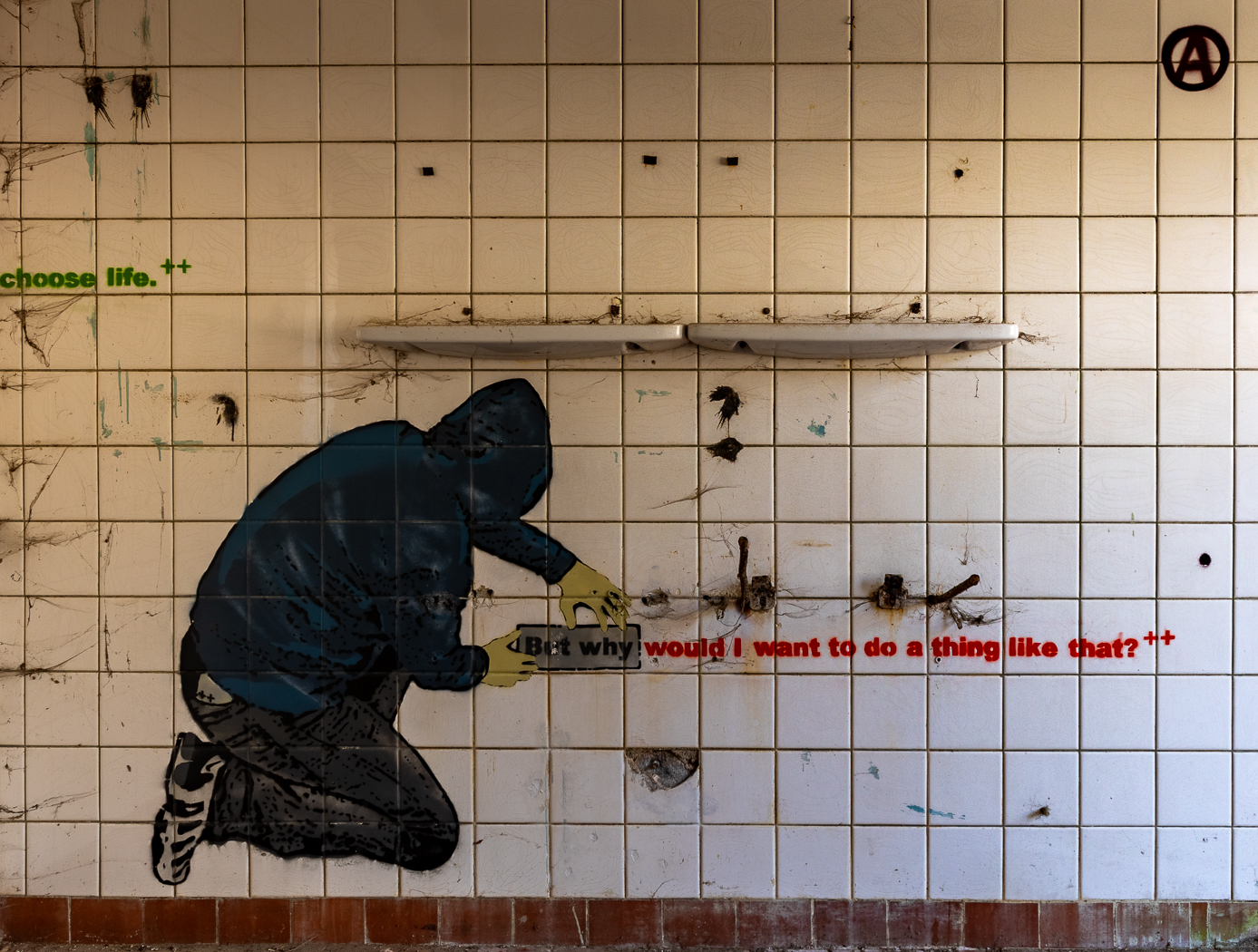
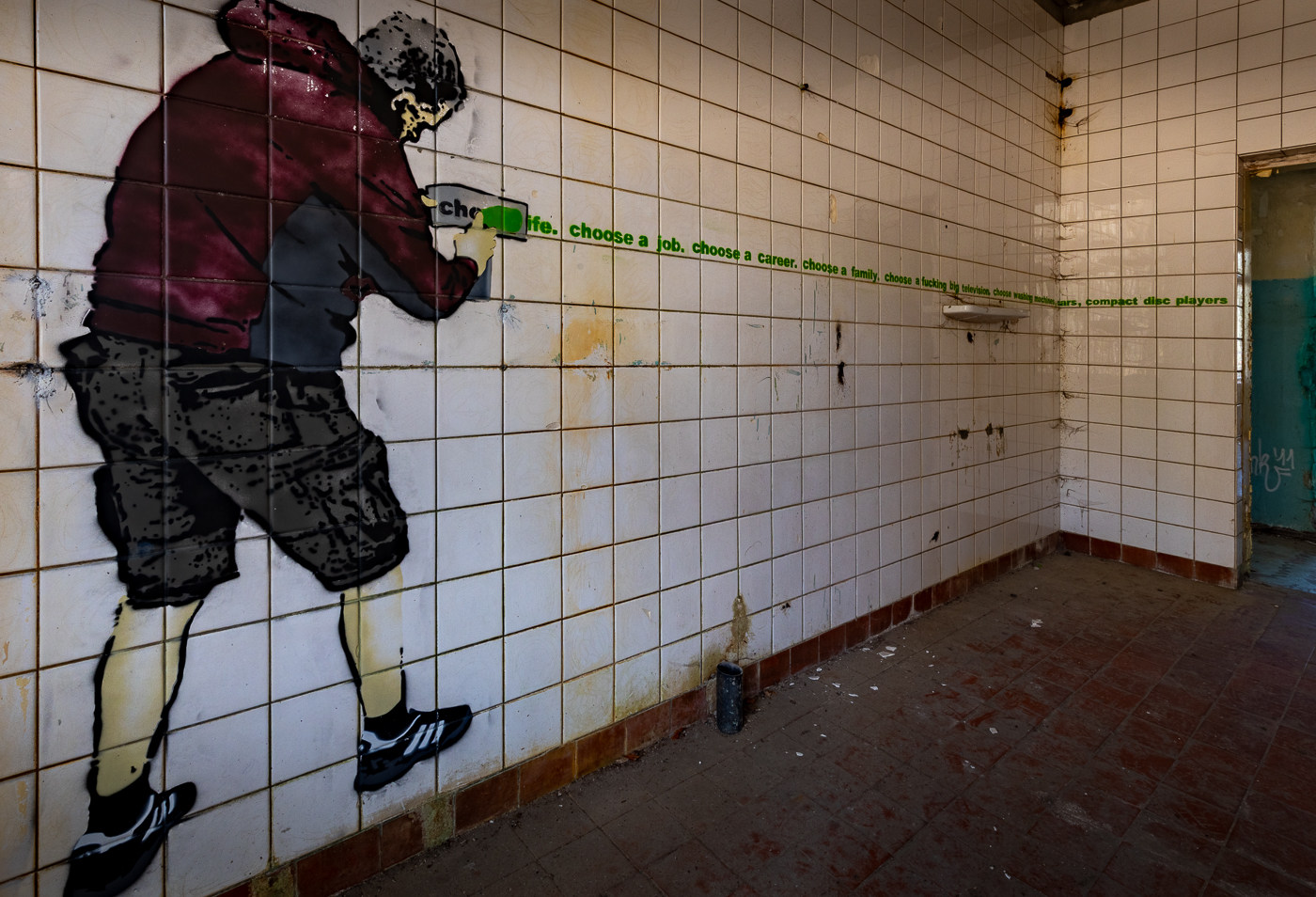
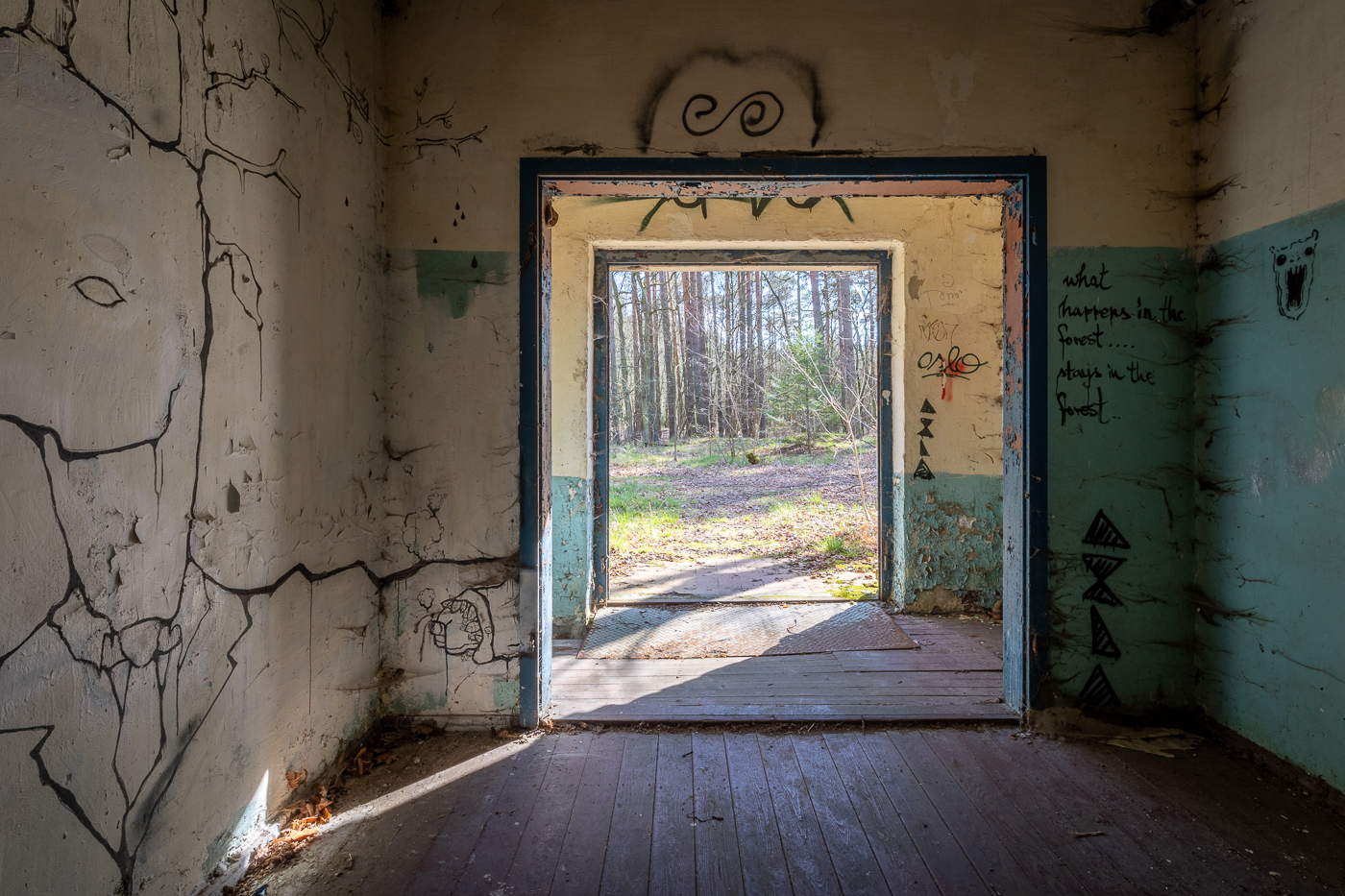
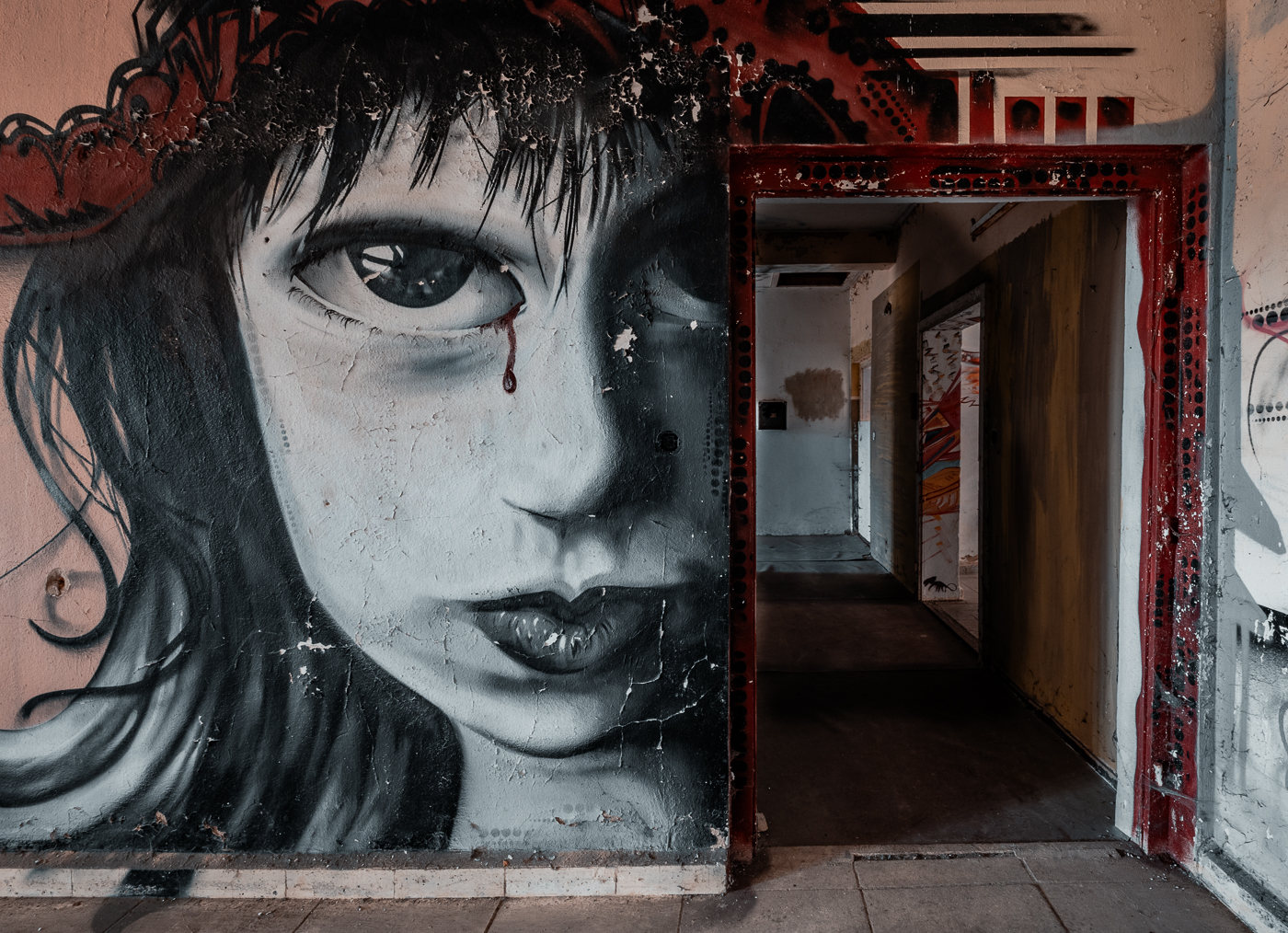
Grabowsee has far less graffiti than most of Berlin’s lost places, which makes the pieces that are here stand out. A sandbagged window frames a burst of colour on an outbuilding wall. A face stares down from the tiles above a toilet. In one washroom, stencilled figures paint the “Choose life” monologue from Trainspotting along the tiles. Portraits and creatures turn up in corridors and beside doorways.
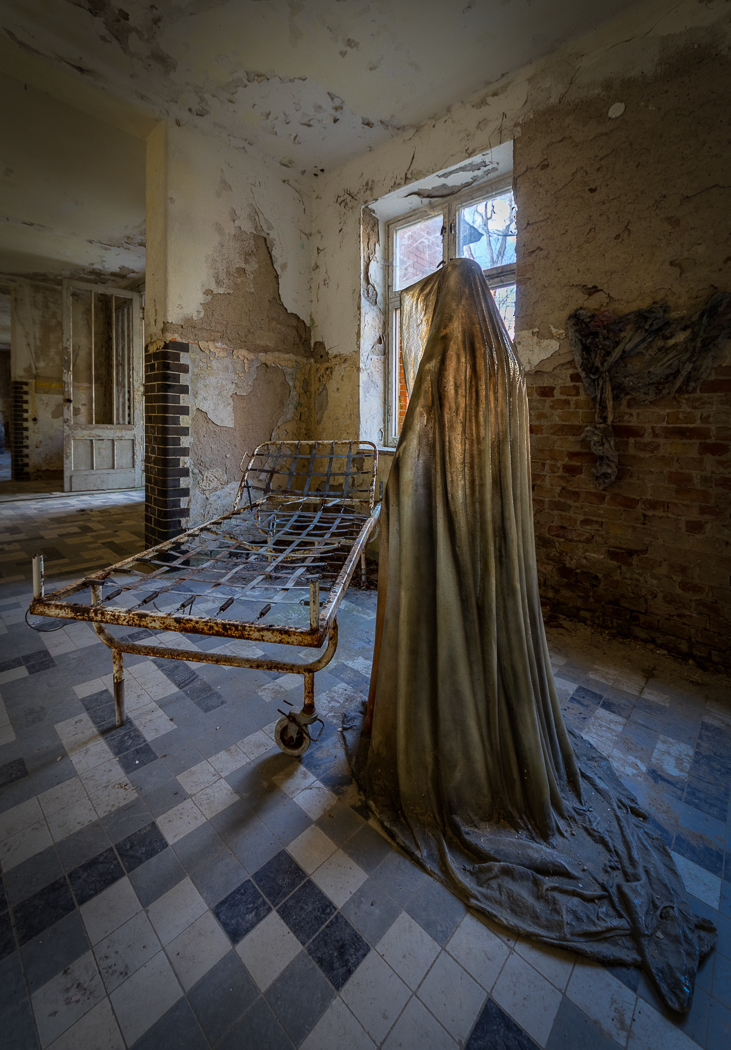
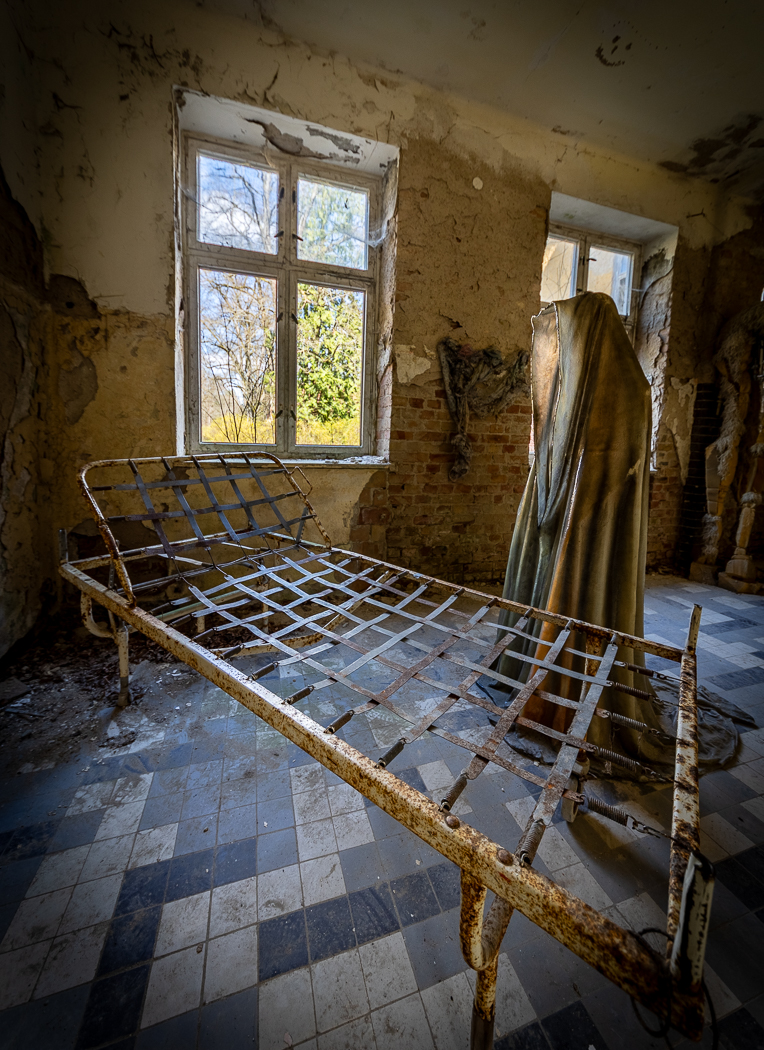
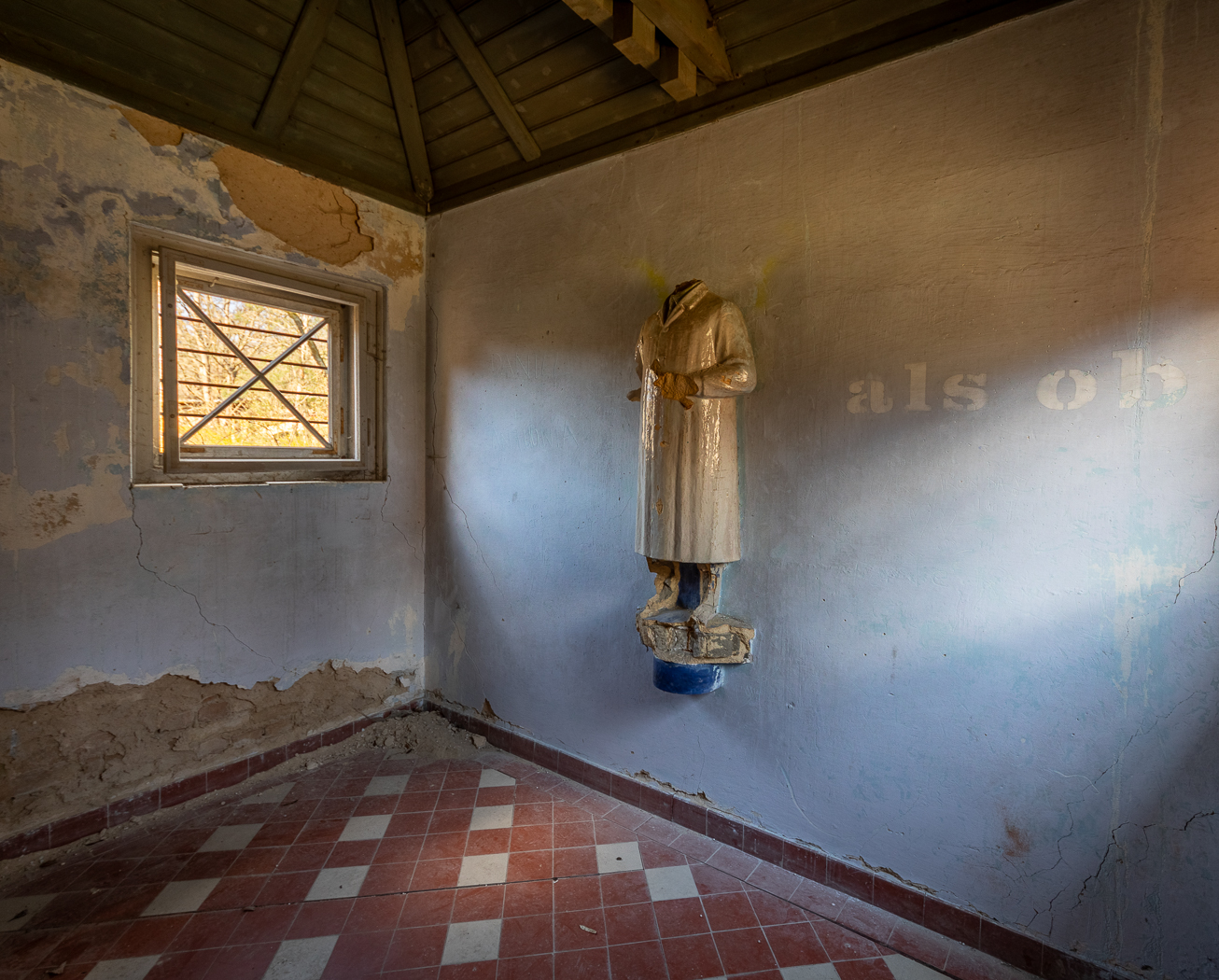
Some of the art isn’t painted on the walls at all. Around the buildings you come across installations: a shrouded figure beside an iron bed frame, painted fabric cones, a circle of rubble laid out on the floor and an empty coat hanging in mid-air.
Back in 2024
On a return visit in October 2024 the red sofa was still in its bay room, the striped corridor was still open, and the tiled halls were still catching the autumn light.